
Ep. 048 - Seafood Isn’t Scary: Myths, Fraud, and the Future with Emily De Sousa
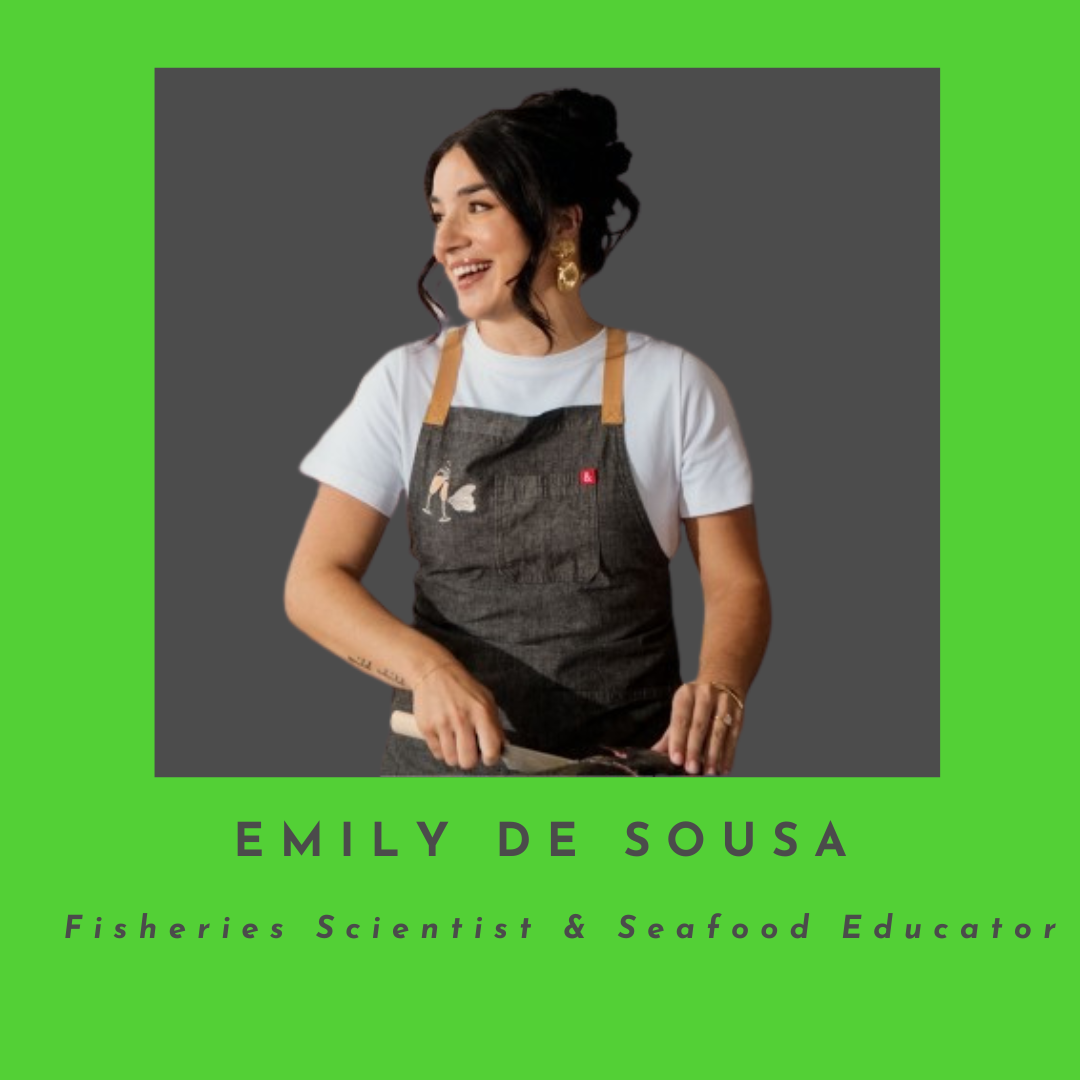
On this episode of the Bites and Bytes Podcast, your host, Kristin King, is back with the second installment of the Seafood Summer Series, sitting down with Emily De Sousa, a fisheries scientist who turned into a seafood educator and founder of Seaside with Emily. As you know, this podcast sits at the intersection of food systems and cybersecurity, examining what it takes to keep the systems that feed us running and secure. This episode looks at a different kind of vulnerability: trust. Emily has spent her career studying what happens when the seafood supply chain breaks down, from mislabeling and fraud to the myths that keep people confused at the fish counter, and turning that research into education people can use!
We get into seafood fraud, the myths around farmed versus wild seafood, and what it takes to buy, cook, and trust seafood again. It’s a bit of a look behind the curtain and some of your more burning seafood questions.
If you missed the first installment of the Seafood Summer Series, please go back and listen to James Sibley, the “Fish Fluencer”, break down aquaculture.
Find Emily De Sousa:
Newsletter: https://www.seasidewithemily.com/newsletter-signup
Website: https://www.seasidewithemily.com/
LinkedIn: https://www.linkedin.com/in/emilycdesousa/
Instagram: https://www.instagram.com/seasidewithemily
TikTok: https://www.tiktok.com/@seasidewithemily
YouTube: https://www.youtube.com/@seasidewithemily
Thought Leader Product Safety Innovation Summit 2026
August 14, 2026 – Virtual – Free
Sign up here: https://sangha.controlpointholdings.com/c/tlpsi-summit-2026
---------------
Episode Key Highlights 00:00:21 — Why Seafood Confusion Costs Consumers and the Industry
00:12:20 — The Secret to Crispy Fish Skin
00:17:26 — The Biggest Seafood Misconceptions
00:22:19 — Why Wild-Caught Seafood Alone Cannot Meet Global Demand
00:29:31 — The Truth About Salmon Color
00:35:32 — How Seafood Fraud Happens
00:44:10 — Why Tinned Fish Is Having a Moment
00:54:42 — The Future of Seafood and Whole-Fish Use
00:58:24 — Understanding Food Systems Before Securing Them
---------------
📘 Kristin’s book, “Securing What Feeds Us: Cybersecurity in Food and Agriculture,” is here.
Food & Agriculture Cyber Incident Atlas is located here: https://securingwhatfeedsus.com/atlas
---------------
🎤 Book Kristin Demoranville toSpeak
To invite Kristin to speak at your conference, corporate event, webinar, or workshop, visit the website and submit a request.
---------------
🎤 Bites and Bytes Podcast Info:
Website: Explore all our episodes, articles, and more on our official website.
MerchShop: Show your support with some awesome Bites and Bytes gear!
Substack: Stay updated with the latest insights and stories from the world of cybersecurity in the food industry.
Socials: TikTok;Instagram;LinkedIn;BlueSky
---------------
🛡️ About AnzenSage & AnzenOT
AnzenSage is a cybersecurity advisory firm specializing in security resilience for the food, agriculture, zoo, and aquarium industries. AnzenSage offers practical, strategic guidance to help organizations anticipate risks and build resilience. Learn more about their offerings at anzensage.com.
AnzenOT helps organizations understand and prioritize operational risk faster, without relying on slow or static assessments. Subscription access is available, including a student option. Learn more at anzenot.com.
Listen to full episode :
Episode Guide:
00:00:21 — Seafood Summer Series Introduction
00:01:20 — Favorite Food and Boxing Day Seafood Memories
00:04:03 — Meet Emily De Sousa
00:08:18 — Inside the Seafood Boot Camp
00:12:20 — The Crispy Fish Skin Aha Moment
00:17:26 — Two Categories of Seafood Misconceptions
00:20:29 — Wild-Caught Versus Farmed Seafood
00:22:19 — Why Aquaculture Is Essential
00:24:54 — Seeing a Modern Salmon Farm Firsthand
00:26:36 — The Technology Behind Aquaculture
00:28:55 — What Salmon Color Really Means
00:32:42 — Food, Technology, and Cyber Risk
00:35:32 — Seafood Fraud and Species Substitution
00:38:11 — Rebuilding Trust and Trying New Seafood
00:41:06 — How Preparation Changes Flavor and Texture
00:43:28 — Tinned Fish as a Gateway to Seafood
00:47:15 — How Tinned Seafood Is Produced
00:48:09 — Seafood Diversity and Artisanal Canneries
00:50:22 — How to Start Buying Tinned Fish
00:51:52 — Caviar Trends and Unexpected Pairings
-
00:00:21 Kristin King
Welcome back to the Bites and Bites podcast.
00:00:23 Kristin King
I am your host, Kristen King, and welcome to our second stop on our Seafood Summer series.
00:00:29 Kristin King
If you haven't listened to the first episode with James, the fish influencer, go back and start there.
00:00:35 Kristin King
He laid the groundwork on agriculture and what fish farming looks like today and the technology running underneath it.
00:00:42 Kristin King
This episode builds right on top of that.
00:00:44 Kristin King
Here's the thing about seafood.
00:00:46 Kristin King
People don't know how to buy it, cook it, or trust what's on the label.
00:00:50 Kristin King
And that confusion cost the industry and consumers more than most people realize.
00:00:55 Kristin King
Today, I'm sitting down with Emily DeSouza, a fishery scientist turned seafood educator, who has spent her career closing that gap.
00:01:03 Kristin King
By the end of this conversation, you won't look at the seafood counter the same way again, and hopefully you'll feel inspired to go home and cook that fish you constantly keep burning.
00:01:12 Kristin King
Grab your coffee or your drink of choice, or maybe even some tinned fish on toast, and let's get into it.
00:01:20 Kristin King
Bites and Bites podcast tradition.
00:01:22 Kristin King
We're going to do favorite food and favorite food memory.
00:01:25 Kristin King
They do not need to be the same thing.
00:01:27 Kristin King
If you don't have a favorite food, I'll also take food fixation of the moment.
00:01:31 Kristin King
Go for it.
00:01:32 Emily De Sousa
Okay.
00:01:33 Emily De Sousa
Favorite food is hard because I feel like I love so many different things.
00:01:38 Emily De Sousa
But if I had to pick, I think I'm going coconut curry mussels, which is like not the right season right now.
00:01:44 Emily De Sousa
I love coconut curry mussels in like cold winter months, so probably not going to eat a lot of it
00:01:50 Emily De Sousa
in the summer, but it's just so cozy and comforting and with fries or perfectly crusty bread.
00:01:56 Emily De Sousa
Chef's kiss.
00:01:57 Emily De Sousa
I'm now officially starving.
00:01:59 Kristin King
That just sung.
00:02:01 Kristin King
You were singing to me.
00:02:02 Kristin King
I was like, that is amazing.
00:02:03 Kristin King
You can't see my face, but I was like, what?
00:02:08 Kristin King
That's great.
00:02:08 Kristin King
And your favorite food memory?
00:02:10 Emily De Sousa
Favorite food memory.
00:02:11 Emily De Sousa
The one that comes to top of mind is like a recurring memory, if I can pull from that.
00:02:18 Emily De Sousa
And I guess it's kind of a
00:02:20 Emily De Sousa
But every time I think of food memories, I always think of Boxing Day morning.
00:02:26 Emily De Sousa
So the day after Christmas, I'm always woken up by my mom frying fish in the kitchen.
00:02:31 Emily De Sousa
It is our like Christmas tradition.
00:02:33 Emily De Sousa
The day after Christmas, December 26th, we get together with her extended family and she's always up way earlier than anybody else frying fish fillets in the kitchen.
00:02:43 Emily De Sousa
And I like wake up to like the sounds of the fish frying and the smell of it throughout the house.
00:02:48 Emily De Sousa
And it's just like my, I don't know.
00:02:50 Emily De Sousa
core memory of the holiday season and then kind of going off of that as well as that's how our Boxing Day starts and then our Boxing Day ends with a giant tub.
00:03:02 Emily De Sousa
buttery, garlicky shrimp.
00:03:05 Emily De Sousa
Like long after lunch was finished, dessert has been served.
00:03:08 Emily De Sousa
It's like a second meal, the like midnight seafood feast that somebody like pulls out of somewhere and everybody like reconvenes at the table and there's like cheap beer because you have to have it with beer.
00:03:19 Emily De Sousa
Like the good wine goes away and everyone just like rolls up their sleeves and gets elbow deep into this like shrimp that's bathed in garlic and butter.
00:03:27 Emily De Sousa
And it's just it's so fun to think like all of the cousins and aunts and uncles like regathering around the table
00:03:32 Emily De Sousa
last like raw on Christmas.
00:03:34 Emily De Sousa
So that's like what I think food memories, especially seafood, I think like the beginning to end of Boxing Day that all like circles around seafood.
00:03:42 Kristin King
That sounds actually really delicious and also really quite fun because if everybody's shelling shrimp and doing that, like there's things going on, this brings back a lot of memories for me too.
00:03:52 Kristin King
You just slammed me into nostalgia land for sure.
00:03:55 Kristin King
So thank you for that.
00:03:56 Kristin King
All sounds delicious.
00:03:57 Kristin King
This is amazing.
00:03:58 Kristin King
This is a great start to the show already.
00:04:00 Kristin King
If anybody couldn't tell, we're going to be talking about
00:04:03 Kristin King
Emily, why don't you go ahead and introduce yourself to everyone so they know who you are and what you do?
00:04:09 Emily De Sousa
Yeah, so my name is Emily D'Souza and I am a fishery scientist by training.
00:04:14 Emily De Sousa
So I studied at the University of Guelph and did a lot of research on seafood supply chains, things like community supported fisheries and looking at alternative seafood networks and what happens to seafood supply chains during global shocks like a pandemic, for example.
00:04:30 Emily De Sousa
But while I was doing that, I realized that
00:04:33 Emily De Sousa
of the research aspect of academia, the bureaucracy was incredibly frustrating and not something that aligned with my personality, I guess.
00:04:43 Emily De Sousa
And so I wanted to find ways to continue to investigate and explore seafood, but communicate a little bit more freely and a little bit more of like a creative way and most importantly, like a more timely way.
00:04:54 Emily De Sousa
Academic publishing, I mean, as you know, it's just, it's so slow and I felt like I really wanted to be giving people information when it was
00:05:03 Emily De Sousa
most relevant.
00:05:03 Emily De Sousa
And so I started talking about my master's research and I started talking about seafood on social media.
00:05:08 Emily De Sousa
And surprisingly, I guess surprisingly to me back then, people really had an appetite for it.
00:05:13 Emily De Sousa
They wanted to know more about where their seafood was coming from.
00:05:16 Emily De Sousa
They were super curious.
00:05:18 Emily De Sousa
I realized there were these really big knowledge gaps in what people, like what the seafood industry thought people knew about seafood and what they actually knew.
00:05:25 Emily De Sousa
And so that was kind of the birth of Seaside with Emily, which is my education media brand that I run now that is entirely focused
00:05:33 Emily De Sousa
helping people understand where their seafood comes from, like what it's like to work on a fishing boat, what a fish farm looks like, all the way down to here's how you buy seafood at the grocery store, here's how you talk to your fish monitor, here's how you store it, here's how you handle it and cook it when you get home.
00:05:48 Emily De Sousa
And I also run a company called Innocy Media, which is kind of an extension of the work that I do with Seaside with Emily.
00:05:54 Emily De Sousa
I wanted to be able to build a little bit of a larger team and offer services beyond just me as an influencer and as an
00:06:03 Emily De Sousa
to the industry.
00:06:04 Emily De Sousa
And so NSC Media is a consulting agency that acts as a strategic partner to mostly companies in the seafood industry or seafood adjacent in the food embed space, really trying to help them market seafood better, tell their story better, connect with different consumers and access new markets.
00:06:20 Emily De Sousa
So it's been quite the journey from just a little kid growing up eating seafood to now running these multiple media brands trying to improve seafood literacy around the world.
00:06:29 Kristin King
I think this is great because I always forget the privilege of the fact that I grew
00:06:33 Kristin King
coastal line, right?
00:06:34 Kristin King
I grew up on the East Coast.
00:06:35 Kristin King
So seafood was part of my journey from beginning.
00:06:38 Kristin King
Like it was not something that I didn't shy away from.
00:06:41 Kristin King
I ate whatever my parents gave me.
00:06:43 Kristin King
Like I enjoyed it.
00:06:44 Kristin King
So when I would go to different parts of the country and the United States and even different parts of the world, it wasn't as predominant.
00:06:51 Kristin King
And I was kind of like, weird.
00:06:52 Kristin King
You've never had what?
00:06:54 Kristin King
You've never experienced that?
00:06:55 Kristin King
Well, I've never had lobster.
00:06:57 Kristin King
Really?
00:06:57 Kristin King
I've had too much.
00:06:58 Kristin King
I don't want it anymore.
00:06:59 Kristin King
Like that's how I've reached levels.
00:07:01 Kristin King
But you know, that kind of conversation.
00:07:03 Kristin King
So when I started connecting with you, I started being like, wow, she's really doing a good job of bringing literally the fishery to places that didn't understand or hadn't had any knowledge about it.
00:07:13 Kristin King
And I think consumers in general, seafood is a kind of a black hole because they're like, well, I don't know how to cook it and I don't know where to buy it.
00:07:21 Kristin King
I don't know what's safe because there's a lot of conflicting information.
00:07:26 Kristin King
And then the doctors will say, you need to eat more fish.
00:07:28 Kristin King
And the people are like, what does that mean?
00:07:30 Kristin King
Where can I get that from?
00:07:31 Kristin King
Can I eat it out of a can?
00:07:32 Kristin King
Can I eat it fresh?
00:07:33 Kristin King
Like, where does that come from?
00:07:35 Kristin King
So I appreciate the work that you're doing because even I at this stage, sometimes I'm like, I need to add more.
00:07:40 Kristin King
I've actually been told I need to add more fish to my diet.
00:07:42 Kristin King
And I kind of laughed and I was like, but I eat fish like three or four times a week.
00:07:46 Kristin King
Like, I don't, I mean, it's pretty predominant in my household.
00:07:51 Kristin King
Yeah.
00:07:51 Kristin King
And I love this new trend that's running of, you know, eat your skin care and it's
00:07:57 Kristin King
totally brilliant.
00:07:58 Kristin King
And I think that's probably why we all have such great skin as kids because we eat so much sugar fish, Totally.
00:08:03 Emily De Sousa
It's the hell goodest thing you need.
00:08:05 Kristin King
Yeah.
00:08:05 Kristin King
It's not supposed to be scary either.
00:08:08 Kristin King
And I think that's something that I really enjoy about what you've recently done that you actually went and took classes on how to prepare it, butcher it, cook it, go through the whole journey.
00:08:18 Kristin King
Can you go through a little bit of that?
00:08:19 Kristin King
I'm like, because like that's really interesting to me.
00:08:21 Kristin King
And don't worry people, I know I will get to the technology and cyber stuff later, but I'm just getting there now.
00:08:26 Emily De Sousa
Yeah, no, totally.
00:08:28 Emily De Sousa
So I recently took a seafood boot camp at the Culinary Institute of America in Hyde Park, which was really special.
00:08:36 Emily De Sousa
I mean, the Culinary Institute is an incredible culinary institution.
00:08:40 Emily De Sousa
It's one of the best cooking schools in the world.
00:08:43 Emily De Sousa
Anthony Bourdain, you know, the likes of celebrity chefs and well-known chefs around the world have all graced those hallways.
00:08:50 Emily De Sousa
It was kind of surreal being there.
00:08:52 Emily De Sousa
And they offer a foodies like extended education
00:08:56 Emily De Sousa
basically where if you're just like a home chef and you're like, I don't need to change career paths.
00:09:01 Emily De Sousa
I don't want to take like a one year, two year like a culinary arts program, but I want to improve my cooking skills and I want to learn.
00:09:07 Emily De Sousa
They offer these boot camp programs that are like two days or four days and they offer one for seafood.
00:09:12 Emily De Sousa
So immediately I, as soon as I heard about it, I was like, I know that I have to do this at some point in my life.
00:09:17 Emily De Sousa
And the reason that I wanted to do it is like I said in the intro, like I'm a scientist by training.
00:09:22 Emily De Sousa
And while I grew up eating,
00:09:26 Emily De Sousa
a lot and appreciating food.
00:09:28 Emily De Sousa
I wouldn't say that my like culinary skills were exactly where I wanted them to be.
00:09:34 Emily De Sousa
I had never like, I'd obviously grown up like watching my mom, my grandma cook, but never really I think like developed the skills to the point that I felt that I needed to be at in the career that I was in.
00:09:44 Emily De Sousa
What I was noticing was when I started CSAD with Emily and I started talking about sustainable seafood, I was very focused on the science.
00:09:51 Emily De Sousa
I was very focused on like, here's where your seafood comes from.
00:09:54 Emily De Sousa
Here's what the certification programs were.
00:09:56 Emily De Sousa
here's how fisheries management works.
00:09:58 Emily De Sousa
Here's what you need to know to make a good seafood choice.
00:10:00 Emily De Sousa
And after a couple years of doing that and visiting different fisheries and farms and showing people the behind the scenes of where their seafood comes from, I would get people asking me like, they would message me on Instagram and I'd say, Emily, I love your content.
00:10:12 Emily De Sousa
It really helps me like understand how to buy seafood.
00:10:14 Emily De Sousa
I feel really confident at the fish counter now.
00:10:16 Emily De Sousa
Like I know what to look for.
00:10:18 Emily De Sousa
I know how to buy it.
00:10:19 Emily De Sousa
But the problem is like, I don't know what to do with it when I get it home.
00:10:21 Emily De Sousa
Like I still don't know how to cook it.
00:10:23 Emily De Sousa
Like I'm messing it up.
00:10:24 Emily De Sousa
And you know, sometimes
00:10:26 Emily De Sousa
Seafood can be really expensive and people are like, the skin is sticking to the pan and it was a complete mess.
00:10:31 Emily De Sousa
And I don't know how to make this taste as good as it does in the restaurant.
00:10:35 Emily De Sousa
And I realized that I didn't feel confident in my answer to those questions.
00:10:41 Emily De Sousa
Like I didn't feel like I had the background knowledge.
00:10:43 Emily De Sousa
Like I didn't feel like I had the expertise, I guess, that I wanted to be able to speak on actually cooking seafood as an authority.
00:10:49 Emily De Sousa
And so, you know, I spent a lot of time just flying around in my kitchen at home, which I truly think is the best way for anybody to learn
00:10:56 Emily De Sousa
Sure.
00:10:56 Emily De Sousa
You just got to do it, which I asked a lot of my chef friends.
00:10:59 Emily De Sousa
They actually told me straight out, you don't need cooking classes.
00:11:02 Emily De Sousa
You don't need to go to school.
00:11:04 Emily De Sousa
You just need to get into the kitchen, but I'm stubborn.
00:11:07 Emily De Sousa
So after trying it my own way for a long time and definitely making some substantial progress, I was like, okay, I want to go to the CIA.
00:11:15 Emily De Sousa
I want to learn from true professionals and I want to sharpen my skills.
00:11:20 Emily De Sousa
And so I spent four days in their seafood bootcamp with Chef Chris Mueller, who used to work at Laberne
00:11:26 Emily De Sousa
done in New York City, which is a very famous seafood restaurant.
00:11:28 Emily De Sousa
And so definitely like, knew what he was talking about, to say the least.
00:11:33 Emily De Sousa
And it was a crazy 4 days.
00:11:35 Emily De Sousa
It felt like drinking from a fire hose.
00:11:37 Emily De Sousa
It was unlike any other formal education that I've ever received.
00:11:41 Emily De Sousa
I mean, you're in a kitchen all day for 8 hours instead of, you know, what I'm used to sitting in like a university lecture hall.
00:11:47 Emily De Sousa
It was very different, but I loved it.
00:11:49 Emily De Sousa
I loved the hands-on learning.
00:11:51 Emily De Sousa
I loved actually getting to like put things into practice very quickly.
00:11:55 Emily De Sousa
And I definitely
00:11:56 Emily De Sousa
left feeling like, okay, I can say that I'm like a cook now.
00:11:59 Emily De Sousa
Like I know what I'm doing.
00:12:00 Emily De Sousa
I feel confident that I can answer people's questions.
00:12:03 Emily De Sousa
I can actually tell them like why the skin is sticking to the pan, like what they need to do differently.
00:12:07 Emily De Sousa
And I can show them through my videos as well so that I can cover that whole supply chain of like, all right, here is the fish farm and here's what this looks like.
00:12:16 Emily De Sousa
And here's how you take that fish and make it taste as good as it does in the restaurant.
00:12:20 Kristin King
What was your biggest, you know, like, aha?
00:12:23 Kristin King
moment while you were there, you're like, I should have known this.
00:12:26 Kristin King
Or, that's how easy it is?
00:12:27 Kristin King
Or, whoa, what was like the biggest moment?
00:12:30 Kristin King
Because like, to me, like that would have been worth all of the money to go.
00:12:34 Emily De Sousa
Yeah, you know, I think I keep mentioning the fish sticking or the skin sticking to the pan because I also struggle with this so much.
00:12:42 Emily De Sousa
And my husband could attest to this.
00:12:44 Emily De Sousa
There's been a lot of screaming and crying over pans that are way too expensive.
00:12:48 Emily De Sousa
And it's always the pan's fault and never my fault.
00:12:52 Emily De Sousa
because I love like that crispy fish skin and I have never been able to achieve it at home.
00:12:59 Emily De Sousa
And one day that was like what one of our chef demos was focused on.
00:13:03 Emily De Sousa
And it's so simple and truly just comes down to patience, not scraping it off.
00:13:07 Emily De Sousa
If it's sticking, it means you just gotta chill.
00:13:09 Emily De Sousa
You just gotta wait.
00:13:10 Emily De Sousa
Like the fish, it will release when it's ready.
00:13:13 Emily De Sousa
And so I felt a little bit silly realizing that this whole time all I had to do was just like have a little bit of patience instead of just trying to scrape my beautiful hands to death.
00:13:21 Emily De Sousa
And that was the aha moment where
00:13:23 Emily De Sousa
It really is that easy.
00:13:24 Emily De Sousa
And I think that's, and I know we're going to talk about misconceptions about seafood, but I think like one of the big ones is that seafood is so hard to cook.
00:13:31 Emily De Sousa
And if I learned like anything from the four days at the CIA boot camp, it's actually super simple and straightforward to cook and handle seafood.
00:13:40 Emily De Sousa
I would almost argue easier than, you know, trying to cook a steak or something like that.
00:13:44 Kristin King
No, I just mastered the crispy skin for fish in the pan this past year.
00:13:49 Kristin King
And I'll tell you, I completely understand the frustration.
00:13:53 Kristin King
It wasn't until I was like, you got to let the pan heat up and have to wait.
00:13:58 Kristin King
And then you add your whatever you're going to put in with it, your oil or butter or whatever you're using.
00:14:02 Kristin King
And then you put the fish down, you got to hold it for a second.
00:14:05 Kristin King
And then you just let it go for whatever you need, whatever you choose to keep your temperature at.
00:14:10 Kristin King
It's actually not that hard.
00:14:11 Kristin King
And the fact that it was like, why was I stressed about this for so long?
00:14:15 Kristin King
This is stupid.
00:14:15 Kristin King
Like, this is really easy.
00:14:17 Kristin King
Yeah.
00:14:17 Kristin King
I'm not professional by any stretch, but I just made salmon last night.
00:14:21 Kristin King
So I was like, you know, I got this.
00:14:23 Kristin King
It's also about the pan.
00:14:24 Kristin King
you have to be able to use the right pan.
00:14:26 Kristin King
Not all pans are gonna work.
00:14:28 Kristin King
Emily, you're like singing in my heart.
00:14:29 Kristin King
Like I totally feel this.
00:14:30 Kristin King
Like I really do.
00:14:31 Kristin King
So now I feel good that I know how to do this.
00:14:33 Kristin King
Like maybe I'm in the upper 10% of cooking fish.
00:14:35 Kristin King
Like, all right, cool.
00:14:36 Kristin King
This is great.
00:14:37 Kristin King
It's the, I think a lot of people get really stuck on like, what if I wanted to just buy a whole scallop?
00:14:42 Kristin King
I don't know why you'd buy it in the shell.
00:14:44 Kristin King
I mean, you don't need to, but if you want to, go for it.
00:14:47 Kristin King
Good for you.
00:14:48 Kristin King
But I also really appreciate there's a lot of newer influencers that have come onto the market cooking
00:14:53 Kristin King
otherwise that are trying to show people how to do this in a way that makes sense without being too cumbersome.
00:14:59 Kristin King
And I really appreciate that you're doing that because some of the stuff you see online, you're like, what is this?
00:15:04 Kristin King
Like the whole trend of heating up your tinned fish in the tin with a paper towel.
00:15:12 Kristin King
How unsanitary and food safety issue are you?
00:15:15 Kristin King
So sorry.
00:15:16 Kristin King
Like I wish it worked and I wish it wasn't nasty, but like also, do you know what paper towels are made of?
00:15:22 Kristin King
Like, I don't know.
00:15:23 Emily De Sousa
Trend.
00:15:24 Kristin King
I mean, you could, it's already smoked usually in tinted or I don't know, I have so many questions.
00:15:30 Kristin King
And I think that's what I enjoy about social media because I watch it.
00:15:33 Kristin King
I'm like, I have so many questions after this.
00:15:35 Kristin King
What is happening?
00:15:36 Kristin King
And but then again, I'm just curious.
00:15:37 Kristin King
So I like constantly asking questions.
00:15:43 Kristin King
Let's take a quick break.
00:15:44 Kristin King
And while we're here, a small favor.
00:15:46 Kristin King
If this conversation has been useful, hit that like button, drop a comment, or share it with somebody who needs to hear it.
00:15:52 Kristin King
really does help the bright people find the show, and I really appreciate it.
00:15:56 Kristin King
Thank you.
00:15:56 Kristin King
Now on to some housekeeping.
00:15:58 Kristin King
My book.
00:16:00 Kristin King
Cybersecurity in Food and Agriculture is available for pre-order right now and publishes September 29th through Wiley.
00:16:08 Kristin King
If you've been listening to the show for any length of time, you already know this book is everything I've been building towards.
00:16:13 Kristin King
You can find the pre-order link at securingwhatfeedsus.com, the book's website.
00:16:18 Kristin King
There's information about the book there as well, of course, ways to find me, reading and watching recommendations if you want to go further into the global food supply, and I'm excited to announce I just
00:16:29 Kristin King
added something new, an interactive atlas mapping every public cyber incident in food and agriculture worldwide from 2020 to today.
00:16:39 Kristin King
Let me know what you think.
00:16:40 Kristin King
And I found the visuals really helpful in seeing those attack clusters and how the patterns shift over time.
00:16:46 Kristin King
All of that lives at securingwhatfeedsus.com.
00:16:49 Kristin King
On the event side, there's a full list of author events and speaking engagements on the website too that I'm doing over the next few months, but I wanted to point you towards one in particular, the 2026
00:16:59 Kristin King
Leader Product Safety Innovation Summit hosted by Control Point Holdings is Friday, August 14th.
00:17:06 Kristin King
It's virtual and it's free.
00:17:08 Kristin King
Dr.
00:17:09 Kristin King
Darren Detweiler is opening as the keynote and I am the closing keynote.
00:17:14 Kristin King
If you work anywhere near agriculture, food, pharmaceuticals, this one is built for you and the seats are limited so make sure you grab one.
00:17:22 Kristin King
Alrighty, back to the conversation.
00:17:25 Kristin King
What do you
00:17:26 Kristin King
What do you think are the biggest misconceptions of seafood right now other than like it's difficult to cook?
00:17:30 Kristin King
I don't know what I'm doing when I'm standing in front of a fishmonger's counter.
00:17:34 Kristin King
Like I'm scared.
00:17:36 Kristin King
Or I think a lot of people think fish is supposed to taste one way when it does taste another way, depending on how you prepare it.
00:17:42 Kristin King
And I think a lot of people are like, I hate the way it smells when it cooks.
00:17:45 Kristin King
I'm sorry.
00:17:46 Kristin King
Like that's what I always say back.
00:17:48 Kristin King
I'm sorry.
00:17:48 Kristin King
I don't like the smell of cat food, but I still give it to my cats every day.
00:17:52 Kristin King
Like I don't know what to tell you.
00:17:55 Emily De Sousa
Some things we can fix and we can address, but some things are just the way that God intended them to be and that's what it is.
00:18:04 Emily De Sousa
But to answer your question, I think I was actually just thinking about this yesterday because I am working on a presentation about exactly that, kind of misconceptions and how to address them.
00:18:13 Emily De Sousa
And I think when it comes to seafood, I think broadly there's kind of like 2 buckets that I could put all
00:18:18 Emily De Sousa
all the misconceptions in.
00:18:20 Emily De Sousa
And one are the kind of like ethical, moral, environmental sustainability misconceptions.
00:18:27 Emily De Sousa
There's a lot of those.
00:18:28 Emily De Sousa
You know, there's the people who think that the oceans are going to run out of fish, that all fishing is unsustainable, or that all like certain gear types are unsustainable, or that farm seafood is bad, or farm seafood is died, and all the, you know, the environmental kind of stuff over here.
00:18:43 Emily De Sousa
And then I think in the other bucket, that's where you have the people who are just, not just, but people who are concerned about
00:18:48 Emily De Sousa
how do I cook it?
00:18:49 Emily De Sousa
It's too hard to cook.
00:18:51 Emily De Sousa
It's going to be messy.
00:18:53 Emily De Sousa
It's not going to cook properly.
00:18:55 Emily De Sousa
It's going to stick to my pan.
00:18:56 Emily De Sousa
It's going to stink up my house or it's going to make me sick.
00:18:59 Kristin King
And it's expensive.
00:19:00 Kristin King
So if you make a mistake, you have to throw out a very expensive meal.
00:19:04 Kristin King
It's sort of like if you are anything, any cut of meat for the most part is expensive or will be more expensive, I suppose.
00:19:09 Kristin King
But like fish feels like really personal when you've got to toss it for some reason.
00:19:13 Emily De Sousa
It does.
00:19:14 Emily De Sousa
Yeah, and it makes people almost, it makes people not want to try, right?
00:19:18 Emily De Sousa
If they,
00:19:18 Emily De Sousa
one time and they have a negative experience.
00:19:21 Emily De Sousa
Like I really can empathize with people if you have spent a lot of money or any money.
00:19:28 Emily De Sousa
Like if you spent money on something and you take it home and you're trying to achieve one outcome and you don't achieve that outcome, whatever the fault may be, whether it's the fish, whether it's your skills, whether it's the pan, whether it's 100 other things, a lot of people are just like, you know what, it's not worth it.
00:19:43 Emily De Sousa
I'm not trying again.
00:19:43 Emily De Sousa
Like this was, it didn't work.
00:19:45 Emily De Sousa
I wasted all this money.
00:19:46 Emily De Sousa
I wasted all this time.
00:19:47 Emily De Sousa
I ruined my pan.
00:19:49 Emily De Sousa
and my house smells like I'm not gonna do this again.
00:19:51 Emily De Sousa
And so I can really empathize with getting down about that and not wanting to do it and just being like, I'll just eat seafood at the restaurant.
00:19:57 Emily De Sousa
I'll just have somebody else cook it for me.
00:19:58 Emily De Sousa
That's the easier option.
00:19:59 Emily De Sousa
And so I'm really, I think like that's really a lot of the work that I'm trying to do is to get ahead of those things before people feel defeated and feel like I don't even know where to find this information.
00:20:09 Emily De Sousa
Like I don't know what went wrong.
00:20:11 Emily De Sousa
Like so I'm like, here's everything that I could possibly like tell you so that you know how to buy it and you know how to get it home, you know how to store it, you know how to prepare it before you
00:20:19 Emily De Sousa
with a pan and then how to cook it.
00:20:20 Emily De Sousa
So you can feel like, all right, I actually, I know how to do this.
00:20:23 Emily De Sousa
I'm not going to mess it up and maybe are willing to try again if they have had a negative experience.
00:20:28 Emily De Sousa
Exactly.
00:20:29 Kristin King
And then also, what is the difference between wild caught and farm and should I care?
00:20:34 Kristin King
Do I need to know or any of that?
00:20:36 Kristin King
I'll be honest, I was really nervous about farming for fish for a while.
00:20:39 Kristin King
I also spent a lot of time in the sustainability space as well and I kept thinking this isn't going to work.
00:20:45 Kristin King
And then I've talked to others in the industry and they explained what a fish farmer
00:20:49 Kristin King
looks like now, how it's working and how it's contributing and what the actual bugaboos are and those kind of things and addressing them and how we're eventually converting food waste for food stock for insects that will eventually be used for feed, hopefully over time.
00:21:01 Kristin King
It's going to be expensive to do.
00:21:02 Kristin King
We'll get there.
00:21:04 Kristin King
All these things that I was like, wow, so we have like a circular bioeconomy.
00:21:07 Kristin King
Cool.
00:21:07 Kristin King
I love this stuff.
00:21:08 Kristin King
Like this is great.
00:21:09 Kristin King
So I actually buy farm fish now.
00:21:11 Kristin King
I have no issues with it.
00:21:12 Kristin King
In fact, I think it's delicious.
00:21:14 Kristin King
It's just depends on where you get it, I suppose.
00:21:15 Kristin King
I mean, people have preferences all over the world where they get their fish from.
00:21:18 Kristin King
It's really
00:21:19 Kristin King
that there's so many little bugaboos about these things that it's also at the same time we eat domesticated food that's farmed.
00:21:26 Kristin King
I don't understand why all of a sudden it's kind of this weird thing.
00:21:28 Kristin King
Like it must be wild caught from nature.
00:21:31 Kristin King
That's really hard to do now, like in some places, because it's also expensive to get your rigs to go out to go do this and all the different ways and regulations around it, depending what country you're in.
00:21:40 Kristin King
It's wild.
00:21:41 Kristin King
It literally is wild.
00:21:42 Kristin King
Yeah.
00:21:43 Kristin King
So I think this makes a lot of sense on a sustainability, especially it's going to help fish populations so they don't
00:21:49 Kristin King
go extinct.
00:21:50 Kristin King
Yeah.
00:21:50 Kristin King
That's really important.
00:21:51 Kristin King
And also all of the fish that's used to help the fish their farming and all these other things and like lumpfish and things like that.
00:21:58 Kristin King
I just think all this is so cool how it all interconnects and works.
00:22:02 Kristin King
Was there anything that you find, and because you deal with the public all the time, that they're very adamantly like, wait, I don't understand this and you have to explain it to me.
00:22:10 Kristin King
Like talk about that aspect because I'm really curious to see what like the general public is really feeling about that notion between farming fish and catching it wild.
00:22:19 Emily De Sousa
I think farm seafood is definitely the biggest misconception category, I guess, that I've had to deal with in my work.
00:22:27 Emily De Sousa
And it's actually really interesting because when I started my work in seafood, I didn't start in aquaculture.
00:22:34 Emily De Sousa
I started in small scale wild fisheries.
00:22:36 Emily De Sousa
That's kind of like what everybody points to is like the pinnacle of sustainability.
00:22:40 Emily De Sousa
And this is the only way we should get our seafood is small scale wild sustainable fisheries.
00:22:45 Emily De Sousa
I think there's a lot of truth to that.
00:22:46 Emily De Sousa
I think there's a lot of small scale wild fisheries that are
00:22:49 Emily De Sousa
doing incredible things.
00:22:51 Emily De Sousa
But I think people need to also recognize that even if we fished wild fisheries 100% sustainably, there's just not enough fish in the ocean to meet global seafood demand.
00:23:04 Emily De Sousa
Even if we were doing everything perfectly, the math just doesn't map.
00:23:08 Emily De Sousa
And so we have to supplement with aquaculture.
00:23:10 Emily De Sousa
And I was the same as you.
00:23:12 Emily De Sousa
I was a little bit apprehensive about aquaculture in the beginning.
00:23:15 Emily De Sousa
And I think that's a product of all the negative press and
00:23:19 Emily De Sousa
that's surrounded aquaculture.
00:23:21 Emily De Sousa
And also to be fair, I think when aquaculture started, there was a lot of, there were a lot of things that were happening that weren't kosher, that weren't as regulated as they are right now.
00:23:34 Emily De Sousa
As are, I think in a lot of new technologies, you have to unfortunately sometimes learn through trial and error and learn through making mistakes.
00:23:41 Emily De Sousa
And the way that aquaculture is now is wildly different from how it was 30 years ago.
00:23:47 Emily De Sousa
And I think that is really like the battle right
00:23:49 Emily De Sousa
now is trying to convince people of that, which is really hard because once people learn something and they have an opinion and they have a perception, a lot of the times they really get stuck in that belief and that perception.
00:24:00 Emily De Sousa
And so really trying to show people that how aquaculture was 30 years ago is not how it was today.
00:24:05 Emily De Sousa
I really dipped my toes in.
00:24:07 Emily De Sousa
I didn't dip my toes in rather because I went straight for open net pen salmon farming, which is kind of one of the big ones that everyone is talking about in a negative light.
00:24:18 Emily De Sousa
I think when you talk about aquaculture,
00:24:19 Emily De Sousa
is really easy for people to get behind oyster farms and kelp farms and mussel farms.
00:24:24 Emily De Sousa
And people love to talk about these really great regenerative aquaculture systems that are fantastic.
00:24:30 Emily De Sousa
But as we were just talking about, not everybody wants to eat mussels all the time or yeah, kelp is a really hard thing to put on the center of the plate.
00:24:38 Emily De Sousa
And so, you know, fin fish aquaculture is super important and salmon is the largest aquaculture product that we have.
00:24:45 Emily De Sousa
And so I felt it, you know, was kind of almost like a responsibility to really learn more about it.
00:24:49 Emily De Sousa
not going anywhere.
00:24:50 Emily De Sousa
I gotta figure out who are the players, who's doing things right, what do I have to look for?
00:24:54 Emily De Sousa
And so I jumped right in and I went out to fish farms and I was like, I can't talk about this until I see it for myself because I really have to know and I have to be sure.
00:25:02 Emily De Sousa
And I just remember the first fish farm that I ever went to being completely like, I feel like I was very quiet and the people who were touring me around were like, is everything okay?
00:25:12 Emily De Sousa
Like you're really quiet?
00:25:13 Emily De Sousa
And I was almost like stunned into silence because I had so many ideas
00:25:19 Emily De Sousa
of what it was going to look like, again, based on so much of the negative PR that I had consumed.
00:25:26 Emily De Sousa
And when I got there, I just remember being like, the water is so clear.
00:25:29 Emily De Sousa
Like the fish looks so healthy.
00:25:31 Emily De Sousa
The technology is unlike anything I'd ever seen on any fishing boat before.
00:25:36 Emily De Sousa
The like checks and balances that are in place with like vets there all the time, cameras, like people watching 24-7.
00:25:44 Emily De Sousa
I had to explain like, I'm just, it was so vastly different than anything that I expected.
00:25:50 Emily De Sousa
I refer back to that a lot in the work that I do because I think, I was fortunate enough to have that experience.
00:25:55 Emily De Sousa
And now imagine all the people who have the same perceptions that I did who may never get the opportunity to have that experience walking on a fish farm.
00:26:03 Emily De Sousa
Like how do I try to like replicate that experience for them so they can see with their own eyes or as closely as I can get them?
00:26:12 Emily De Sousa
Like here's what's really going on.
00:26:14 Emily De Sousa
So you at least have all of the information.
00:26:16 Emily De Sousa
Like I'm never trying to change anybody's mind.
00:26:19 Emily De Sousa
I'm not here to say like, no, we all need to support aquaculture or we all need to support, whatever it is.
00:26:25 Emily De Sousa
I just think that there's a lot of misinformation as we've been talking about.
00:26:29 Emily De Sousa
And I'm trying to like at least balance it out with the correct stuff so people can say, at least make an informed decision, I guess is what I'm trying to say.
00:26:36 Kristin King
It's so frustrating too, because I've had so many people tell me that there's no technology that's really used in farming full stop, which I kind of like, wait, what?
00:26:45 Kristin King
Yeah, don't get me wrong.
00:26:46 Kristin King
I'm really grateful for some like TV shows that are trying to show
00:26:49 Kristin King
that more often and more regularly.
00:26:51 Kristin King
I'm grateful that people are talking about it.
00:26:53 Kristin King
Precision agriculture is the sustainability model and all these other things, right?
00:26:57 Kristin King
It's great.
00:26:58 Kristin King
But nobody talks about fisheries or agriculture or anything.
00:27:01 Kristin King
And I'm like, there's so much tech is like NASA level.
00:27:04 Kristin King
It's like insane actually, because it's the crop is so volatile and it takes years to grow just like any other creature that we ingest or work with.
00:27:13 Kristin King
And it's such a sensitive industry as well in the sense that anything could throw anything
00:27:19 Kristin King
It is very interesting.
00:27:22 Kristin King
And the fact that they're actually putting them out into deep water and we're using the ocean, it's not like it's just put into a tank at the aquarium.
00:27:30 Kristin King
It's not like that.
00:27:31 Kristin King
Don't get me wrong.
00:27:32 Kristin King
There is some land-based, you know, starting situations or whatever's happening in their particular breeding situation.
00:27:39 Kristin King
But these pens are in the ocean, like in the ocean, like out.
00:27:42 Kristin King
You've got to go out there.
00:27:43 Kristin King
And it's not necessarily friendly environments either.
00:27:46 Kristin King
So if you're going to do this for a living, like respect.
00:27:49 Kristin King
Like it's totally it can be quite crazy to think about.
00:27:54 Kristin King
And also it's tied to the economies of nations.
00:27:57 Kristin King
Like Norway is like what the number one for salmon and New Zealand and Australia are running like right behind.
00:28:04 Kristin King
And it's crazy to me that we have no idea this massive conglomerate thing that's happening.
00:28:11 Kristin King
And the only reason we probably don't know is because nothing bad has happened around it, right?
00:28:15 Kristin King
There's nothing to really until something happens, people don't pay attention to it because our
00:28:19 Kristin King
modern food system is our modern food system because we don't need to know about it.
00:28:22 Kristin King
So it's, I appreciate the fact that you literally started from the bottom.
00:28:26 Kristin King
You know, it's interesting because that's how I started to, like, I had to get onto the floors of the production centers.
00:28:33 Kristin King
I had to understand what was going on.
00:28:35 Kristin King
I don't really like watching certain things be processed.
00:28:37 Kristin King
It's some of it's really kind of just, you know, but I needed to understand how it worked in order to be able to talk about it better.
00:28:44 Kristin King
And more importantly, to the people who are working in those industries because they need the support too.
00:28:49 Kristin King
Because if you
00:28:49 Kristin King
You can't speak their speak.
00:28:50 Kristin King
You can't talk to anybody else about it, really.
00:28:53 Emily De Sousa
Yeah, I completely agree.
00:28:55 Kristin King
Was there anything that when you were learning about this, that you were like, whoa, I was so wrong.
00:28:59 Kristin King
Like this one particular thing I was specifically very wrong about.
00:29:02 Kristin King
I can tell you mine if you want.
00:29:04 Kristin King
I think I totally believe the hype about the color of the fish.
00:29:07 Kristin King
I really did.
00:29:09 Kristin King
I feel really dumb now.
00:29:10 Kristin King
I'm like, I'm so dumb.
00:29:13 Kristin King
That's the one that got me.
00:29:14 Kristin King
It is not an issue.
00:29:16 Kristin King
It was never some marketing ploy to keep people
00:29:19 Kristin King
off certain things and it's just very, very silly disinformation, misinformation I bought into.
00:29:24 Kristin King
So on air in front of the whole world, yes, I messed that one up, but now I don't care because I do eat farmed fish, but there we go.
00:29:31 Emily De Sousa
I mean, honestly, it's the color of farmed salmon, like it's such, it's a huge misconception and I still hear it repeated even by people who are in like the culinary space, like people who are, you know, buying seafood for restaurants or wherever else, like they talk about looking to the
00:29:49 Emily De Sousa
of farmed salmon as like some kind of indicator, the color of salmon rather as some sort of indication of quality.
00:29:54 Emily De Sousa
When it, the two are like not correlated by any means of the imagination.
00:29:59 Emily De Sousa
Like we're talking about different species of salmon, like, you know, Atlantic salmon, which is the farmed species.
00:30:05 Emily De Sousa
There's no wild Atlantic salmon available commercially, so it's all farmed.
00:30:09 Emily De Sousa
But even in the wild, Atlantic salmon naturally has a lighter flesh color just because of the way that they metabolize carotenoids.
00:30:17 Emily De Sousa
And so, you know, we're talking about five
00:30:19 Emily De Sousa
different types of Pacific salmon.
00:30:21 Emily De Sousa
We're talking about Atlantic salmon.
00:30:22 Emily De Sousa
We're talking about farm.
00:30:23 Emily De Sousa
We're talking about wild, like different farming methods.
00:30:25 Emily De Sousa
And yeah, but I hear the color repeated all the time.
00:30:28 Emily De Sousa
And it's really interesting too, actually.
00:30:29 Emily De Sousa
I was just talking to somebody about this because I live on the Great Lakes and we have salmon in the Great Lakes.
00:30:35 Emily De Sousa
They stock them.
00:30:36 Emily De Sousa
We have hatcheries here.
00:30:37 Emily De Sousa
And it's interesting because if you catch a salmon in the Great Lakes, they are white because there is nothing in the Great Lakes that they can eat that contains the crotomoids like acesamin.
00:30:49 Emily De Sousa
that would give them that red, orange, pink coloring.
00:30:53 Emily De Sousa
So it's a little jarring if you don't know that, but I have done it.
00:30:58 Emily De Sousa
I caught a salmon and it was white.
00:31:00 Emily De Sousa
And yeah, that's just the case.
00:31:01 Emily De Sousa
It's what they eat, but it's perfectly, it's healthy.
00:31:04 Emily De Sousa
There's nothing wrong with the fish.
00:31:05 Emily De Sousa
It's just a matter of they didn't have that one mineral or that antioxidant in their food source.
00:31:11 Emily De Sousa
And so they have a different appearance, but it's definitely not tied to quality or safety.
00:31:16 Emily De Sousa
And you also can't tell if it was farmed or wild by the color, which is
00:31:19 Emily De Sousa
That's what I hear a lot too, is if it's really light, it must be farmed.
00:31:23 Emily De Sousa
That's not necessarily true.
00:31:25 Kristin King
That's so fascinating.
00:31:26 Kristin King
I actually didn't know that, but it makes total sense.
00:31:29 Kristin King
When you said it immediately, it was like, oh, they're not eating the same things.
00:31:31 Kristin King
Then you said it.
00:31:32 Kristin King
I was like, oh yeah, that's super fascinating.
00:31:35 Kristin King
And I think that's why when I travel even in the US and throughout Canada, I always like to try local fish.
00:31:42 Kristin King
I lived in the Midwest for a little while and walleye was the fish of choice when you go in and they tried to make fish and chips out of it because I came
00:31:49 Kristin King
from had a cod land.
00:31:51 Kristin King
I was like, what is this?
00:31:52 Kristin King
But then it wasn't, it was still good.
00:31:54 Kristin King
It wasn't horrible.
00:31:55 Kristin King
And I wasn't mad at it.
00:31:56 Kristin King
I just, it wasn't what I was used to.
00:31:58 Kristin King
So I have to remind my brain that it's not the same.
00:32:01 Kristin King
Don't consider it the same.
00:32:02 Kristin King
Don't judge it for this on the same level.
00:32:05 Kristin King
It's sort of like judging wine from France versus England.
00:32:09 Kristin King
You know, it's totally different things.
00:32:11 Kristin King
You can't necessarily judge it.
00:32:13 Kristin King
And sure.
00:32:14 Kristin King
I mean, we have some rival of champagne happening in England, but like,
00:32:17 Kristin King
You still can't judge the same.
00:32:19 Kristin King
It's not the same.
00:32:19 Kristin King
And it's also, it tells a story of like where the fish was from and what kind of environment it grew up in.
00:32:25 Kristin King
What's the ecosystem like?
00:32:27 Kristin King
What's the weather like?
00:32:28 Kristin King
All these factors play into every other crop or animal rearing that we have in the world.
00:32:34 Kristin King
So I think people just have trouble with, oh, it's a fish.
00:32:37 Kristin King
So it's still an animal, still a thing.
00:32:39 Kristin King
And it's so interesting to me.
00:32:42 Kristin King
That's actually what gets me excited about the work that I do because I'm bringing this information
00:32:47 Kristin King
into, okay, we have technology and it needs to be secure and all these things, but here's the story of why.
00:32:53 Kristin King
This is why we need to care about it.
00:32:54 Emily De Sousa
Exactly.
00:32:55 Kristin King
Because food is intimate.
00:32:56 Kristin King
It's always going to be intimate.
00:32:58 Kristin King
And having it be violated by a cyber incident is, I think, one of the lowest of violations you could possibly do to food.
00:33:06 Kristin King
Like it's just so viscerally impacting on just a betrayal of any sense.
00:33:13 Kristin King
I think a lot of people think that it's not going to happen or hasn't happened because why would everything
00:33:17 Kristin King
with food, I can tell you 15 reasons why people won't mess with food.
00:33:21 Kristin King
And that's not even just on a cyber level.
00:33:24 Kristin King
That's just on a whole other level.
00:33:25 Kristin King
And one of the ones I did want to bring up, because I did see an article I think you posted, was about fraud.
00:33:30 Kristin King
Because we've got a fraud problem in seafood like nobody's business and nobody really knows about it.
00:33:36 Kristin King
So I'd love for you to talk a little bit about it, because this actually crosses into what I deal with cybersecurity and cyber physical stuff, because this is part of the journey of bad people doing bad things and why.
00:33:48 Kristin King
Hi, we're Anson Sage.
00:33:51 Kristin King
And if you're in food production, agriculture, and even running a zoo or an aquarium, you need to talk.
00:33:57 Kristin King
Because let's be honest, your operation relies on a lot more technology than most people realize.
00:34:03 Kristin King
Rain dryers, hatchery controls, life support systems for animal habitats, all connected, all critical, all often overlooked when it comes to cybersecurity.
00:34:13 Kristin King
That's where we come in.
00:34:15 Kristin King
At Anson Sage, we help industries that grow, feed, and inspire the world manage cybersecurity and operational risks.
00:34:22 Kristin King
Without the fear tactics, the fluff, or the 200-page audit, you'll never read.
00:34:27 Kristin King
Whether you're producing milk, processing seafood, or running life support systems, we focus on what matters, keeping your operations safe, your people protected, and your business running, even when things go sideways.
00:34:39 Kristin King
And hey, we know not everyone on your team speaks cyber.
00:34:43 Kristin King
And because not everyone on your team speaks cyber,
00:34:45 Kristin King
We've created a free resource library at ansonsage.com.
00:34:49 Kristin King
Inside you'll find sector-specific infographs built for teams in agriculture, seafood, zoos and aquariums.
00:34:56 Kristin King
They're clear, practical, a little witty, and designed to help frontline teams understand their risks without needing a translator.
00:35:03 Kristin King
No logins, no e-mail required, no catch, just usable tools that make cybersecurity stick.
00:35:08 Kristin King
If you're responsible for keeping food moving, animals safe, and systems online, Ans and Sage is your partner in real world.
00:35:15 Kristin King
Visit ansandsage.com to download your free infographs, book a consult, or just learn more about how we're helping critical infrastructures secure what matters most.
00:35:25 Kristin King
Ans and Sage, helping the industries that grow, feed, and inspire the world manage cybersecurity and operational risks.
00:35:32 Emily De Sousa
Yeah, see-through fraud is another topic that I get asked about quite often.
00:35:38 Emily De Sousa
And I actually did quite a few years ago now, I think it was 2021, kind of tail end of COVID, I believe, where I worked
00:35:45 Emily De Sousa
with researchers at the University of Guelph to do a really big project talking about seafood fraud.
00:35:51 Emily De Sousa
And we actually did some DNA authentication with samples to talk about why seafood fraud happens, to investigate how often it's happening and to kind of bring it to, one, bring it to consumers' attention, but also to really, you know, put the pressure on the seafood industry to be like, hey, this is not cool.
00:36:09 Emily De Sousa
And this is not something that we should just accept as like, well, that happens.
00:36:13 Emily De Sousa
It's A globalized supply chain, like, whoopsie.
00:36:16 Emily De Sousa
We should be really a lot more proactive about it.
00:36:18 Emily De Sousa
But seafood fraud, it happens often.
00:36:20 Emily De Sousa
I mean, it's usually happening because somebody is taking a lower quality species and trying to pass it off as a higher quality species to garner a higher price point, right?
00:36:29 Emily De Sousa
Capitalism, that's really at the heart of seafood fraud.
00:36:32 Emily De Sousa
And it cheats consumers because obviously you're paying for something that you're not getting.
00:36:38 Emily De Sousa
But you made me think of this earlier, actually, when you mentioned like you're expecting one thing and you're getting another.
00:36:44 Emily De Sousa
And even when you know
00:36:46 Emily De Sousa
that, right?
00:36:46 Emily De Sousa
It can be kind of jarring.
00:36:48 Emily De Sousa
So imagine if you don't know that, like if you're buying a fish, which truly most consumers are not buying a whole fish, which is really the only way you can be 100% certain that you're getting what you think you're getting is if it's got the head and the tail and the fins on.
00:37:02 Emily De Sousa
Because as soon as you butcher that fish, it's just a piece of flesh.
00:37:06 Emily De Sousa
And the most talented, experienced fishmonger in the world can't tell a piece of white flesh for another piece of white flesh.
00:37:13 Emily De Sousa
There's no way to do that.
00:37:14 Emily De Sousa
And so consumers are
00:37:16 Emily De Sousa
cheated because they're paying more for something that is not worth that in value.
00:37:21 Emily De Sousa
But also like it goes back to what we were talking about in the beginning, where they have a really negative experience and they're trying to cook something that maybe they think is a cod and they're cooking it like they would a cod, but it's not cooking like a cod and then it doesn't taste like a cod.
00:37:34 Emily De Sousa
And they're like, well, wait a second, like this doesn't make any sense.
00:37:37 Emily De Sousa
And now they've had a bad experience and now they're just like, forget it.
00:37:40 Emily De Sousa
I'm never doing this again.
00:37:41 Emily De Sousa
And so it's a violation of consumer trust and seafood.
00:37:46 Emily De Sousa
I think already doesn't have a high level of trust with consumers.
00:37:50 Emily De Sousa
I think in general, like consumers are a lot more skeptical about like food in general and where it's coming from and people are reading labels more, but seafood I think has had a lot of instances of breaking trust and it's possible to rebuild trust, but it takes time and it takes patience and like things like this just kind of like set it back a lot more.
00:38:11 Kristin King
It's true.
00:38:12 Kristin King
I think about the fact that, you know, I came up out of the generation of fish
00:38:16 Kristin King
sticks or if you're one of my UK listeners, fish fingers.
00:38:19 Kristin King
I think that nobody questioned anything in that or a fish filet at McDonald's back in like the 80s and 90s was probably a little more questionable than it was not as questionable as today.
00:38:28 Kristin King
We just trusted the fact that it was fish that was fine.
00:38:31 Kristin King
Like we didn't think about it.
00:38:32 Kristin King
And looking back on that, I have now I have so many questions, but that's just, it's fine.
00:38:37 Kristin King
Or I think, like I said, tuna fish was the sandwich of choice next to peanut butter and jelly for a very long time.
00:38:43 Kristin King
And now I can't remember the last time I really had tuna.
00:38:46 Kristin King
in a can, not as tuna fish.
00:38:49 Kristin King
It's not something I gravitate towards.
00:38:51 Kristin King
I think I've just had so much of it.
00:38:52 Kristin King
And then you go to a restaurant and it depends on your level of dining, of course, but you may not, you may be getting the same, you always get salmon usually on the menu.
00:39:02 Kristin King
Maybe there's some sea bass, maybe some trout, right?
00:39:05 Kristin King
Like that's kind of like where it sits for the most part.
00:39:07 Kristin King
But then if you go to anything above that, then you're probably getting something a little bit more interesting.
00:39:13 Kristin King
Definitely, probably a lot more interesting.
00:39:15 Kristin King
And I think I feel really privileged that I've had the opportunity to have really amazing meals over my lifetime and will continue to have amazing meals.
00:39:22 Kristin King
Or I've got to try different seafood so I know what it tastes like and how the texture is supposed to feel.
00:39:27 Kristin King
I've been to Japan.
00:39:28 Kristin King
I know what that's like.
00:39:29 Kristin King
I understand what different textures of raw fish is supposed to be versus cooked.
00:39:33 Kristin King
It's just something that has stuck in my mind.
00:39:35 Kristin King
And since I am in the food industry, I pay attention to this kind of thing.
00:39:38 Kristin King
But I don't think the average consumer is going to do that.
00:39:41 Kristin King
They're just going to be like, I don't know what to do with this.
00:39:44 Kristin King
Or should I
00:39:45 Kristin King
Is it okay if I buy it frozen?
00:39:47 Kristin King
Yes, you can buy frozen fish.
00:39:48 Kristin King
It's fine.
00:39:48 Kristin King
Like I eat frozen fish too.
00:39:50 Kristin King
It's totally fine.
00:39:51 Kristin King
Or what is a good starter fish and things like that.
00:39:53 Kristin King
And I walked into seafood out, like I said, as a child early, but as an adult coming up through, I had a lot of trouble with the fishiness of fish sometimes.
00:40:03 Kristin King
It really got me quickly.
00:40:04 Kristin King
You know, like anchovies, I'm not a huge fan of them, but I respect them.
00:40:08 Kristin King
Like it's different.
00:40:09 Kristin King
It depends on how it's served to me.
00:40:10 Kristin King
My husband, for example, can eat a can of anchovies.
00:40:13 Kristin King
He likes it on his pizza.
00:40:14 Kristin King
That's
00:40:15 Kristin King
Like that's just a thing.
00:40:17 Kristin King
But I'll have a Caesar salad made with anchovies.
00:40:19 Kristin King
No problem.
00:40:20 Kristin King
Like it's fine.
00:40:21 Kristin King
It's just interesting.
00:40:21 Kristin King
I think where I kind of got stuck in figuring this out was I had Arctic char for the first time when I was in my early 20s and I realized, oh, this is the gateway to salmon.
00:40:32 Kristin King
And then it kind of the gateway to things and moving forward.
00:40:35 Kristin King
And then it kind of spread into other stuff.
00:40:37 Kristin King
And I have a thing about trying, you know, if I'm offered, I'll try it within reason, within total reason.
00:40:46 Kristin King
I've had so many different types of seafood now over my adult life that I obviously know what I love and what I don't care for.
00:40:52 Kristin King
I just wish people were a little more adventurous because it's not as scary as people think it is.
00:40:58 Kristin King
Most fish tastes very similar to each other.
00:41:00 Kristin King
It's not, there's different flavor profiles and it's what you do with it and how you have it that makes it amazing.
00:41:06 Emily De Sousa
Yeah, that's what I was just going to say.
00:41:07 Emily De Sousa
It's so much about like what you, how you prepare it and you know, like a braised fish is going to taste
00:41:15 Emily De Sousa
than like a pan fries, a pan fried fish.
00:41:17 Emily De Sousa
But oftentimes like people are, I think the best way to eat seafood, in my opinion anyway, is pretty simply like salt, pepper, lemon, maybe some garlic butter.
00:41:25 Emily De Sousa
Like you don't need to go crazy with like buying like a fish seasoning or whatever, like at the grocery store.
00:41:31 Emily De Sousa
Like it's great when it's simple.
00:41:33 Emily De Sousa
But also you just reminded me of something when you were talking about like how you don't like the fishiness of fish and how like, you know, I guess we're trained to maybe like question why something tastes a certain way.
00:41:44 Emily De Sousa
Whereas the
00:41:46 Emily De Sousa
Yeah.
00:41:46 Emily De Sousa
Whereas the average person is just like, I don't like this.
00:41:49 Emily De Sousa
I'm done.
00:41:50 Emily De Sousa
Like, and salmon, because just because we've been talking about salmon is a great example.
00:41:53 Emily De Sousa
Like farmed Atlantic salmon is generally a lot milder than a wild like sockeye salmon, for example.
00:42:01 Emily De Sousa
Both fantastic fish, but totally different flavor and texture profiles.
00:42:06 Emily De Sousa
Like a wild sockeye salmon is going to be way leaner.
00:42:09 Emily De Sousa
Like, think about it.
00:42:10 Emily De Sousa
It's like an elite athlete swimming up river.
00:42:13 Emily De Sousa
You know, it's wild.
00:42:14 Emily De Sousa
So it's eating
00:42:15 Emily De Sousa
it can find in the ocean, whereas this farmed Atlantic salmon is living a life of leisure.
00:42:20 Emily De Sousa
Like it's a little bit fatter, it's being fed a specific diet.
00:42:24 Emily De Sousa
And so it tastes a lot milder than the wild fish and it's going to have a way different texture because it's got more fat on it.
00:42:32 Emily De Sousa
And like I said, they're both great fish, but I like personally, like I gravitate to them for completely different things.
00:42:38 Emily De Sousa
Like if I'm cooking for a crowd of people and I know like maybe not everybody's a huge seafood eater, I'm probably going with the
00:42:45 Emily De Sousa
the Atlantic salmon because it's a little bit more mild.
00:42:47 Emily De Sousa
But if it's just like me and I'm like, no, I want to, I'm craving like a wild sockeye, like I want to enjoy like an in-season salmon, like I'm going to go for the wild sockeye.
00:42:56 Emily De Sousa
But for some people that can be really off-putting and it brings you back to the idea of fraud too in that sense where if you think you're buying a wild sockeye salmon and you're getting a farmed Atlantic salmon and you're just like, well, this tastes way different than the last time I had wild sockeye.
00:43:11 Emily De Sousa
Like, I don't know, maybe I don't like salmon.
00:43:12 Emily De Sousa
Why is this off?
00:43:13 Emily De Sousa
Or maybe this fish is bad or something like
00:43:15 Emily De Sousa
There's no, there's not enough like education around why these things are different and why they would taste different.
00:43:22 Emily De Sousa
And so people are just like, I guess the seafood was bad or wasn't handled properly.
00:43:25 Emily De Sousa
So I'm just, I'm not going to have it again.
00:43:27 Emily De Sousa
So frustrating.
00:43:28 Kristin King
And we've talked about this prior to recording and I'd love to get into a little bit now.
00:43:33 Kristin King
I think one of the best ways for people to really try seafood if they don't want to go fresh, because totally understand, very intimidating to cook all the things, right?
00:43:42 Kristin King
It takes time.
00:43:44 Kristin King
is tin fish and there's been a huge resurgence of tin fish.
00:43:48 Kristin King
I mean, you've even done some social media about your tin fish cabinet, which has been upgraded from your basket.
00:43:54 Kristin King
I happen to have a little shelf of tin fish.
00:43:56 Kristin King
I'm not as a connoisseur as I probably should be at this point.
00:44:00 Kristin King
Well, let's talk about that a little bit because I think it's a great gateway because everybody's had tuna fish on or been around tuna fish at least.
00:44:07 Kristin King
This is not the same thing.
00:44:09 Kristin King
So let's get into that a little bit.
00:44:10 Emily De Sousa
Yeah, I love that tin fish.
00:44:13 Emily De Sousa
I mean,
00:44:13 Emily De Sousa
been having the moment for quite a while now.
00:44:15 Emily De Sousa
I want to say it was like COVID kind of era times.
00:44:18 Emily De Sousa
And I don't know if the pandemic is partly what sparked the resurgence.
00:44:23 Emily De Sousa
People were going a little crazy with pantry stuff back then.
00:44:27 Kristin King
They can get subscription boxes of tin fish now.
00:44:29 Kristin King
I think that's probably what really helped push it on the map.
00:44:31 Emily De Sousa
Exactly.
00:44:32 Emily De Sousa
Yeah.
00:44:33 Emily De Sousa
And I think like one, it's handy.
00:44:35 Emily De Sousa
You know, you have food on hand all the time, like pantry staple.
00:44:39 Emily De Sousa
That's great.
00:44:40 Emily De Sousa
I think also like the convenience factor of it.
00:44:43 Emily De Sousa
This is
00:44:43 Emily De Sousa
convenience and the portion size.
00:44:45 Emily De Sousa
And I go like blue in the face trying to explain this to the seafood industry because I think a lot of people in the seafood industry still do not understand the importance of convenient pre-portioned seafood.
00:44:59 Emily De Sousa
And that I think is like truly like at its bare minimum.
00:45:03 Emily De Sousa
There's a lot of other things, the culture, like the flavor, the packaging, the marketing, the branding, like tin fish talk, there's so much, but I think if you boil it down, it is convenient.
00:45:12 Emily De Sousa
People don't have to
00:45:14 Emily De Sousa
to cook it.
00:45:14 Emily De Sousa
They don't need any special pans.
00:45:16 Emily De Sousa
And it is perfectly portioned for one person or two people, however you want to do it.
00:45:20 Emily De Sousa
You open up a tin, it's good for you.
00:45:22 Emily De Sousa
It's got your protein, it's got your omegas.
00:45:24 Emily De Sousa
Like talk about eating your skincare.
00:45:26 Emily De Sousa
Everyone's talking about hitting their macros and everyone's talking about protein now.
00:45:30 Emily De Sousa
Like tinned fish is the perfect solution to so many of the goals or the problems that people are looking to address and achieve right now.
00:45:39 Emily De Sousa
But I think that the convenience factor of it, like it cannot be denied
00:45:44 Emily De Sousa
I can't think of anything else that would be easier besides something like, for example, a protein bar, which is processed, maybe has more sugar, whereas tinned fish is just, it's as simple of a protein source you can get.
00:45:57 Kristin King
I mean, it's so funny because it's a thing that's been around forever in other countries that's stapled items.
00:46:03 Kristin King
I mean, when you were talking about your memories of food, I was thinking about my earliest memories of food was aloofta fish being cooked on Christmas Eve, which is pickled ham.
00:46:14 Kristin King
herring, which smells like a sock that's been left out for too long and boiled.
00:46:18 Kristin King
However, it will always, no matter where I am, when I go to Scandinavia, if I smell that, it makes me think of my grandfather.
00:46:24 Kristin King
So like, it's the memory of that kind of thing that gets you.
00:46:27 Kristin King
And tin fish has been like, it's around forever.
00:46:29 Kristin King
Like it's been everywhere.
00:46:30 Kristin King
Totally.
00:46:31 Kristin King
You can get it in any kind of variety you want.
00:46:33 Kristin King
Yeah.
00:46:34 Kristin King
What I think people get intimidated about is like, how am I supposed to eat it?
00:46:37 Kristin King
Am I supposed to just eat it out of the can?
00:46:39 Kristin King
Because people think sardines, you just eat them out of the can.
00:46:41 Kristin King
I mean, if you want to, you rock out.
00:46:43 Kristin King
I feed my
00:46:44 Kristin King
it's what you want to do.
00:46:48 Kristin King
But I think that's where people got to get caught up.
00:46:50 Kristin King
Like they're like, oh, well, I don't, you can put it on a salad, you can put it on bread.
00:46:54 Kristin King
I mean, you can literally eat it out of the can if you want.
00:46:56 Kristin King
You can make a whole thing out of it.
00:46:59 Kristin King
It's whatever you want it to be.
00:47:01 Kristin King
And I think that's where people get stuck is because like this never ending infinite list of things you could do with it.
00:47:08 Kristin King
And the funny thing is you pretty much can do that with fresh fish too.
00:47:12 Kristin King
So that gets really kind of like, whoa, my mind's explode.
00:47:15 Kristin King
What I find interesting is canneries for tinned fish.
00:47:19 Kristin King
is a total food production environment.
00:47:21 Kristin King
It's automated in some places.
00:47:23 Kristin King
Some places it's really hands-on.
00:47:25 Kristin King
It just depends on like the recipes and where the fish is coming from.
00:47:28 Kristin King
People think that fish isn't a quality fish.
00:47:30 Kristin King
Some of that fish is so high quality, it's ridiculous.
00:47:34 Kristin King
And it's interesting because
00:47:36 Kristin King
There's so many different, God, I could get into tin fish for a long time because I just find it to be really fascinating.
00:47:42 Kristin King
Just not just from like perspective of how delicious it is or where it's from or all that things, but the fact how it's made is really interesting to me.
00:47:50 Kristin King
And if you ever get a chance, people look it up because it's really fascinating to like watch how tin fish is made and how like the ingredients, decisions that are made to go into it.
00:47:58 Kristin King
It's really quite fascinating.
00:48:00 Kristin King
And what is accompanied like chickpeas are put in with different types of varieties and like other beans.
00:48:05 Kristin King
I just find this.
00:48:06 Emily De Sousa
It totally is.
00:48:09 Emily De Sousa
And I think, you're totally hitting on, I think one of the most exciting parts of seafood for me is the diversity.
00:48:15 Emily De Sousa
Like we're just talking about the diversity of tins, but to your point, like this extends across the whole category.
00:48:20 Kristin King
Oh yeah.
00:48:21 Emily De Sousa
And like I think seafood is one of the most exciting and interesting food categories out there because it is.
00:48:27 Emily De Sousa
so diverse.
00:48:28 Emily De Sousa
And again, just like going back to tins, everyone thinks, tuna or sardines.
00:48:33 Emily De Sousa
And of course, I mean, I always have those two things on hand.
00:48:37 Emily De Sousa
And I think those are the two kind of like low barrier to entry that people like know of and are familiar with.
00:48:42 Emily De Sousa
But you can get like ready seafood in a tin.
00:48:47 Emily De Sousa
we have, I'm trying to think of some of the weird stuff that are covered right now.
00:48:50 Emily De Sousa
Like we have octopus and squid and razor clams and like persebs, which are goose particles in English.
00:48:58 Emily De Sousa
And so like there's so many different things that you can get in tins.
00:49:03 Emily De Sousa
And to your point, like the process is really interesting and in a lot of ways is like super high tech and automated and innovative.
00:49:11 Emily De Sousa
And on the other end of the spectrum can also be like small
00:49:16 Emily De Sousa
like single tins by hand, very like artisanal.
00:49:20 Emily De Sousa
And I've actually visited some of those canneries in Portugal where everything is like done by hand.
00:49:25 Emily De Sousa
It's small scale, it's artisanal.
00:49:27 Emily De Sousa
And speaking about the quality, like these aren't like the leftover fish that people don't want that are going into the tins.
00:49:33 Emily De Sousa
There's A cannery
00:49:35 Emily De Sousa
just outside of Portsmouth, it's called Spanish.
00:49:38 Emily De Sousa
We actually just serve like all of their tins at our wedding because we love their sardines so much.
00:49:43 Emily De Sousa
And they send people down to the dock each morning to go buy sardines.
00:49:49 Emily De Sousa
And they're specifically looking for a certain level of quality and they will buy sardines that are of a lower quality, which is why sometimes they have fluctuations in production and they don't produce as much because they have a quality standard.
00:50:00 Emily De Sousa
And so I'm glad that you brought that up because I think sometimes that's a misconception that people think like canned seafood is
00:50:05 Emily De Sousa
is not as quality as like buying a whole fish or buying a different piece of fish, but I think that couldn't be further from the truth.
00:50:12 Emily De Sousa
And I mean, you see it now, you see tins at all price ranges, right?
00:50:15 Emily De Sousa
Like you can get tins for 5 bucks, you can get tins for 50 bucks.
00:50:18 Emily De Sousa
There's a reason that they're 50 bucks, you know?
00:50:21 Kristin King
Yeah, no, for sure.
00:50:22 Kristin King
And don't be afraid of, you know, tinned fish.
00:50:25 Kristin King
I mean, honestly, for me, I feel like the gateway is Trader Joe's.
00:50:28 Kristin King
If you want a good tinned fish right out of the gate, I mean, I believe they like their salmon, their smoked salmon and olive oil.
00:50:34 Kristin King
It's like $4.
00:50:35 Kristin King
I mean, you can't really go wrong with it.
00:50:37 Kristin King
I stick it on everything I can.
00:50:39 Kristin King
It's ridiculous.
00:50:40 Kristin King
My love of that particular tin fish, because it's just so basic.
00:50:42 Kristin King
It just goes with everything for me.
00:50:44 Kristin King
Those things are, that's kind of what you want to look for with tin fish, especially if you want to rotate more fish in your diet because your doctor told you you're trying to be better about your omega-3s and your protein.
00:50:51 Kristin King
There you go.
00:50:52 Kristin King
Start there.
00:50:52 Kristin King
Start small.
00:50:53 Emily De Sousa
Yeah.
00:50:54 Kristin King
Don't need to go into like a specialty store and stare at the wall and not know what to do because that's a lot.
00:51:00 Kristin King
It's
00:51:01 Kristin King
You don't need to do that.
00:51:02 Kristin King
Or, and if you want to go into a fish market or something like that, and you're like, I don't know, start with your comfort zone.
00:51:07 Kristin King
Start with what you know.
00:51:08 Emily De Sousa
Yeah.
00:51:09 Kristin King
I think that's what I would say.
00:51:10 Kristin King
And also, I want to say again, there's a lot of tech that goes behind this.
00:51:13 Kristin King
You've got to move these tin fish and, you know, in and out of factories.
00:51:17 Kristin King
There's the tins themselves are manufactured.
00:51:21 Kristin King
Like there's a lot of factors in this that are still including in all of this.
00:51:24 Kristin King
Food safety is also, I think it's very highly regulated.
00:51:28 Kristin King
You know, it's not, it's not as like sin
00:51:31 Kristin King
I think people think it is for some reason.
00:51:33 Kristin King
I don't know why.
00:51:34 Kristin King
It's sort of like how people are very still to this day, very suspicious about certain things like, I don't know, lettuce, spinach, milk.
00:51:42 Kristin King
Yeah.
00:51:42 Kristin King
Kind of like, kind of look at it sideways.
00:51:44 Kristin King
But it doesn't mean that it's bad.
00:51:46 Kristin King
It just means you need to know, you need to know what you need to know to be able to keep things safe for you and your family.
00:51:52 Kristin King
And do you see any other food trends that are running, speaking of tin fish?
00:51:55 Kristin King
The one that came to mind for me was caviar on chicken nuggets, which don't be wrong.
00:52:01 Kristin King
delicious and wonderful and everybody should try it at some point.
00:52:04 Kristin King
But I also feel like that's really extreme.
00:52:08 Emily De Sousa
Yeah, definitely extreme.
00:52:09 Emily De Sousa
Very tasty.
00:52:10 Emily De Sousa
I've seen a lot of those like caviar trends, caviar on like weird things that you would never think.
00:52:16 Emily De Sousa
Like I saw caviar on a corn dog somewhere, which I've had like, I love it.
00:52:22 Kristin King
I love it too.
00:52:22 Kristin King
I had caviar and coconut ice cream, like non-dairy coconut ice cream.
00:52:28 Kristin King
That salty, sweet combo.
00:52:29 Kristin King
And I know
00:52:31 Kristin King
So that was, I've never had it again, but I know I can walk into like a grocery store and buy some caviar and some coconut ice cream and I can recreate that for myself very quickly.
00:52:40 Kristin King
But I'm choosing not to because I might live there.
00:52:44 Emily De Sousa
Like this might get very expensive out of hand very fast.
00:52:48 Kristin King
Exactly.
00:52:48 Kristin King
I was like that could be like a celebration because obviously I had champagne with it.
00:52:52 Kristin King
I mean, that all that just airs perfectly.
00:52:55 Emily De Sousa
Yeah.
00:52:56 Kristin King
And then we know champagne could go between, you know, affordable to not
00:53:01 Kristin King
depending on where it comes from.
00:53:02 Kristin King
It's just like, yeah, that's been my strangest caviar experience.
00:53:08 Kristin King
It's delicious.
00:53:09 Kristin King
Do it again for sure.
00:53:13 Kristin King
You know that nagging feeling, that one that says your operations might be more exposed than you realize, but a full-blown assessment feels out of reach?
00:53:21 Kristin King
Traditional OT cyber physical assessments are expensive, time consuming, and let's be honest, you get a point in time report that's outdated the moment something changes.
00:53:32 Kristin King
That's not risk management, that's just a snapshot.
00:53:34 Kristin King
That's exactly why we built Anzone OT, designed by practitioners who've been in your shoes.
00:53:40 Kristin King
It's one of the first subscription-based platforms for continuous quantified OT cybersecurity risk management.
00:53:46 Kristin King
Not just monitoring or threat detection, but actual risk modeling built for your facilities.
00:53:52 Kristin King
Whether you're managing a processing plant, a distribution center, a zoo, or even a utility, hands-on OT.
00:53:58 Kristin King
OT gives you a living picture of your operational risk posture that evolves as your facility does and turns that intelligence into actionable, prioritized tasks so you know exactly what to fix first.
00:54:10 Kristin King
Subscription plans start at prices that might actually surprise you, in a good way.
00:54:15 Kristin King
Visit anzenot.com to explore plans and see how continuous facility-focused risk management finally fits your reality.
00:54:23 Kristin King
Anzen OT, risk intelligence that evolves as fast as your operations do.
00:54:28 Kristin King
But is there any other strange trends that are running with fish right now?
00:54:31 Kristin King
Not strange, I should say not strange, just trends that are running with fish that you see are coming on the horizon or, because I know you pay attention to what's going on in the seafood industry as a whole with all the different corporations and companies that are running.
00:54:42 Emily De Sousa
There's kind of like, I guess, two that maybe go hand in hand.
00:54:46 Emily De Sousa
But I'm, well, one that I'm seeing a lot of right now is like this age, like dry aging of fish, which admittedly I don't know enough about to speak on confidently, but I've seen it like
00:54:58 Emily De Sousa
pop up on my For You page quite often.
00:55:00 Emily De Sousa
A lot of chefs are trying to experiment with, I mean, again, the seafood's so diverse, you can do so much with it.
00:55:06 Emily De Sousa
So they're like, let's see how dry aging works.
00:55:08 Emily De Sousa
And there's a restaurant in Toronto that does a really nice job with some aging techniques of seafood that are really, really impressive and something I'm wanting to learn more about.
00:55:18 Emily De Sousa
So I've seen a lot of that.
00:55:19 Emily De Sousa
And kind of going hand in hand with that, something I'm seeing maybe a little bit less, but I just was at Menus of Change at the Culinary Institute of America.
00:55:28 Emily De Sousa
heard Josh Nyland speak, who is an Australian chef who does incredible work in the seafood industry, really advocating for 100% whole fish usage, minimal fish waste.
00:55:40 Emily De Sousa
I really got like roped into his Instagram channel and now I'm seeing a lot of content like his that's looking at whole fish butchery and how to use every single part of the fish.
00:55:50 Emily De Sousa
And one of my goals for 2026 was really to be mindful of like my food waste in general.
00:55:55 Emily De Sousa
And with seafood, there can
00:55:58 Emily De Sousa
be a lot of waste, especially if you think of a whole fish and if we're just taking the two fillets from each side and we're throwing away the rest of the fish, like for some fish that could be like a 60% yield that we're throwing out that we don't have to.
00:56:13 Emily De Sousa
And there are like obvious things, like using the heads and the bones and things for stock and whatnot.
00:56:18 Emily De Sousa
But Josh Dylan really takes it a step further.
00:56:20 Emily De Sousa
Like he makes fish eye ice cream and he serves tuna tongue.
00:56:25 Emily De Sousa
And these things might be a little crazy for the average
00:56:28 Emily De Sousa
like home chef or the average seafood consumer.
00:56:31 Emily De Sousa
But I think it caught my attention because I'm thinking like trend wise and future wise, like maybe it's just challenging the way that we think about seafood.
00:56:39 Emily De Sousa
Like again, especially in North America, we eat the same five species, we usually eat them again, just to fill it.
00:56:44 Emily De Sousa
Like it's the same species, the same cut over and over again.
00:56:48 Emily De Sousa
And I just found his like approach really inspiring is to do nothing other than to challenge people to think differently about seafood, think about the things that we consider waste, think about the
00:56:58 Emily De Sousa
cuts that we deem like appropriate to eat.
00:57:01 Emily De Sousa
It just really like expanded my opinion of what can really be done with seafood.
00:57:05 Emily De Sousa
And so I'm hoping that it becomes a trend and that this idea of like whole fish usage and just using like weird fish and weird cuts of fish and getting outside of those like big five and experimenting a little bit becomes more trendy.
00:57:19 Kristin King
This is why I really, I want people to travel more.
00:57:21 Kristin King
I know that this is probably my bigger ask.
00:57:24 Kristin King
General, please travel because you will experience seafood in a whole other level
00:57:28 Kristin King
I think the butchering a tuna is an extreme sport.
00:57:33 Kristin King
So I don't necessarily remember I recommend anybody doing that at home.
00:57:36 Kristin King
They're huge fish.
00:57:37 Kristin King
I think there's two points I thought of when you were talking was, number one, people don't even know what a tuna looks like.
00:57:43 Kristin King
That's a problem to understand what a whole tuna looks like.
00:57:45 Kristin King
We know what a cow looks like.
00:57:47 Kristin King
Why don't we know what a tuna looks like?
00:57:48 Kristin King
I think that would help people make the connection in their mind of what they're buying and what's happening.
00:57:53 Kristin King
I guess I'm plugging you for like your media experience and moving forward with your curriculum.
00:57:58 Kristin King
I would like that.
00:57:59 Kristin King
And also too, I think I, when you were talking, I was thinking about that I had the cheek essentially of the tuna when I was Japan.
00:58:07 Kristin King
And I, my God, that was amazing.
00:58:09 Kristin King
Like I never would have thought to is a tuna cheek.
00:58:11 Kristin King
I actually even making sure I had to translate correct when I was sitting there because I was like, wait a minute, that's a thing.
00:58:16 Kristin King
We can eat that.
00:58:17 Kristin King
Like I never thought about it.
00:58:18 Kristin King
Yeah.
00:58:18 Emily De Sousa
And it's a great cut.
00:58:20 Emily De Sousa
It's a great.
00:58:22 Emily De Sousa
Yeah.
00:58:24 Kristin King
And I really, I do think that people need to understand this is where I, this is where I'm
00:58:28 Kristin King
excited to have people like you on here, Emily, because I'm trying to get people to understand where their food comes from and not to be afraid of it, but also understand that in our modern world, we have so much tech running around it to help it along, whether that's to help raise it or grow it or harvest it or whatever.
00:58:43 Kristin King
And it needs to be secure and sure, that's always going to be the conversation for me.
00:58:47 Kristin King
But the fact that we don't even know where our food comes from,
00:58:51 Kristin King
How can we actually secure it if we don't understand it?
00:58:53 Kristin King
So that's where I come in.
00:58:55 Kristin King
These is where I love these conversations because I learn something every time.
00:58:59 Kristin King
I'm like, oh yeah, that's so cool.
00:59:01 Kristin King
And I mean, we didn't even touch on like shellfish and things like that, really.
00:59:06 Kristin King
In places around the world identify based on seafood, actually, like Maryland's known for crabs, Maine's known for lobster or New England or whatever you want to call it.
00:59:13 Kristin King
You know, other places in the world like
00:59:16 Kristin King
Singapore is known for their crabs.
00:59:18 Kristin King
Like it's such a crazy place.
00:59:20 Kristin King
I actually went to China and it was hairy crab season and people were having hairy crab grams getting on the plane with them.
00:59:27 Kristin King
Like how you get a lobster gram from like on the plane.
00:59:31 Kristin King
I was like,
00:59:32 Kristin King
It took me a minute to figure what was happening.
00:59:34 Kristin King
And I was like, is that a real crab, like in the plane?
00:59:37 Kristin King
Oh, I guess it is.
00:59:40 Kristin King
That's cool, crabs on planes, but it's just, it's so interesting to me how people can start sharing things like that, even on that level.
00:59:48 Kristin King
Lobsters and crabs are intimidating.
00:59:50 Kristin King
I'll give people that, if you don't know how to work it, takes a minute for sure.
00:59:54 Emily De Sousa
A lot of work for your food.
00:59:56 Kristin King
Yeah, and it's so interesting how the culinary world is
01:00:02 Kristin King
trying to help sustain the environment in so many different ways.
01:00:06 Kristin King
And it's so, if you are a systems thinker, you start to see it in the sphere very quickly, like, oh, we are really making a difference here, and here.
01:00:13 Emily De Sousa
Yeah.
01:00:14 Kristin King
As we're trying to, you know, recorrect or readjust, I just really appreciate the fact that your whole career is basically systems thinking.
01:00:21 Kristin King
You started just chasing your curiosity and then ended up at culinary school.
01:00:26 Kristin King
Yeah.
01:00:27 Kristin King
I mean, you never really would have thought you would have ended up there for a minute.
01:00:31 Kristin King
whole influencer thing.
01:00:33 Kristin King
I'm sure it was also not on your bucket list at all.
01:00:35 Kristin King
But this is great.
01:00:37 Kristin King
Thank you so much for your time, Emily.
01:00:38 Kristin King
This has been such a great conversation.
01:00:41 Kristin King
And I'll leave all of her links below.
01:00:42 Kristin King
Please follow her on Instagram and TikTok if you're into that and all these other things because her content is great.
01:00:49 Kristin King
It's easy to understand.
01:00:50 Kristin King
She shares great little recipes.
01:00:52 Kristin King
Her husband makes wine.
01:00:53 Kristin King
We didn't even get there, but he makes wine.
01:00:55 Kristin King
So like that's even more amazing to think about too.
01:00:58 Kristin King
Oh, that's what I want to ask you before we go.
01:00:59 Kristin King
Last question, because I actually really want to know this.
01:01:02 Kristin King
What is your perfect fish pairing with wine?
01:01:06 Kristin King
this is the one I want to know because I'm totally replicating this.
01:01:09 Kristin King
It's going to happen.
01:01:10 Emily De Sousa
Yeah, you know, and I was thinking about this.
01:01:12 Emily De Sousa
So I, here's the thing is like, I like can never give a straight answer because like I said, I love to like eat everything.
01:01:20 Emily De Sousa
But I think
01:01:22 Emily De Sousa
So my family's from the Azortre islands off the coast of Portugal, and specifically Pico, and Pico is the wine island.
01:01:28 Emily De Sousa
And we make a lot of like really high acid, high salinity white wines.
01:01:34 Emily De Sousa
And I think those types of white wines pair so perfectly with seafood, especially like simple seafood, like I was talking about earlier, salt, pepper, butter, garlic, like nothing too crazy.
01:01:47 Emily De Sousa
In the Azortre we also have lapas and they're kind of like a mussel oyster
01:01:52 Emily De Sousa
They grow on the volcanic rocks and you scrape them off.
01:01:54 Emily De Sousa
They're so good, just grilled with butter and garlic and then paired with one of those white wines like Enarinto.
01:02:01 Emily De Sousa
It's just so good.
01:02:03 Emily De Sousa
Like I just love a crunchy, crisp white wine with like just like simple, simple pieces seasoned.
01:02:09 Kristin King
That's actually pretty on the nose for me.
01:02:12 Kristin King
It would be mussels and a really good crispy, very crispy white wine.
01:02:17 Kristin King
And I have a problem with Semillon Blanc because it has a banana for it because it's tropical fruit and I'm allergic to banana.
01:02:22 Kristin King
usually I shy away from that for many.
01:02:23 Kristin King
It's okay though, because if it's a crispy rose, that's a dry rose, I'll also do that too.
01:02:28 Kristin King
Like that's okay.
01:02:30 Kristin King
Yes, to all of that.
01:02:31 Kristin King
And it's good to see like these new chefs that are coming up too that are just doing simple ingredients.
01:02:35 Kristin King
I think I watched somebody the other day do ramp butter on a scallop and I was like, oh, that's really kind of amazing and delicious.
01:02:41 Kristin King
Anyways, thank you.
01:02:42 Kristin King
And like I said, all of her handles will be available.
01:02:44 Kristin King
If you have any questions, she does reach out and talk to people.
01:02:47 Kristin King
So don't feel like you have to, you know, be strange about it.
01:02:50 Kristin King
I mean, don't be weird about it, but.
01:02:54 Kristin King
But anything before you go, Emily.
01:02:56 Emily De Sousa
No, I just want to say, yeah, thanks for having me.
01:02:58 Emily De Sousa
This is a great conversation.
01:03:00 Emily De Sousa
I'm sure you and I could have gone on for hours more because we just love to talk about this.
01:03:05 Emily De Sousa
I know you're passionate about it.
01:03:06 Emily De Sousa
I'm passionate about it.
01:03:07 Emily De Sousa
And yeah, like you said, I'm always keen to chat with people.
01:03:12 Emily De Sousa
I get it.
01:03:12 Emily De Sousa
Seafood's complicated.
01:03:13 Emily De Sousa
It's intimidating.
01:03:14 Emily De Sousa
I'm here to help address that, make it less intimidating, make it simple.
01:03:18 Emily De Sousa
So please reach out and yeah, eat more seafood.
01:03:21 Emily De Sousa
It's the healthiest thing you can do.
01:03:22 Emily De Sousa
more seafood.
01:03:22 Emily De Sousa
It's awesome.
01:03:23 Kristin King
Yes, totally agree.
01:03:24 Kristin King
Thank you.
01:03:30 Kristin King
That's a wrap on our conversation with Emily and this episode from the Summer Seafood Series.
01:03:36 Kristin King
Thank you, Emily, for your time and for cutting through so much of the noise around seafood from fraud all the way to what belongs on your plate.
01:03:45 Kristin King
And thank you for listening.
01:03:46 Kristin King
I hope you walk away knowing a little more about where your seafood comes from and why it matters.
01:03:51 Kristin King
Also,
01:03:53 Kristin King
Do let me know if you attempt to cook fish at home.
01:03:55 Kristin King
Hopefully you were inspired to try again.
01:03:57 Kristin King
A seafood summer series continues on the next episode of the Bites and Bites podcast.
01:04:01 Kristin King
You won't want to miss it.
01:04:02 Kristin King
Stay safe, stay curious, and we'll see you on the next one.
01:04:06 Kristin King
Bye for now.
