
Ep. 042 - How AI, Data, and Digital Agronomy Will Reshape Our Food Systems with Serg Masis
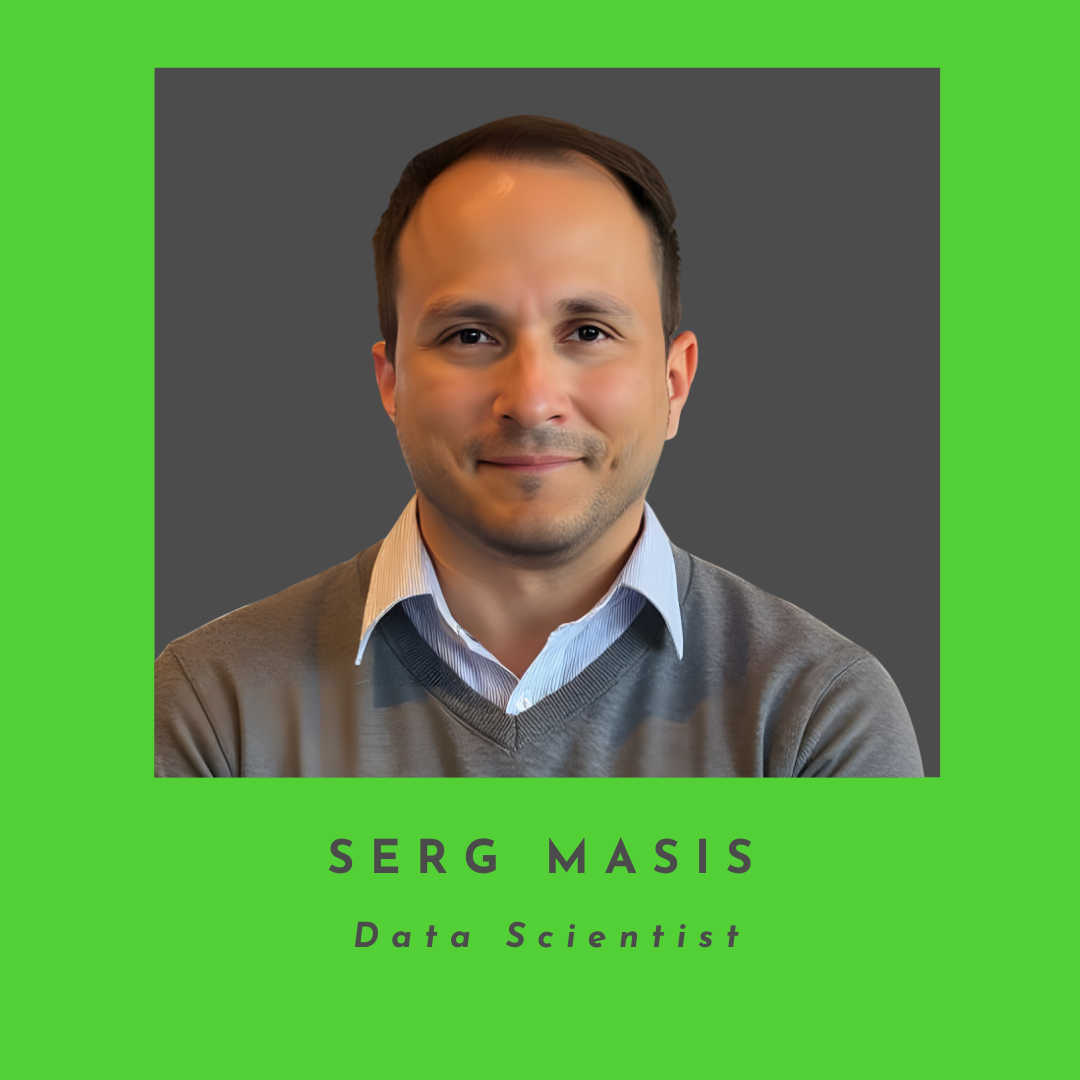
Data Scientist
In this episode, Kristin King sits down with Serg Masis, a data scientist at Syngenta, to explore how AI, data, and digital agronomy are reshaping modern agriculture. (Agronomy is the science of how crops are grown — soil, climate, plants, and farming practices working together.)
Serg brings an engineering mindset to AI, explaining it less like science fiction and more like a murder mystery, where multiple perspectives, incomplete information, and interpretation matter just as much as the data itself. Rather than treating AI as a black box, he breaks down how understanding why a system makes a decision is just as important as the decision itself.
Together, they talk about decision-making in farming, unintended consequences in complex systems, and why changing one thing in agriculture often creates ripple effects elsewhere. If you’re curious about how technology is quietly influencing what we grow, how we farm, and what ends up on our plates, this conversation will change the way you think about food and data.
---------------
Guest Contact Information
Guest Info — Serg Masis
Website: https://www.serg.ai/#about-me
Books & Writing: https://www.serg.ai/writing/
LinkedIn: https://www.linkedin.com/in/smasis/
Employer (Syngenta): https://www.syngenta.com/
---------------
Episode Key Highlights
00:11:00 — Why AI Is About Better Decision-Making, Not Replacing Humans
00:13:19 — The Three Inputs of Agriculture: Environment, Genetics, and Decisions
00:17:20 — Sustainability, Ecosystems, and Runaway Effects in Farming
00:25:33 — AI as a Murder Mystery: Interpretation, Bias, and Perspective
00:34:26 — Crop Collapse, Monocultures, and Why This Isn’t Science Fiction
---------------
📘 Sign up for early updates, exclusive previews, and launch news of Kristin’s book, “Securing What Feeds Us: Cybersecurity in Food and Agriculture” here.
---------------
🎤 Book Kristin Demoranville to Speak
To invite Kristin to speak at your conference, corporate event, webinar, or workshop, visit the website and submit a request.
---------------
🎤 Bites and Bytes Podcast Info:
Website: Explore all our episodes, articles, and more on our official website.
Merch Shop: Show your support with some awesome Bites and Bytes gear!
Substack: Stay updated with the latest insights and stories from the world of cybersecurity in the food industry.
Schedule a Call with Kristin: Share Your Thoughts
Socials: TikTok; Instagram; LinkedIn; BlueSky
---------------
🛡️ About AnzenSage & AnzenOT
AnzenSage is a cybersecurity advisory firm specializing in security resilience for the food, agriculture, zoo, and aquarium industries. AnzenSage offers practical, strategic guidance to help organizations anticipate risks and build resilience. Learn more about their offerings at anzensage.com.
AnzenOT: Industrial Cyber Risk — Simple. Smart. Swift.
AnzenOT is the SaaS risk management platform built to bring clarity and control to Operational Technology (OT) cybersecurity. Designed for critical infrastructure sectors, AnzenOT translates technical risk into clear, actionable insight for decision-makers. Explore the platform at anzenot.com.
For demo requests or inquiries, email stuart@anzenot.com or kristin@anzenot.com
Listen to full episode :
Episode Guide:
00:00:19 — Welcome and Episode Overview
00:01:19 — Favorite Food Segment (Bites & Bytes Tradition)
00:06:35 — Food, Culture, Authenticity, and Regional Identity
00:10:51 — Introducing Serg Masis and His Work in Data Science
00:11:36 — AI as Decision Support, Not Human Replacement
00:12:39 — What Digital Agronomy Really Means
00:13:19 — The Least Optimized Input in Farming: Decision-Making
00:14:40 — Mid-Episode Break and Community Message
00:15:50 — Making Sense of AI in Agriculture
00:17:04 — Scaling Food Production and Sustainability Tradeoffs
00:18:41 — Digital Twins, Modeling Soil, and Environmental Systems
00:21:35 — Predictive Analytics, Climate Change, and Farming Adaptation
00:21:41 — Interpretable Machine Learning and Serg’s Book
00:23:16 — Debugging AI and Why Models Aren’t Perfect
00:25:33 — AI, Interpretation, and the Murder Mystery Analogy
00:29:33 — Aggregation, Bias, and Human Limits in Systems Thinking
00:32:13 — The Future of Data and AI in Agriculture
00:33:55 — Sustainability Timelines and Global Food Risk
00:34:26 — Crop Collapse, Monocultures, and Seed Diversity
00:36:06 — Fisheries, Overexploitation, and Cultural Impact
00:38:17 — Closed-Loop Food Systems and Symbiotic Farming
00:39:07 — Consumer Education, Seasonality, and Abundance
00:40:37 — Curiosity, Nature, and Reconnecting with Food Systems
00:42:35 — Final Thoughts: Staying Curious About Food and Data
00:43:04 — Closing Thanks and Holiday Message
-
00:00:19 Kristin King
and welcome back to the Bites and Bytes Podcast.
00:00:21 Kristin King
I'm Kristin King, and today's conversation is one I'm really excited to share.
00:00:25 Kristin King
In this episode, I'm joined by Serg Masis, a data scientist and someone who thinks deeply about how data, AI, and decision making shapes modern agriculture.
00:00:35 Kristin King
We talk about digital agronomy, which is really the science of how crops grow from soil and climate to farming practices, and why better data isn't about replacing farmers, but about helping them navigate increasingly complex systems.
00:00:47 Kristin King
Serg has a way of explaining AI
00:00:49 Kristin King
from an engineering mindset that actually makes sense, comparing it to a murder mystery rather than a black box.
00:00:55 Kristin King
This conversation moves from food culture and curiosity to system thinking, unintended consequences, and why small changes in agriculture can create ripple effects across entire food systems.
00:01:06 Kristin King
If you've ever wondered how technology quietly influences what ends up on your plate or how we're going to keep feeding people in a changing world, this episode is definitely for you.
00:01:15 Kristin King
Let's get into it.
00:01:19 Kristin King
In Bites and Bytes tradition, we're going to start with favorite food and favorite food memory.
00:01:23 Kristin King
They do not need to be the same thing.
00:01:25 Kristin King
And if you can't think of anything on the spot, I'll also take my favorite food fixation that's current.
00:01:29 Kristin King
Go for it.
00:01:30 Serg Masis
Okay.
00:01:31 Serg Masis
My favorite food is hot peppers.
00:01:34 Kristin King
Really.
00:01:35 Serg Masis
Spicy.
00:01:35 Serg Masis
Yeah.
00:01:37 Serg Masis
I guess it does tie into my favorite food memory.
00:01:41 Serg Masis
I believe it was the first time I tried curry.
00:01:43 Kristin King
Any particular type of curry, the hotter the better or?
00:01:47 Serg Masis
No, it was, well, the thing is my parents were graduate students and they usually would ask our neighbors from across the hall,
00:01:58 Serg Masis
which was a friend of my mother.
00:02:00 Serg Masis
She was Pakistani.
00:02:01 Serg Masis
So I guess it was Pakistani curry.
00:02:03 Serg Masis
I don't remember what it was exactly.
00:02:05 Serg Masis
I think it was pirjani of some kind of rice and maybe some protein.
00:02:11 Serg Masis
But yeah, it was just so flavorful.
00:02:13 Serg Masis
And I've been in hook since to spicy food.
00:02:17 Serg Masis
I just love capsaicin and I'm fascinated.
00:02:20 Serg Masis
behind the history of it and, you know, how it's cultivated, where it's, I try to cultivate some of it by myself.
00:02:28 Serg Masis
Yeah, I just love it.
00:02:29 Kristin King
That's the only thing they did really good in my garden this year was hot peppers.
00:02:32 Kristin King
So I completely understand.
00:02:34 Serg Masis
And I had- Yeah, you know, awesome.
00:02:36 Serg Masis
One of the, they can be, they can be delicate for some things, you know, like environmental things, but something you'll notice is they won't attract insects.
00:02:45 Serg Masis
And I find that fascinating because as a protection biologically,
00:02:50 Serg Masis
they've developed toxicity towards insects and other animals.
00:02:55 Serg Masis
And somehow we gravitate towards that.
00:02:58 Serg Masis
The only species that actually consumes it.
00:03:01 Kristin King
That's funny.
00:03:01 Kristin King
I didn't think about that.
00:03:03 Kristin King
You're right.
00:03:03 Kristin King
I don't remember seeing any bugs on any of those plants, even when they were flowering.
00:03:07 Kristin King
I thought it was kind of odd.
00:03:08 Kristin King
But then again, I wasn't like monitoring them 24-7, so there could have been, I don't know.
00:03:12 Kristin King
But you're right, because they favored like my marigolds.
00:03:15 Kristin King
They're like next to it rather than those.
00:03:17 Kristin King
So that's really interesting.
00:03:19 Kristin King
I didn't think of it like that.
00:03:20 Serg Masis
And caffeine is the same, which is another favorite of mine.
00:03:24 Serg Masis
Anything with caffeine is also toxic towards insects.
00:03:28 Serg Masis
So that's...
00:03:29 Kristin King
Oh my goodness.
00:03:30 Kristin King
So everybody plant a coffee bush and hot peppers if you want to keep insects out of your areas.
00:03:35 Kristin King
That's actually really funny.
00:03:37 Kristin King
There was a documentary, I think, on Apple TV.
00:03:39 Kristin King
It may have been last year or the year before.
00:03:40 Kristin King
I could be really wrong on my ears, but it was talking about food.
00:03:44 Kristin King
I forget the name and the title of the documentary series, but they did an episode on hot peppers, specifically red ones.
00:03:50 Kristin King
were from a certain region in, I think it was Europe.
00:03:53 Kristin King
And it was super fascinating.
00:03:55 Kristin King
Oh, it's the paprika plant, the one that makes paprika.
00:03:57 Kristin King
And sorry, as I'm jogging my memory, I'm live here.
00:03:59 Kristin King
And I had no idea what was involved in that whole process and how coveted the process is, because it's like family generations passed on through generations.
00:04:09 Kristin King
And it's the way you make authentic paprika and you have to use these certain peppers and this certain method of grinding and all these things.
00:04:17 Kristin King
And I thought, wow, we have like these UNESCO heritage
00:04:20 Kristin King
sites, we need to have them for food.
00:04:22 Kristin King
This needs to be protected.
00:04:23 Kristin King
And it was really incredible listening to the stories.
00:04:26 Kristin King
And then they of course showed how it's used in different places in the world and regions.
00:04:31 Kristin King
how important that particular spice is.
00:04:33 Kristin King
I was just like, wow.
00:04:35 Kristin King
So when you said hot peppers, that's the first thing I thought of.
00:04:37 Kristin King
Granted, paprika is not super spicy.
00:04:39 Kristin King
It's just flavorful, really.
00:04:41 Kristin King
But yeah, I've recently run into my love of curry as well.
00:04:45 Kristin King
I think over the last few years, my partner's British and he's introduced me to various different types of curry and he cooks the curry every Friday night out of whatever particular recipe he finds that he's really fascinated by.
00:04:57 Kristin King
Or he's working through a series of different types of curries.
00:04:59 Kristin King
I'm not, I don't want like super hot.
00:05:01 Kristin King
I just want super flavorable.
00:05:03 Kristin King
So we have a little bit of a balance going on there where he likes them like five alarm fire bad.
00:05:07 Kristin King
Like I don't understand my face burnt off.
00:05:10 Kristin King
But it took me a while to get used to them because if you're not used to that on your palate, it's such a flavor explosion that it's almost a little bit offensive to your system.
00:05:18 Kristin King
And I don't mean that in a negative way.
00:05:19 Kristin King
You just don't know how to handle it because you start sweating and it's all these things.
00:05:23 Kristin King
But yeah, and I've been all over the world and had curry in many different places.
00:05:27 Kristin King
And the funny thing is probably one of the best curries I ever had, Indian curries, was actually
00:05:31 Kristin King
in Sweden, believe it or not.
00:05:34 Kristin King
So, which is kind of wild.
00:05:35 Kristin King
It's amazing how you can go to different places and they do authentic really interestingly and different, but it's still just as good.
00:05:41 Kristin King
So yeah, echo the curry thing for sure.
00:05:44 Kristin King
Like it's great.
00:05:44 Serg Masis
Yeah.
00:05:45 Serg Masis
Well, as much as I embrace like the hybrid
00:05:48 Serg Masis
cuisines that emerge from like local populations blending in with immigrant community tastes or to immigrant communities as it happens with Toronto with the Chinese and Indian having their own blend or there's there's also like happens that that you know immigrant communities come with the cuisine and have to adapt it to the local pellets and in some places the locals don't want that they want they want authentic and so that's that's why in some places you get something more authentic in some places
00:06:18 Serg Masis
you get less authentic.
00:06:20 Serg Masis
Not necessarily that I find that offensive in any way.
00:06:23 Serg Masis
I think, No, I think it's great.
00:06:25 Serg Masis
have emerged from that.
00:06:27 Serg Masis
Like we wouldn't have California rolls or Tex-Mex or anything like that.
00:06:31 Kristin King
Or any like Americanized Chinese food.
00:06:34 Kristin King
Yeah.
00:06:35 Serg Masis
Yeah, yeah, yeah, exactly.
00:06:36 Serg Masis
You know, yeah, I think that's great to some degree, but it's also good to kind of trace it back to its origin.
00:06:42 Serg Masis
I find that fascinating when I travel, you know, also going and seeing, okay, let me try this station.
00:06:48 Serg Masis
I find it so different from what I've already tried, which I thought was authentic, but maybe it was authentic, but that's another thing that's lost in that process, which is it's authentic for a region of that country, which is not necessarily the region you visited.
00:07:02 Serg Masis
So.
00:07:03 Kristin King
Yeah, that's true.
00:07:04 Serg Masis
There's just so much loss.
00:07:05 Serg Masis
You think, okay, this is Thai cuisine, but there's maybe like 100 different variants of what Thai cuisine means.
00:07:12 Serg Masis
And you're only familiar to probably the most prominent one.
00:07:14 Kristin King
Interesting, though, is when I traveled, obviously, I think...
00:07:19 Kristin King
I think traveling really opens up your palate, like you were just saying, in so many ways.
00:07:22 Kristin King
Because you can be exposed to plenty of food in your own country for the most part.
00:07:26 Kristin King
And usually there's immigrants that are there that provide you those meals, like we were saying.
00:07:29 Kristin King
But having an authentic experience in another country with the food that you thought tasted one way and was one way, and then it's entirely different way in another and tastes differently in some ways, was really eye-opening for me and really amazing.
00:07:42 Kristin King
Like Chinese food is not Chinese food in the US as it is to China.
00:07:45 Kristin King
It's entirely different.
00:07:46 Kristin King
I prefer Chinese food in China.
00:07:48 Kristin King
I mean,
00:07:49 Kristin King
I think it's amazing.
00:07:50 Kristin King
I can't eat sushi in the US because I've had proper sushi in Japan.
00:07:54 Kristin King
It's just wrecked me.
00:07:55 Kristin King
Like I can't, that doesn't look like sushi to me.
00:07:56 Kristin King
I can't eat it.
00:07:57 Kristin King
I'm sure the high-end restaurants do a great job.
00:08:00 Kristin King
that's great.
00:08:01 Kristin King
I'd be willing to sacrifice my palate for that.
00:08:03 Kristin King
But I couldn't just buy like store-bought sushi.
00:08:05 Kristin King
That's not sushi, that's just rice and stuff in it.
00:08:08 Kristin King
Like I can't.
00:08:09 Serg Masis
Yeah.
00:08:09 Kristin King
Or like ramen, for example.
00:08:11 Kristin King
Proper ramen done properly is entirely different than the pack of ramen you get in college, you know, or that kind of thing.
00:08:19 Kristin King
I think that it's so, I'm so grateful that I've been to those places and I've experienced those things.
00:08:26 Kristin King
I think people should try different things like that to understand.
00:08:30 Kristin King
And also gets to know the people that you're around.
00:08:32 Kristin King
And then you get to start to understand the ecosystem that they live in, what they have available to them, and how it's shaped their culture.
00:08:39 Kristin King
I think it's an important thing.
00:08:40 Kristin King
I love that we're having this particular conversation.
00:08:43 Kristin King
It's such a, I feel like we should talk about food like that more in terms of it's not just what we eat, it's how we feel.
00:08:50 Kristin King
And
00:08:51 Kristin King
and the culture behind it.
00:08:52 Serg Masis
Yeah, the exploratory nature of food is kind of lost when it's kind of, you know, pre-packaged and, you know, with these very generic names that don't really tell you anything about the history of it.
00:09:07 Serg Masis
Even for processed food, I find it fascinating, the history of, you know, sliced bread and how it came to be, even though,
00:09:16 Serg Masis
it's maligned for many reasons, nutritional.
00:09:20 Serg Masis
And otherwise, it's a convenience.
00:09:22 Serg Masis
But even the way sliced bread is done here is different than the way it's done in Japan.
00:09:28 Serg Masis
Oh yeah, absolutely.
00:09:30 Serg Masis
Or throughout the world.
00:09:31 Serg Masis
So it is interesting, you know, how the palate
00:09:35 Serg Masis
of these different cultures changes things, either more sweet or more savory or they like it not as processed or maybe they even process it more, like it's interesting.
00:09:47 Kristin King
I always find it really telling when someone says, try licorice, right?
00:09:52 Kristin King
Do you prefer the red licorice, which is more like the cherry berry for it or do you prefer the black licorice, which is more intense flavors and more, you know, sarsaparilla, maybe even root beer to a degree.
00:10:03 Kristin King
And it's interesting because people always turn their nose up at the
00:10:05 Kristin King
the black licorice.
00:10:06 Kristin King
And I say, do you know that this is like a super popular candy in certain countries?
00:10:10 Kristin King
Like this is it.
00:10:11 Kristin King
This is their favorite.
00:10:12 Serg Masis
Yeah.
00:10:12 Kristin King
And even even root beer, I've watched people from various countries try root beer for the first time.
00:10:17 Kristin King
And they're like, this is horrible.
00:10:18 Kristin King
And I'm thinking to myself, it's amazing because it's part of my childhood experience.
00:10:23 Kristin King
So I'm like, this is great.
00:10:24 Kristin King
And I love that kind of stuff.
00:10:26 Kristin King
So it was super interesting because we'd be like, oh yeah, of course I love our licorice, like Swedish fish and stuff.
00:10:30 Kristin King
And I'm like, yeah, well, black licorice is kind of a thing.
00:10:32 Kristin King
And like root beer and that whole flavor palette is different for
00:10:35 Kristin King
people.
00:10:36 Kristin King
So it always that fascinates me watching people make faces if they don't like something or if they or if they love it, just like this whole world explosion of excitement happens.
00:10:46 Kristin King
And that's what food does to people.
00:10:48 Kristin King
And it's it's so I just love that.
00:10:50 Kristin King
I just love that aspect of it.
00:10:51 Kristin King
Before we keep like going down this amazing conversation, quickly, let's have you introduce yourself to listeners.
00:10:57 Serg Masis
Okay, well, I'm a data scientist.
00:11:00 Serg Masis
I specialize in
00:11:02 Serg Masis
interpretable machine learning, agent tech AI.
00:11:05 Serg Masis
I'm kind of a tinker of different technologies.
00:11:08 Serg Masis
Long time been in the technology space.
00:11:11 Serg Masis
One could say in even the data space, because who hasn't?
00:11:14 Serg Masis
Tinkering with itself for the longest time, at the very least.
00:11:17 Serg Masis
Like now I do it with code and, you know, other means, you know, but it's, it's still like, to me, it's just a sense of exploration of data is, it's what drives me, the insights, the predictions, all these things.
00:11:31 Serg Masis
I think it's all,
00:11:32 Serg Masis
about making your decision making better.
00:11:34 Serg Masis
I think ultimately that's the goal.
00:11:36 Serg Masis
I think people think, okay, well, data's out or machine learning or AI is out to replace humans.
00:11:42 Serg Masis
I think it's just out.
00:11:43 Serg Masis
to enhance our decision-making process, hopefully for better outcomes in general, in business, but also at a personal level.
00:11:52 Serg Masis
I try that ethos even with my own decision-making.
00:11:56 Serg Masis
I think it helps me move forward with confidence, things that, you know, maybe a lot of people wouldn't think too much about, but I think that ultimately may have like a longer effect.
00:12:08 Serg Masis
Like for instance, choosing my son's pediatrician, you know, I might say, okay, well, let's just try some
00:12:13 Serg Masis
alternatives, but I just want to be confident I'm choosing the best one because there'll be a pediatrician for years to come, hopefully.
00:12:20 Serg Masis
And so I want to put everything in a spreadsheet and kind of figure things out, you know, from that angle.
00:12:26 Serg Masis
But I think you want that with anything, pretty much.
00:12:29 Serg Masis
And so that's what motivates me.
00:12:31 Serg Masis
I work at Syngenta, I probably should have led with that.
00:12:34 Serg Masis
Well, a leading agribusiness company, that's a connection with food as well.
00:12:39 Serg Masis
I work in digital agronomy, which is actually the part that touches the farm
00:12:43 Serg Masis
decision making.
00:12:45 Serg Masis
So like when we talk about the three kind of main inputs, well, if we think of it kind of like a very general level, you're talking about environment, you know, and you're talking about genetics, right?
00:12:57 Serg Masis
So you got the plant seed, you got the environment in which it grows, but then there's all these, this decision making input, you know, where to plant, how to plant, how to, how much to space in, you know, what products to apply, if anything, how to prepare the soil, if you prepare the soil.
00:13:13 Serg Masis
There's just so much decision making goes on.
00:13:16 Serg Masis
That's the other input, right?
00:13:17 Serg Masis
So there's just like 3 in that equation.
00:13:19 Serg Masis
And I work in the third one, which is like the least known or less like optimized of all three.
00:13:26 Serg Masis
Like we look at farming over the last 100 years.
00:13:29 Serg Masis
We've optimized environment, we've optimized genetics, but have we optimized decision making?
00:13:35 Serg Masis
We're still, a lot of farmers are still using 19th century techniques with tools from the 20th and 21st century.
00:13:43 Serg Masis
And so
00:13:43 Serg Masis
we want to bring it up to that level.
00:13:45 Serg Masis
And it's just a hard thing to do.
00:13:46 Kristin King
Yeah, no, for sure.
00:13:48 Kristin King
It's difficult to bolt in modern into legacy equipment, for sure.
00:13:53 Kristin King
It's done, we always kind of joke that it's done with bubble gum and shoestring or duct tape, you know, because it's that, it feels that way sometimes.
00:14:00 Kristin King
Getting people to transition from what's always been working to what has to work in the future because of the amount we need to feed people.
00:14:10 Kristin King
You know, we have a tremendous population in the world now that needs to be
00:14:14 Kristin King
Obviously, precision farming is going to help us with sustainability.
00:14:17 Kristin King
I also realize that there are listeners on here that consider that to be a hot button topic.
00:14:21 Kristin King
I'm not going to get into that right now, but just so everyone knows, we feel you.
00:14:25 Kristin King
I understand that there's a lot of emotions and frustrations around that when whatever country you're listening from, and I do acknowledge that.
00:14:40 Kristin King
Quick break, and thank you for listening.
00:14:42 Kristin King
If you're enjoying the show, please take a moment to like, comment, follow, and share it with someone who would appreciate it.
00:14:48 Kristin King
Every bit of support helps more people find these conversations, and I'm truly grateful for all the messages, the feedback, and the stories you've been sending to me.
00:14:57 Kristin King
Hearing about how these episodes resonate with you means more than you know.
00:15:02 Kristin King
And since we're heading into the holiday season, I want to encourage you to help where you can.
00:15:08 Kristin King
Consider donating to your local food pantry.
00:15:10 Kristin King
You can find one at findhelp.org.
00:15:13 Kristin King
Call a local farm and ask if you can sponsor a farm share for a family in need.
00:15:18 Kristin King
Localharvest.org is a great place to start.
00:15:21 Kristin King
Reaching out also to a local school to support their breakfast or lunch programs when the holidays are over, or simply being a grocery buddy for someone nearby who could use a hand.
00:15:31 Kristin King
Food insecurity isn't just an American issue, it's global.
00:15:35 Kristin King
And while not sponsored by any of these organizations, I generally believe that if we have the tools, resources, and access, we should use them to help make sure people have food.
00:15:44 Kristin King
Thank you for caring, and now back to the episode.
00:15:50 Kristin King
I think when people hear like AI and farming though, kind of freaked out, like we're going to have like crazy robots and it's going to be some seed out of the matrix harvesting people or I don't know what they're thinking, but it's not that crazy.
00:16:03 Kristin King
It's actually quite common sense based.
00:16:05 Kristin King
Like you said, there's so much data moving around that what are we supposed to do with all that data?
00:16:10 Kristin King
I know people automatically think data protection and they think privacy.
00:16:13 Kristin King
That's fine.
00:16:14 Kristin King
Those are great things to think about.
00:16:15 Kristin King
AI is the ability to take all that data and start making sense of it.
00:16:20 Kristin King
and ways that we probably haven't even thought of thinking about it.
00:16:22 Kristin King
I think that's what excites me about AI and data in general is how we can take it and make things better and learn from past mistakes faster because we have this non-emotional thing looking at it, if you will.
00:16:36 Kristin King
I shouldn't say thing, it's not a thing, it is a thing, but you know what I mean.
00:16:38 Kristin King
But we don't have that like non-biased way of looking at things.
00:16:41 Kristin King
And that's what I'm excited about for the farming communities is because maybe we can have some type of patterns between global climate change and weather and soil and animals
00:16:50 Kristin King
and all this other stuff.
00:16:51 Kristin King
And maybe there's things that we haven't thought of yet to start figuring out how we deal with the changing world, whether that's human driven or environmental driven.
00:17:00 Serg Masis
Yeah, no, obviously, like everything you say is like, right on point.
00:17:04 Serg Masis
I think it's just, there's, we've scaled things up, you know, with food production, with optimizing certain processes over the last 100 years, enormously.
00:17:16 Serg Masis
But we haven't thought of the sustainability component to a large degree, because
00:17:20 Serg Masis
As we've pretty much exhausted every piece of like cultivatable land or easily cultivatable land over that period of time, we haven't thought, okay, what does this mean in the neighborhood ecosystem in which this lives?
00:17:35 Serg Masis
You know, what does this do to the plants and animals that are nearby, the insects, and how does that affect the process?
00:17:42 Serg Masis
Because even as you're thinking, well, you know, if I make a good seed for this kind of soil, it should be good through and throughout.
00:17:50 Serg Masis
There are other things that like runaway effects that happen that are really hard to manage and to even predict.
00:17:56 Serg Masis
So how do you mitigate all those things in a very sensible way and still produce the same amount of food or even more?
00:18:04 Serg Masis
And that's come to be a really tough thing to do because there's a lot of things that can be done to mitigate effects, like some that are kind of natural and unnatural.
00:18:15 Serg Masis
Like if you can cultivate in the desert and bring the water there and in the desert, you're not
00:18:20 Serg Masis
kind of have a problem with insects and a lot of animals that want to feast on your food because they're not native to that place.
00:18:27 Serg Masis
But you're also kind of changing the landscape around and kind of having other effects.
00:18:32 Serg Masis
So I find it really interesting, you brought up all this AI and all these robots and all these other things, and these are awesome tools.
00:18:41 Serg Masis
But when it comes down to basics, it's all about how do we model this environment, this soil, create kind of a digital twin and kind of simulate
00:18:50 Serg Masis
what goes on behind the scenes and how do we optimize this, every kind of decision taken to kind of make the amount of food we need to make.
00:18:58 Serg Masis
Even if that means, okay, let's not produce food here, let's produce it somewhere else, you know, or let's produce at a different time or use like a different method, you know, that is more sustainable in the long run.
00:19:12 Kristin King
Yeah, I think the productive analytics of data is really fascinating when it comes to ag in general.
00:19:18 Kristin King
A lot of people don't even realize how that's been
00:19:20 Kristin King
been used currently.
00:19:22 Kristin King
An example would be different therapies that we've given cattle so they can be in high altitude or can stand at 102 degrees Fahrenheit and be fine.
00:19:30 Kristin King
There's different types of therapies that have done that.
00:19:32 Kristin King
And that comes from viewing data and these predictive analytics and things like that.
00:19:38 Kristin King
And with the way the world is changing, whether it's climate change or different types of human activity, we're going to have to be prepared to potentially make some adjustments to farming and raising of animals because
00:19:50 Kristin King
because we may have to do it in a different place.
00:19:52 Kristin King
Or you may not be able to grow Florida oranges in Florida anymore.
00:19:55 Kristin King
You might have Florida passion fruit or papaya, but you'll have Florida oranges in Ohio.
00:20:00 Kristin King
We're getting to that place where we're tipping scales a little bit to make adjustments.
00:20:05 Kristin King
I was having this conversation a couple days ago with someone who said, isn't it amazing that the food that we had when we were kids, whether that was 40, 50 years ago, is not the same food that we have now because of the way we process now at the optimal temperatures, the optimal speed, the
00:20:20 Kristin King
optimal ingredients.
00:20:21 Kristin King
Everything's just orderly, really orderly.
00:20:24 Kristin King
It's different because artisan is different now.
00:20:26 Kristin King
The way production is different.
00:20:27 Kristin King
The way we produce in the field is different.
00:20:29 Kristin King
And people want to point fingers that, oh, it was so much better back in the old days.
00:20:33 Kristin King
Okay, sure, but you can't mass produce like that.
00:20:36 Kristin King
It's not sustainable.
00:20:37 Kristin King
But that doesn't mean that farmers aren't people that care about the environment and they're not sustainable individuals.
00:20:42 Kristin King
They definitely are.
00:20:43 Kristin King
They do care about what's around them and what nature's doing.
00:20:45 Kristin King
I have
00:20:46 Kristin King
so much respect for the fact that they understand weather better than anyone else on the entire planet.
00:20:51 Kristin King
Farming understands weather.
00:20:53 Kristin King
They have four different apps on their phone.
00:20:55 Kristin King
They're savvy about it.
00:20:56 Kristin King
And it makes me laugh because I barely can understand my own, you know, because I look at one.
00:21:02 Kristin King
So clearly I haven't, I know nothing is what I always say.
00:21:05 Kristin King
But AI is going to be able to help predict weather patterns and all this other stuff around that too, to help farmers make better decisions about when they plant, when they harvest, when they go to water, when they should be spraying, when they should not be spraying.
00:21:17 Kristin King
All these things are going to come into play.
00:21:20 Kristin King
And I love that you're working in this, I mean, it's kind of this dynamic, like almost pioneering field in a way, because nobody's been looking at this.
00:21:29 Kristin King
and, or at least not to the level that they are now and the ability with AI moving forward.
00:21:35 Kristin King
And you also, you wrote a book on AI, didn't you?
00:21:38 Kristin King
did something to that effect.
00:21:40 Kristin King
Do you want to talk a little bit about that?
00:21:41 Kristin King
Because I think that's fascinating too.
00:21:42 Serg Masis
Well, yeah, like something that is said all the time about machine learning and AI, at least like.
00:21:49 Serg Masis
Let's call it deep learning, which is like probably the most complex algorithm or set of algorithms we have for developing AI systems.
00:21:58 Serg Masis
Like, it's a black box.
00:22:00 Serg Masis
Yes.
00:22:00 Serg Masis
Like, and we don't know what's going on.
00:22:02 Serg Masis
I mean, it sounds silly to say we build it, but we don't really know what's going on inside.
00:22:09 Serg Masis
The reality is, yeah, we can kind of, it's like a very complex system.
00:22:12 Serg Masis
You can look under the hood, but you know, it's, you won't understand what's going on because there's just so much.
00:22:20 Serg Masis
So there are ways of kind of trying to figure out what's going on.
00:22:26 Serg Masis
I say trying because it's like a lot of things in data.
00:22:30 Serg Masis
It's an act of interpretation.
00:22:32 Serg Masis
You don't really know for fact what's going on, but you can guess it to a pretty high degree of certainty.
00:22:41 Serg Masis
And some methods are more certain than others, but that's what my book is about.
00:22:46 Serg Masis
It's called Interpretable Machine Learning with Python, and it's about...
00:22:50 Serg Masis
that practice of looking under the hood.
00:22:53 Serg Masis
Because before, I worked for Syngenta, long before I had a startup, and I was in office in machine learning.
00:23:00 Serg Masis
We're talking like 2000 or so.
00:23:02 Serg Masis
And I'm like, I'm going to train this model and I'm going to put it here.
00:23:06 Serg Masis
And I, as a software engineer, I wasn't used to what came after, which was I got a ticket about something not working.
00:23:16 Serg Masis
And I was trying to figure out, what is going on?
00:23:19 Serg Masis
This model is supposed to be doing this, and I couldn't debug it.
00:23:23 Serg Masis
So for someone that's used to debugging something and just arriving to a line of code that says, okay, this is the culprit and I have to fix this, to realizing, oh, I hit a brick wall and there's a model here that won't let me get past this, and I can't figure out what's going on here, was like a very humbling time.
00:23:41 Serg Masis
And it wasn't until years later that I realized
00:23:44 Serg Masis
what the solution for that was.
00:23:48 Serg Masis
what are the set of techniques to kind of look under the hood and then as a good mechanic, figure out how to fix things.
00:23:55 Serg Masis
Because that's the other side of the coin, which is, it's not, unlike mechanics, there's not like a perfect solution.
00:24:03 Serg Masis
Because machine learning, AI, all those things aren't
00:24:08 Serg Masis
perfect solutions.
00:24:09 Serg Masis
They will never solve a problem 100%.
00:24:11 Serg Masis
You will never get 100% prediction, unless you're cheating, right?
00:24:16 Serg Masis
Because that's something that happens.
00:24:17 Serg Masis
Maybe you have what is called data leakage in your training data, and that's why you're getting 100% accuracy.
00:24:22 Serg Masis
But it's only on the test set.
00:24:25 Serg Masis
You won't get that in real world dynamics.
00:24:28 Serg Masis
I kind of equate, go ahead.
00:24:30 Kristin King
I was going to say, you just made me think of, I have this kind of thought in my head and I've never really said it out loud, so here we go.
00:24:36 Kristin King
I feel like AI, especially generative AI,
00:24:38 Kristin King
It's sort of like interpretive dance.
00:24:39 Kristin King
You kind of have to like be in the moment and present to understand what they're trying to display as they're doing this incredible interpretive modern dance.
00:24:49 Kristin King
Instead of like ballet is pretty straightforward, generally speaking.
00:24:52 Kristin King
Everybody knows what Swan Lakes looking like and how that's going to move.
00:24:55 Kristin King
But interpretive dance is sort of this, it makes sense.
00:24:59 Kristin King
It's happening in front of you, but it's a different way of looking at it.
00:25:03 Kristin King
And then you have to really think about it.
00:25:05 Kristin King
And you said it's about interpretation.
00:25:06 Kristin King
So I always think about like how AI is in generally just like interpretive dance.
00:25:11 Kristin King
You kind of have to take it with a grain of salt and kind of look at it in a different perspective rather than the standard way we always have looked at tools in general.
00:25:19 Serg Masis
Yeah.
00:25:20 Kristin King
Sorry, you just made me think that.
00:25:21 Kristin King
I was like, yeah, AI is like interpretive dance.
00:25:23 Kristin King
So I don't know if that's accurate, but that's how my mind registers it.
00:25:27 Serg Masis
No, it's a good point.
00:25:28 Serg Masis
I mean, there is a dancing component to it.
00:25:31 Serg Masis
I more equate it to like
00:25:33 Serg Masis
a murder mystery.
00:25:35 Serg Masis
That's awesome.
00:25:35 Serg Masis
That's great.
00:25:36 Serg Masis
Yeah, like there's actually, forget the Japanese movie, Kiro Kurosawa from the 1960s.
00:25:43 Serg Masis
Well, it's about a murder.
00:25:44 Serg Masis
And the interesting thing about murders is that if you have several people witnessing it, they'll have different
00:25:50 Serg Masis
perspectives and different stories.
00:25:52 Serg Masis
And they might use their biases and say, I think this was this person.
00:25:57 Serg Masis
And that is not only something that happens in Hollywood.
00:25:59 Serg Masis
That actually happens in real life quite a bit.
00:26:02 Kristin King
Oh yeah, that's human interpretation.
00:26:04 Serg Masis
Exactly, and that's something you find in data all over the place, depending on how you slice things, which is why data is so amenable for misinformation, because you can slice things in so many ways and validate a point.
00:26:17 Serg Masis
That isn't the most truthful way of kind of interpreting it.
00:26:20 Serg Masis
Because you can slice the data many ways, and you can pretty much come up with more likely several explanations, you know, that are truthful.
00:26:31 Serg Masis
enough to kind of say out loud and not get sued for it if that's sort of riskable.
00:26:37 Serg Masis
You know, like you could do that, but then there's other interpretations that are definitely misleading and definitely shouldn't be used, you know, from a statistic.
00:26:45 Serg Masis
And the same goes with machine learning and predictions.
00:26:49 Serg Masis
Like it is, I can't say with every level, it gets more complicated because like there's nothing like being like at the source.
00:26:58 Serg Masis
where data's coming in, whether it's machinery data or someone registering something that happened in a police report or something, that's the point of contact.
00:27:08 Serg Masis
That's when you know exactly what happened, right?
00:27:10 Serg Masis
If you witness it.
00:27:11 Serg Masis
If you obviously got like second-hand accounts, that's different, right?
00:27:14 Serg Masis
But that's where, you know,
00:27:16 Serg Masis
You can validate the data, but then it goes through the process where it's been stored, maintained, and so on.
00:27:22 Serg Masis
And then it ends up being transformed, put into machine learning models.
00:27:26 Serg Masis
And with each step, it gets degraded, you know, this idea of what is true, right?
00:27:32 Serg Masis
And it's not necessarily that it gets degraded in a bad way.
00:27:38 Serg Masis
It's just that it's just natural that when you aggregate data, you're not going to get truths about individual data points.
00:27:46 Serg Masis
you're going to get that truth in aggregate.
00:27:48 Serg Masis
And so nobody's creating machine learning models of one observation, right?
00:27:54 Serg Masis
That's not happening.
00:27:55 Serg Masis
You're creating, getting massive amounts of data and creating machine learning models on that.
00:28:00 Serg Masis
So you're getting, you know, an aggregate idea of what's going on.
00:28:04 Serg Masis
In the same way that when you're asking in a large language model something,
00:28:09 Serg Masis
if you're getting in aggregate, what would follow the next token, the next word in aggregate.
00:28:16 Serg Masis
And there's variation to it because it's inherently stochastic.
00:28:19 Serg Masis
So it's not always gonna be the same.
00:28:21 Serg Masis
So I can't tell you exactly what the next word would be, but it would be a likely word.
00:28:25 Serg Masis
I could tell you that.
00:28:26 Serg Masis
It's not gonna be gibberish, right?
00:28:28 Serg Masis
And so the thing is, like all these processes,
00:28:32 Serg Masis
They become aggregate.
00:28:33 Serg Masis
So it becomes a practice of deconstruction to then take, okay, I'm going to take the predictions of machine learning model and figure out what's going on here.
00:28:42 Serg Masis
Because I want to figure out basically what is this, not only the truth for this prediction, but predictions like it, like similar, like observations to the one I'm trying to predict for, right?
00:28:55 Serg Masis
So in a sense, you're pretty much going to trace it back to the training data and figure out, okay,
00:29:01 Serg Masis
what's similar to the training data that might have skewed this in this direction, doesn't necessarily make it wrong.
00:29:06 Serg Masis
It just means, well, maybe you don't have enough variation in the training data.
00:29:11 Serg Masis
Maybe the training data is already biased because it was biased from the source already.
00:29:16 Serg Masis
But you're all trying to trace it back to those origins.
00:29:20 Serg Masis
Because ultimately, that's what matters.
00:29:22 Serg Masis
But what I tell people about the misleading nature of aggregation is that humans aren't used to seeing information at that level and understanding it holistically.
00:29:33 Serg Masis
That's built in into our hardware, like when we were tribal groups, not smaller, and we could identify data points just by pointing them, right?
00:29:41 Serg Masis
And we didn't have to say, okay, well, this belongs to a larger group of people or of things that we can't possibly imagine.
00:29:48 Kristin King
I mean, that kind of goes back to not everyone's a systems thinker, right?
00:29:52 Kristin King
So if you aren't a systems thinker, it's hard for you to grasp that next layer out behind you or beyond that.
00:29:59 Kristin King
And those of us that are systems thinkers find it strange that people don't think like system thinkers.
00:30:04 Kristin King
And not in a bad way, just in a, wow, you think differently than me.
00:30:08 Kristin King
Okay, I don't know how to talk to you right now.
00:30:10 Kristin King
Let me figure out how to speak to you.
00:30:12 Kristin King
That happens quite frequently, actually.
00:30:13 Kristin King
And it's okay.
00:30:14 Kristin King
And this is why the world is the way it is and round and wonderful and beautiful.
00:30:26 Kristin King
Hi, we're Ans and Sage.
00:30:28 Kristin King
And if you're in food production, agriculture, and even running a zoo or an aquarium, you need to talk.
00:30:34 Kristin King
Because let's be honest, your operation relies on a lot more technology than most people realize.
00:30:40 Kristin King
Rain dryers, hatchery controls, life support systems for animal habitats, all connected, all critical, all often overlooked when it comes to cybersecurity.
00:30:51 Kristin King
That's where we come in.
00:30:53 Kristin King
At Anson Sage, we help industries that grow, feed, and inspire the world, manage cybersecurity and operational risks.
00:31:00 Kristin King
Without the fear tactics, the fluff, or the 200-page audit, you'll never read.
00:31:05 Kristin King
Whether you're producing milk, processing seafood, or running life support systems, we focus on what matters, keeping your operations safe, your people protected, and your business running, even when things go sideways.
00:31:17 Kristin King
And hey, we know not everyone on your team speaks cyber.
00:31:20 Kristin King
And because not everyone on your team speaks cyber, we've
00:31:23 Kristin King
We created a free resource library at ansandsage.com.
00:31:26 Kristin King
Inside, you'll find sector-specific infographs built for teams in agriculture, seafood, zoos and aquariums.
00:31:33 Kristin King
They're clear, practical, a little witty, and designed to help frontline teams understand the risks without needing a translator.
00:31:40 Kristin King
No logins, no e-mail required, no catch.
00:31:43 Kristin King
There's usable tools that make cybersecurity stick.
00:31:46 Kristin King
If you're responsible for keeping food moving, animals safe, and systems online, Ans and Sage is your partner in real-world resilience.
00:31:53 Kristin King
Visit AnsonSage.com to download your free infographs, book a consult, or just learn more about how we're helping critical infrastructures secure what matters most.
00:32:03 Kristin King
AnsonSage, helping the industries that grow, feed, and inspire the world to manage cybersecurity and operational risk.
00:32:13 Kristin King
I was thinking while you were talking, so just to swing it back a little bit into ag for a moment and kind of going back to more of the work you're doing, what do you see as the future for data and AI and agriculture moving forward?
00:32:24 Kristin King
I know that there's some really cool things that are happening in the background, but just curious what you think the future is going to look like.
00:32:29 Serg Masis
Yeah, I think it's, I'm hopeful of a lot of things in the sense that we have to come to terms of what kind of resources we can handle and we can manage, right?
00:32:39 Serg Masis
So believing in kind of fairy tales about, you know, like, let's just hit the water table
00:32:43 Serg Masis
and we'll have water there forever.
00:32:44 Serg Masis
And let's just, use these energy sources that are going to run out in very little time.
00:32:50 Serg Masis
go back to the idea that we have pretty much a nuclear power plant in the sky that's far greater than anything we could possibly generate on Earth.
00:32:59 Serg Masis
Let's just leverage that.
00:33:00 Serg Masis
We have plenty of wind, plenty of like tides, geothermal energy.
00:33:05 Serg Masis
It just makes sense to harness that for agriculture because it's the way the plants are thriving off that, those energy sources to begin with.
00:33:13 Serg Masis
So if we need to scale it, we should scale it with that.
00:33:16 Serg Masis
Obviously, the plants are not going to get, if we want them to grow in the crazy amounts we need them to grow year round, they're not going to get that from the sun alone.
00:33:25 Serg Masis
We have to maximize that in different ways, whether it's greenhouses or creating fertilizer, which takes up energy or things like that.
00:33:33 Serg Masis
But then we have to think about the runaway effects of putting too much fertilizer in the soil and how that affects everything else.
00:33:40 Serg Masis
So there's a lot of sustainability components.
00:33:43 Serg Masis
obviously it's, to me, it's not a black and white situation where we have to have it this way, or there's a gradual route there.
00:33:50 Serg Masis
But we shouldn't also think it's gradual, so we can take 200 years.
00:33:55 Serg Masis
No, I think it's probably something we have to think of doing more like in a concerted, like global effort to do in the next decades.
00:34:04 Serg Masis
Because I think it does, it's not like, if you've seen, I'm trying to think of the movie, it's about
00:34:13 Serg Masis
exploration of space and on Earth, like there's crop collapses.
00:34:17 Serg Masis
I don't know, have you seen it?
00:34:18 Serg Masis
I don't know.
00:34:18 Serg Masis
I'm not normally into space movies, so I'm sorry.
00:34:21 Serg Masis
Okay, doesn't matter.
00:34:23 Serg Masis
Well, the point is, it's not science fiction for me.
00:34:26 Serg Masis
It definitely can happen that crops will collapse.
00:34:28 Serg Masis
And it will collapse to a lot of multiculture crops, like bananas and crops that actually pretty much are the same clone.
00:34:37 Serg Masis
Those are the ones first to go.
00:34:38 Serg Masis
And the ones that are the same species
00:34:41 Serg Masis
And I think that's the thing that's lost in the discussion, which is there's good reasons to keep different species, keep the seeds, and keep them as backup and grow them for different things, find purposes for them.
00:34:55 Serg Masis
Just because who knows, maybe, one entire species gets wiped out and we still will need these staple crops for something.
00:35:03 Serg Masis
You know, like I think a lot of people would be sad if
00:35:06 Serg Masis
Bananas disappeared, but no, I want to be.
00:35:10 Kristin King
I'm allergic to them.
00:35:11 Kristin King
Goodbye, bananas.
00:35:12 Kristin King
I don't care.
00:35:13 Serg Masis
Okay.
00:35:14 Serg Masis
Well, I would be a little bit sad, but it's still.
00:35:17 Serg Masis
No, that's fine.
00:35:17 Serg Masis
I understand.
00:35:18 Kristin King
I respect people who eat them.
00:35:19 Serg Masis
It's not a staple crop.
00:35:20 Serg Masis
It's not a staple crop anywhere, I think.
00:35:22 Serg Masis
It's considered like a, you know, like an addition.
00:35:25 Kristin King
Yeah, no, and a lot of people don't even know that bananas are cloned either.
00:35:29 Kristin King
They have no idea that bananas are cloned of things.
00:35:32 Kristin King
And the movie you were talking about was Interstellar, by the way.
00:35:34 Kristin King
I quickly looked it up thanks to the power of Google.
00:35:36 Kristin King
And now I remember because I have seen that movie.
00:35:38 Kristin King
Yes, but you're so right.
00:35:39 Kristin King
But I think it's more of the stock crops that I'm worried about collapsing, right?
00:35:45 Kristin King
So like corn and rice and soy as just three examples out there.
00:35:50 Kristin King
Those would be devastating.
00:35:52 Kristin King
If we lose bananas, people will get over it.
00:35:54 Kristin King
You know, they'll be sad about it, but they'll get over it.
00:35:57 Kristin King
I think that those, or wheat too, I suppose, they should put wheat in there as well.
00:36:00 Serg Masis
Yeah.
00:36:02 Kristin King
Fisheries.
00:36:03 Kristin King
Fisheries.
00:36:05 Kristin King
Fisheries, yes.
00:36:06 Serg Masis
Like it might not be worldwide, maybe like an entire, ocean of fishes disappears.
00:36:13 Serg Masis
It's simply, you know, they can't thrive there.
00:36:15 Serg Masis
That would be devastating for cultures that depend on that.
00:36:18 Serg Masis
You know, I can't imagine the Japan without fish, you know, other people would be fine, you know, like I'll have beef instead, but like, it's just not,
00:36:28 Serg Masis
we should consider kind of balancing things out in that sense, and considering cultural implications.
00:36:34 Kristin King
Definitely, and I think that's why we have, like fishing stock limits.
00:36:37 Kristin King
You can't pull for certain periods of time.
00:36:39 Kristin King
You can't pull like pregnant lobsters, for example.
00:36:42 Kristin King
So fascinating how we just took and took and took and took, and we didn't even think, because we just expected abundance at a certain period of time.
00:36:49 Kristin King
And now we're like, oh, whoops.
00:36:50 Kristin King
It would have been nice if we could have had those data points.
00:36:53 Kristin King
back when the turning was happening, we maybe wouldn't have lost so many of these various different crops.
00:36:58 Kristin King
But that's why we have to do factory farming fishing now in terms of big schools of fish erased in farms, which is all IoT and all interconnected on the internet.
00:37:11 Kristin King
It's wild, actually.
00:37:13 Kristin King
Wild in like the best sense, not wild in like, oh God.
00:37:16 Kristin King
Like it's more like, this is cool.
00:37:18 Kristin King
We're using tech for these really great reasons.
00:37:21 Kristin King
but also for really sad reasons because we overfish, we shouldn't have done that.
00:37:24 Kristin King
Maybe someday we can reverse that.
00:37:26 Serg Masis
I see.
00:37:26 Serg Masis
Just going back into the original question, which was how do you see the future of farming?
00:37:32 Serg Masis
I think you make a very valid point about the fish.
00:37:35 Serg Masis
I think a lot of these things really like fish shouldn't be, I think, any different than the way we produce other animal, animal-based foods.
00:37:44 Serg Masis
We should have full control of the way it's done.
00:37:47 Serg Masis
We either do it in the natural way, you know, like people are doing with
00:37:51 Serg Masis
oysters, and it's actually good for the environment, or we contain it.
00:37:56 Serg Masis
And some people are literally containing it, putting it in a container.
00:37:59 Serg Masis
And I don't know if you've seen these container startups out there, but I find them fascinating where they'll have this symbiotic system where they have fishes that actually their waste goes to fertilize the soil that's beneath it, and it grows plants, and these plants
00:38:17 Serg Masis
feed the fishes and some of that, those plants go to the humans, obviously.
00:38:21 Serg Masis
And so you have this system where it's just completely contained.
00:38:25 Serg Masis
And we should be thinking more in those, that sense.
00:38:28 Serg Masis
Okay, it's that question, okay, this is the food I want, right?
00:38:31 Serg Masis
Which is the way we used to do it, which is like an outlook of complete abundance, which I like abundance, everybody does, but I think.
00:38:38 Serg Masis
Everybody likes abundance, yeah.
00:38:39 Serg Masis
We should be more thinking, okay, well, let's just play around with the seasons a bit more, figure out what's available and how we can work, you know,
00:38:47 Serg Masis
maybe there's things that can help us get avocados year round, but just think of how we can get avocados year round in a sustainable fashion.
00:38:55 Serg Masis
And if not possible, just live with the way it used to be, which you would only get a season of avocados.
00:39:03 Serg Masis
Yeah.
00:39:04 Serg Masis
And so I think that would make more sense.
00:39:07 Kristin King
It's consumer driven, I think A lot.
00:39:08 Kristin King
I think if consumers are more educated in the information we have available, and again, it goes back to disinformation, misinformation, people don't understand what's happening.
00:39:17 Kristin King
I think if we had a better understanding of those particular different data points,
00:39:21 Kristin King
maybe people will be a little bit more like, it's okay, I can wait for avocados until wherever, you know, it's okay.
00:39:26 Kristin King
I think that what you're describing, if anyone has ever been to Walt Disney World and been on the ride, the land, it's a little boat ride that's over by Soren, so if you ever do that ride, in Epcot,
00:39:39 Kristin King
It takes you on a little boat ride and it shows you exactly what you were just describing, how fish are supplying the nutrients for plants.
00:39:46 Kristin King
It's this really neat display.
00:39:48 Kristin King
And then they talk about it if you do the tour.
00:39:49 Kristin King
I think they also talk about it on multiple Imagineer type documentaries they've done as well.
00:39:55 Kristin King
They actually are doing a lot.
00:39:56 Kristin King
Disney's actually a full research house.
00:39:57 Kristin King
It's actually pretty incredible.
00:39:59 Kristin King
People don't even know that.
00:40:00 Kristin King
They're moving the needle on animal conservation as well as various different agricultural things and culture.
00:40:06 Kristin King
So if you get a chance to ever see that, it's worth the boat ride.
00:40:09 Kristin King
It's also air conditioned and cool in there and it's quiet.
00:40:12 Kristin King
So like...
00:40:13 Kristin King
You get a break if you need that.
00:40:14 Kristin King
But I immediately thought of that when you said it.
00:40:17 Kristin King
I was like, yes, absolutely.
00:40:18 Kristin King
I've seen it.
00:40:19 Kristin King
And it's great.
00:40:20 Kristin King
It's such a great way to do things.
00:40:21 Kristin King
It goes to show you how symbiotic relationships between certain elements, plant, animal, mineral, things like that are so important.
00:40:29 Kristin King
And again, we can't really do anything moving forward in the future without that data that you've mentioned.
00:40:33 Kristin King
So I think that is
00:40:35 Kristin King
such a great way to look at it, for sure.
00:40:37 Kristin King
Anything you want to leave before we sign off?
00:40:39 Kristin King
This has been a fascinating conversation, and you've definitely made me laugh, so I appreciate that.
00:40:44 Serg Masis
No, I think, well, I mean, the listeners of this podcast are probably pretty engaged with food and how it's produced and what goes into food and all these things.
00:40:56 Serg Masis
But there's a lot of people that haven't, they haven't put a lot of thought into that.
00:41:01 Serg Masis
So I would urge people to bring them into the conversation about food and not let like it be, driven by other things, like changes in geopolitics or supply chains and all that before they realize, oh, this comes from here.
00:41:16 Serg Masis
Because it is, it is,
00:41:18 Serg Masis
It is cool to actually engage with that.
00:41:21 Serg Masis
And even if it could become a hobby, planting some food in their backyard or some community garden or even just simply.
00:41:29 Serg Masis
paying attention, seeing these documentaries like you mentioned earlier.
00:41:33 Kristin King
Yeah, or even just taking a walk.
00:41:35 Serg Masis
Exactly.
00:41:36 Kristin King
I'm just taking a walk and like I live pretty close to an arboretum, you know, and it's an experimental farm as well.
00:41:42 Kristin King
And I think that if people took more time to walk through nature, because I was saying that on a walk recently, that I'm so grateful that I'm close to this type of space, open space, because if you're going to be in the city, you're not going to see it as much.
00:41:54 Kristin King
You kind of need to get out and remember what the cycles of life look like in nature and
00:41:59 Kristin King
Remember that it really is about that and not necessarily about the grind of a city or grind of your life.
00:42:06 Kristin King
And I think once you start to look at the natural cycles like that, I think you can be a little bit more open and start to see through some of the disinformation, misinformation a little bit better.
00:42:15 Kristin King
But yeah, you're right.
00:42:15 Kristin King
I love talking about food.
00:42:17 Kristin King
People always ask me crazy food questions anyways.
00:42:19 Kristin King
I'm not like a super educated person, but I know enough that I can be dangerous in my conversations.
00:42:25 Kristin King
And it sounds like you are too.
00:42:27 Kristin King
And it's such a,
00:42:28 Kristin King
I think if you stay with an open, curious mind, it just makes it so much more interesting, like you just said.
00:42:33 Kristin King
So that's fabulous.
00:42:35 Serg Masis
Yeah.
00:42:35 Serg Masis
Stay curious.
00:42:36 Serg Masis
That's the underlying message.
00:42:38 Serg Masis
Yeah.
00:42:40 Kristin King
That's great.
00:42:41 Kristin King
Well, thank you so much for your time.
00:42:42 Kristin King
I really appreciate it.
00:42:42 Kristin King
This was really great.
00:42:43 Kristin King
And I'm sure we'll probably have you back again because obviously this is a continuing conversation.
00:42:49 Kristin King
We're going to keep talking about data and AI and agriculture and food moving forward.
00:42:53 Kristin King
So thank you so much.
00:42:55 Serg Masis
Sure.
00:42:55 Serg Masis
Dr.
00:42:56 Serg Masis
Take care.
00:43:04 Kristin King
Before we wrap up, I just want to say thank you so much to SERG for such a thoughtful and generous conversation, and for helping make complex ideas about data, AI, and agricultural feel grounded, human, and accessible.
00:43:16 Kristin King
And to you, the listeners, thank you for spending your time here.
00:43:19 Kristin King
If this episode resonated with you, please like, comment, and share, or pass it along to someone who'd appreciate it.
00:43:25 Kristin King
Every share really does help more people find these important conversations
00:43:30 Kristin King
And I appreciate it more than I can ever say.
00:43:33 Kristin King
As you celebrate the holidays, I hope it's with great food, and that you feel a bit of pride knowing that there are people all over the world working hard to protect and secure the systems behind it, so we can continue keeping our traditions alive.
00:43:45 Kristin King
From me to you, happy holidays.
00:43:47 Kristin King
Stay safe, stay curious, and I'll see you on the next one.
00:43:50 Kristin King
Bye for now.
