
Ep. 043 - Food, Technology, and the Stories We Tell with Fiona Delaney
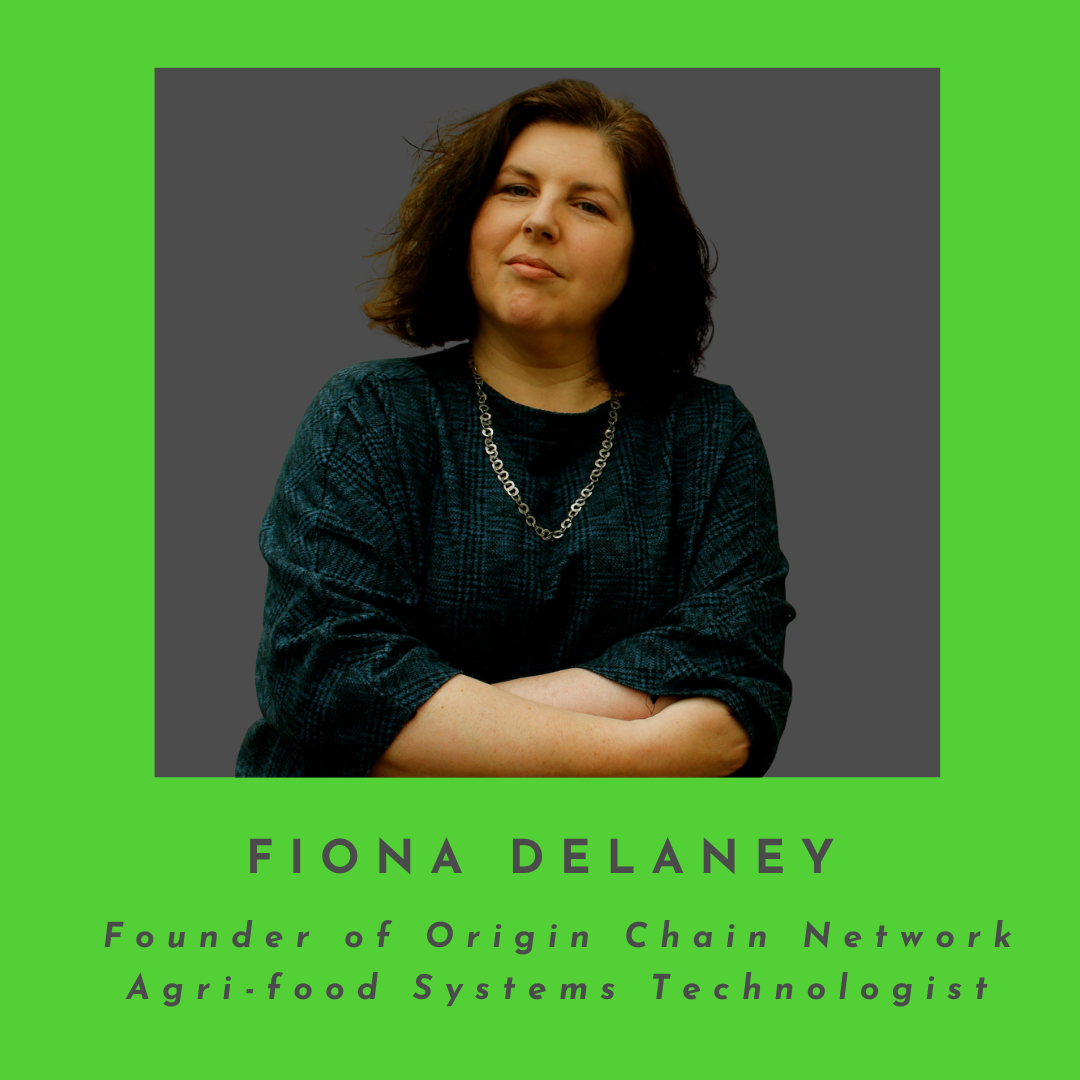
Agri-food Systems Technologist
What happens when we stop asking where our food comes from — and what we lose when we do?
In this season-closing episode of the Bites and Bytes Podcast, your host, Kristin King, sits down with Fiona Delaney, an award-winning agri-food technologist and founder of Origin Chain Network, for a reflective, story-driven conversation about food systems, agriculture, technology, and trust.
Recognized across Europe for her work at the intersection of agriculture and technology, Fiona brings a rare perspective shaped by lived experience, landscape, and community. Throughout the episode, she weaves technical insight with storytelling rooted in Irish culture and oral tradition, offering a thoughtful and grounding lens on modern food systems.
Together, Kristin and Fiona explore how food systems have become increasingly opaque, why context and trust matter more than tools alone, and how the stories we tell about food and technology influence the systems we build and accept — from digital infrastructure to cybersecurity parallels.
This episode closes Season 2 by slowing down and inviting listeners to reflect on what we choose to remember, and what we quietly forget about the systems that feed us. Whether you’ve followed the season from the beginning or are just joining now, this conversation brings the year’s themes in food and agriculture into a single, thoughtful moment. Enjoy.
---------------
Guest Contact Information & Notes
Fiona Delaney
Founder, Origin Chain Network
🌐 Website: https://originchain.network/
🔗 LinkedIn: https://www.linkedin.com/in/fgdelaney/
*Fiona references the Irish “Salmon of Knowledge” — a myth where wisdom comes not from power, but from care, chance, and connection to food and land.
---------------
Episode Key Highlights
00:01:41 — A First Food Memory: Fishing, Family, and the Meaning of Food
00:03:36 — The Salmon of Knowledge and Irish Storytelling Traditions
00:08:44 — From Software Engineer to Agri-Food Systems Builder
00:12:02 — Why the Food System Is a Giant, Fragmented Black Box
00:16:08 — Farming as Community, Not Just an Industry
00:19:04 — Trust Isn’t a Buzzword: How Farming Communities Read Risk
00:21:46 — The Demise of Local Food Systems and What Replaced Them
00:26:02 — “We Are Nurtured Into Not Looking at Where Our Food Comes From.”
00:27:08 — Why People Can’t Absorb the Full Complexity of Risk
00:43:46 — What We Choose to Remember, and What We Choose to Forget
---------------
📘 Sign up for early updates, exclusive previews, and launch news of Kristin’s book, “Securing What Feeds Us: Cybersecurity in Food and Agriculture,” here.
---------------
🎤 Book Kristin Demoranville to Speak
To invite Kristin to speak at your conference, corporate event, webinar, or workshop, visit the website and submit a request.
---------------
🎤 Bites and Bytes Podcast Info:
Website: Explore all our episodes, articles, and more on our official website.
Merch Shop: Show your support with some awesome Bites and Bytes gear!
Substack: Stay updated with the latest insights and stories from the world of cybersecurity in the food industry.
Schedule a Call with Kristin: Share Your Thoughts
Socials: TikTok; Instagram; LinkedIn; BlueSky
---------------
🛡️ About AnzenSage & AnzenOT
AnzenSage is a cybersecurity advisory firm specializing in security resilience for the food, agriculture, zoo, and aquarium industries. AnzenSage offers practical, strategic guidance to help organizations anticipate risks and build resilience. Learn more about their offerings at anzensage.com.
AnzenOT: Industrial Cyber Risk — Simple. Smart. Swift.
AnzenOT is the SaaS risk management platform built to bring clarity and control to Operational Technology (OT) cybersecurity. Designed for critical infrastructure sectors, AnzenOT translates technical risk into clear, actionable insight for decision-makers. Explore the platform at anzenot.com.
For demo requests or inquiries, email stuart@anzenot.com or kristin@anzenot.com
Listen to full episode :
Episode Guide:
00:00:19 — Season 2 Finale Introduction and Setting the Tone
00:01:25 — Opening the Conversation: Favorite Foods and Food Fixations
00:02:14 — Childhood Fishing and the First Taste of Self-Caught Food
00:03:36 — The Salmon of Knowledge and Cultural Memory
00:04:44 — Irish Storytelling, Folklore, and Identity
00:04:45 — Fiona Delaney’s Background and Family Roots
00:06:22 — Growing Food, Gardening, and Teaching Children Where Food Comes From
00:07:50 — City Life, Landscape, and Proximity to Knowledge Communities
00:08:44 — Founding Origin Chain Network and Early Agri-Tech Work
00:10:01 — Farm-Gate Data, Ownership, and Invisible Supply Chains
00:11:11 — Aging Farmers, Knowledge Transfer, and First-Generation Barriers
00:12:02 — The Global Complexity of Modern Food Systems
00:12:47 — Risk, Sales Culture, and How Trust Is Really Built
00:14:04 — Season 2 Reflection and Transition to Season 3
00:14:46 — How Farmers Actually Think About Time, Weather, and Risk
00:16:08 — Community-Driven Systems and Collective Decision-Making
00:16:39 — Why Smaller, Localized Tech Approaches Work Better
00:18:02 — Landscape-Based Agriculture and Regional Nuance
00:18:56 — Trust as a Prerequisite for Technology Adoption
00:19:57 — Connectivity, Cyber Risk, and Why Dairy Is Targeted
00:21:12 — Activism, Misinformation, and Physical Risk to Farmers
00:21:46 — The Collapse of Local Food Systems
00:23:05 — Monoculture, Overproduction, and Export Economics
00:25:16 — The Myth of “One Cow, One Product.”
00:26:02 — Opening the Black Box of Supermarket Food
00:26:56 — Disconnection, Shock, and Cultural Distance from Slaughter
00:27:08 — Why Humans Can’t Take All the Risk In at Once
00:28:22 — Climate Change and Farmers on the Front Lines
00:29:02 — Seasonal Eating, Local Food, and Health
00:30:18 — Normalizing Convenience and Global Food Access
00:31:39 — What Cybersecurity Can Learn From Food Systems
00:32:08 — Farmers Markets, Distribution, and Consumer Choice
00:33:52 — The Economics of Direct-to-Consumer Farming
00:35:17 — Why Systems Are Too Big to Re-Engineer
00:37:42 — Corporate Concentration in the Food System
00:38:18 — Privilege, Access, and Food Availability
00:39:22 — Travel, Food, and Cultural Signals
00:40:21 — Food Manufacturing, Process, and Industrial Curiosity
00:41:34 — Human Ingenuity, Agriculture, and Technology Evolution
00:42:14 — Generational Knowledge and Educational Mobility
00:43:46 — Memory, Forgetting, and the Role of AI
00:44:55 — AI Fatigue and the Need to Move Past the Hype
00:45:21 — Disinformation, Deepfakes, and Critical Thinking
00:47:04 — Cognitive Load, Risk, and “Just Make It Work” Culture
00:48:23 — Health, Addictive Foods, and Systemic Harm
00:49:26 — Social Engineering, Conditioning, and Attention Capture
00:50:42 — Accountability Without Judgment
00:51:31 — Every Business Is Now a Digital Business
00:52:02 — Entrepreneurship, Technology, and Making a Living With Meaning
-
00:00:19
Welcome back to the Bites and Bytes Podcast.
00:00:21
I'm your host, Kristin King, and happy New Year.
00:00:25
This episode is a special one, and I know I say that quite frequently, but I really do mean it this time.
00:00:30
It's the final episode of season 2, and I chose it with a lot of intentionality because sometimes the best way to close a year isn't by speeding up, it's by slowing down.
00:00:40
Today's conversation is with Fiona Delaney, founder of Origin Chain Network, and someone whose way of thinking and storytelling really stays with you.
00:00:49
Fiona,
00:00:49
doesn't just talk about food and technology.
00:00:51
She talks about the land, memory, community, and what happens when systems grow so large that we forget the people inside them.
00:00:59
This episode weeds together so many of the questions we've been circling all season about food systems, technology, trust, and the stories we tell ourselves about how it all works.
00:01:09
Whether you've listened to every episode this year, or you're just finding the podcast now, this conversation gives you a moment to pause and reflect.
00:01:16
Season 3 is coming, and I'm generally excited about where we're
00:01:20
headed to next.
00:01:21
But first, settle in.
00:01:22
I think you're really going to enjoy this one.
00:01:25
I love when I start an interview with someone and I didn't hit record and they've said some glorious gem things already and I'm like, crap.
00:01:32
So here we are.
00:01:33
But we're going to quickly start and then hopefully we can get back to those gem moments and I'm sure we will.
00:01:37
Favorite food and favorite food memory.
00:01:39
They do not need to be the same thing.
00:01:41
Favorite food, I don't know, I can't pick.
00:01:43
Do you have a favorite food fixation currently?
00:01:44
Are you stuck on something at the moment?
00:01:46
Things like seeds, nuts, seeds.
00:01:49
Yeah.
00:01:49
anything that is giving me more bang for my buck in terms of nutrition, an omega-3 and that sort of thing.
00:01:55
I'm like super into trying to find natural ways to supplement the supplements or avoid the supplements.
00:02:04
So maybe that intelligent micro nutrition, not that I'm hugely intelligent, but I'm curious about it and exploring it.
00:02:11
So maybe that's my food fixation right now.
00:02:14
My favorite food memory though is, and I bet if you have like a farming community or
00:02:20
outdoorsy community that listens to your podcast.
00:02:23
My favorite food memory ever is going fishing with my dad.
00:02:26
I was really young.
00:02:28
Well, he was kind of young too then, I guess.
00:02:30
And it was my first time going fishing with him and, you know, digging up worms and trudging the fields and heading down to the river and finding a good spot and all that kind of stuff and casting my little worm into the river and catching a trout.
00:02:46
Wow.
00:02:47
And yeah, and I reeled it in myself.
00:02:49
I think
00:02:49
I think I was maybe 5.
00:02:51
And tredging back up the fields, my dad having killed the fish, which was a little bit traumatic.
00:02:58
But anyway, brought it home and my mom, my dad had caught some fish as well.
00:03:02
And we brought the fish home and my mom cooked them for breakfast.
00:03:06
And I can just remember the taste of the crispy skin and the beautiful, beautiful, tasty flesh and just licking my fingers and being so proud that I had, like, that this was what fish that you catch yourself tastes like.
00:03:24
The freshness, the crisp, and then your mom cooks it with love and you're like, I'm the eldest, so I was like providing for my siblings.
00:03:31
I felt very untrue, to be honest.
00:03:33
That is my favorite ever food memory.
00:03:35
And
00:03:36
I don't know if you know this, well, I'm Irish, and we have this old myth, which is about the salmon of knowledge.
00:03:42
And you can Google it if you want to, but anyway, so there's this powerful story about, you know, like a warrior who comes to know it all, the knowledge in the world, because he ate his fish.
00:03:54
Not his fish, actually, it was his boss's fish.
00:03:57
He was cooking it for his boss and burnt his finger and kind of, you know, put his thumb in his mouth, and that's why he got all the knowledge and his boss didn't.
00:04:04
So there's all this little
00:04:06
trickster fish lore that I kind of love.
00:04:09
And obviously, I see myself as a bit of a warrior or a bit of a pioneer.
00:04:13
It was probably a better way of saying it.
00:04:15
I'm not so much of A fighter, but.
00:04:17
You have to love all of the wisdom fables from Irish culture, because there's one for everything, I swear.
00:04:23
And you'll be having conversation and it's like, yes, that reminds me of this.
00:04:26
And the fable comes out and you're like, wow.
00:04:29
I've never thought about the swans, the children of Lear.
00:04:33
Boy, it's amazing.
00:04:34
I love it.
00:04:35
And it's such an amazing part of the culture, the storytelling.
00:04:39
It's just, it comes across in the music, it comes across in everything really, and it's there.
00:04:44
Go ahead and introduce yourself.
00:04:45
Yeah, one bit down.
00:04:47
So yeah, my name's Fiona Delaney.
00:04:49
I am a family lady.
00:04:52
I have two teenage boys, come from a pretty big Irish family, very, very close, very close to the land.
00:04:59
My father grew up in Dublin, but his parents were both from different parts of the country and his father was from County Kerry.
00:05:06
Myself and my cousin Brendan have taken over that farm and we are, he lives down there and he runs a tourism business like seaweed baths, which is seaweed baths for anybody who's going to be in County Kerry.
00:05:20
Okay.
00:05:21
And yeah, so we are looking at rewilding that.
00:05:25
It's so it's wetlands, it's converting back to wetlands.
00:05:27
My grandmother was
00:05:29
from County Roscommon, which is a very, very rural area.
00:05:32
It's quite one of the lowest populations in Ireland.
00:05:34
And then on my mom's side, she grew up on a farm in the Midlands in County Tipperary.
00:05:39
And she was the youngest of nine.
00:05:41
So there's a whole load of us.
00:05:43
And we, I guess we, the extended we, all, like my mom's siblings, traveled all over the world.
00:05:49
Her father passed away when she was quite young.
00:05:51
So one of her sisters ended up in South Africa.
00:05:54
Another brother was in Australia, another brother was in Canada.
00:05:57
Some of their kids are in the US.
00:05:59
Canada, Australia, Singapore, I think.
00:06:02
I mean, really all over the world.
00:06:03
So I have this cousins WhatsApp group.
00:06:06
I know when every time somebody has a birthday, it's all the timeline of all around the world where everyone, hey!
00:06:12
Happy birthday, happy birthday.
00:06:13
That's great.
00:06:14
So all of that closeness to the land, closest to your family really means a lot to me and has really guided me throughout my life.
00:06:22
One of my mom's elder brothers lived with us when we were growing up.
00:06:25
We grew up, I grew up outside of Dublin in the countryside and my uncle Tommy taught me how to grow food, you know, potatoes, carrots.
00:06:34
We had an orchard, all that kind of stuff.
00:06:37
So I literally grew up pulling food from the dirt.
00:06:42
Yeah, and still to this day, while I live in the city center, I live in a townhouse, I've got a front and back garden.
00:06:52
We grow like, loads of herbs, loads of fruit.
00:06:55
We sometimes we grow vegetable if we feel like it, like winter brassicas, that kind of thing.
00:07:00
Really, when the kids were younger, it was too, because I really loved it, like showing them where food comes from, demystifying that.
00:07:07
All the strawberries, raspberries, blackberries, black currants, gooseberries.
00:07:12
The kids, when they were fruiting, all the boys would just run outside and their friends would come around just to pick all the fruit, all that kind of stuff.
00:07:22
And I love that.
00:07:22
I really love that.
00:07:23
And then of course, they turned into teenagers and now they're just online.
00:07:27
It's too cool.
00:07:28
Too cool to be out in the garden.
00:07:29
No, I get it.
00:07:31
Yeah.
00:07:32
But you know what?
00:07:32
They'll appreciate it when they get older because they'll go back to it, I'm sure.
00:07:35
I think.
00:07:36
That's stuck.
00:07:37
I don't know.
00:07:38
I do my best.
00:07:39
I've got strong values.
00:07:41
Really, as in, where do I come from?
00:07:44
I kind of feel like I come from the land.
00:07:47
Landscape, I think, makes a person.
00:07:50
It helps form your mind.
00:07:53
I love living in the city.
00:07:54
I don't regret at all moving out of the countryside and into the city.
00:07:59
I'm a city girl.
00:08:00
I love the busyness.
00:08:03
I love the facilities.
00:08:05
I love all the art galleries, the activities.
00:08:09
proximity to knowledge bases or communities like hacker communities or meetups or all of that kind of stuff.
00:08:20
So all of that, I love all that.
00:08:22
Trying to balance now, being an entrepreneur.
00:08:27
Being a mom, I'm sort of uncompromising, but I take a farmer's attitude to it.
00:08:32
Get up early.
00:08:34
Maybe if you have to snooze in the middle of the day, go back out later and milk the cows.
00:08:39
So I just, I take it as a sort of a 24-7 type thing.
00:08:44
Not always sure that's the healthiest way.
00:08:46
but I'm just doing my best.
00:08:48
So I'm a software engineer.
00:08:50
So I set up my agri-food company called Origin Chain Networks in about 2017, I think.
00:08:55
Ultimately, we incorporated in 2019, agri-blockchain, trying to fill that niche with kind of public admin adjacent data sharing.
00:09:06
We picked a very bottom-up type of business model, working with farmers, trying to facilitate them
00:09:14
in digital transformation, understanding that farm data, both data about actions that they took or decisions that they made lead into actions that they didn't take, which, sometimes that is like official for your carbon footprint and those sort of environmental type things, exploring with them how to do that in a meaningful way that would build either new revenue streams or build reputation for them.
00:09:39
So hence the blockchain piece around reputation and trust.
00:09:43
Got to work
00:09:44
with so many amazing people.
00:09:46
The market didn't move the way I thought it would, you know.
00:09:49
I get it.
00:09:49
Things were way slower.
00:09:51
Public amend stuff, public sector adjacent stuff moves way more slowly than I think anybody coming from a pure tech background really can understand.
00:10:01
And then of course in Ireland, but Ireland is not the only country before the farm gate, like before your food leaves the farm gate, that side of things are something of a mystery to supply chain transparency.
00:10:14
Everything that happens after the supply, after the farm gate is also a mystery, but a different type of mystery.
00:10:21
Yes, that's more like a black box.
00:10:23
Whereas the data captured on farm tends to be compliance-based data.
00:10:29
If you have, let's say, a financing deal and your robotic milking parlor is with, you know, some kind of a big tech company, you're generating all this data, which is about your farm, about your livestock, but it's not yours.
00:10:47
And as far as I'm concerned, I'm not saying it's terrible and I'm not saying it's the worst.
00:10:51
And of course, who, you know, your livestock benefits maybe, particularly if we're looking at predictive analytics, if they are worth it.
00:10:59
and other stuff like that.
00:11:02
And of course, things like robotic milking parlors are game-changing for farmers and for part-time farmers, for older farmers.
00:11:11
I mean, I'm not sure about the US, but definitely in Ireland and Europe, the age of the average farmer is in their 50s, like late 50s.
00:11:21
I think it's 58 is the median age right now.
00:11:23
So obviously we know we're going to have people retiring in the next 10 to 15 years, which is
00:11:29
kind of terrifying and why we need more first Gen.
00:11:31
farmers or second Gen.
00:11:32
to kick in, but we need to make it easy for people to step into it and it's not.
00:11:36
And that's hard.
00:11:37
How do you transfer so much legacy knowledge if you're outside of family?
00:11:41
That's difficult.
00:11:42
And it's going to take, I know a lot of people want to throw tech at it, which I think is fine.
00:11:46
Throw tech at it if you want.
00:11:51
Especially if you're a first Gen.
00:11:52
farmer, like you're going to need the tech.
00:11:53
You're not going to be able to, you know, you're going to make friends, of course, and you're going to talk to people at the feed store or the co-op.
00:11:59
but it's going to be a bit of a struggle to get going without it.
00:12:02
And it's so interesting that you say what you're saying about we don't really know what's going on in certain places because our food system is 1 big, giant, complex mess that we made ourselves.
00:12:12
And it's a global problem.
00:12:13
It's not just related to any country specifically.
00:12:16
We try to figure out how one thing gets to the other place and all the 15 million stops in between.
00:12:21
It doesn't just go from farm to the store.
00:12:24
It goes different places in between.
00:12:26
We were just saying this before we hit record that it'd be really great.
00:12:29
if they taught our modern food supply or how our modern world works in schools earlier, because having to explain it to grown adults is really hard, partly because people only have so much imagination, I think, and they don't really want to know what they don't want to know.
00:12:43
if they know it, then they can't unknow it.
00:12:45
Yeah, well, and that's hard.
00:12:46
For sure.
00:12:47
And I definitely think that's a thing about risk, let's say technical risk.
00:12:52
So you've got this, you've got all the salespeople who are the sons of farmers coming out there selling you
00:13:00
AI, artificial insemination, yes, whatever, they're coming to sell you this thing and they're giving you the spiel and the farmer, if he likes the cut of you, is maybe bringing you into the farmhouse and you're having a cup of tea and you're having a chat and he's picking your brain and what college courses you did because he's got his sons coming up or his grandsons or granddaughters and he's, it's a quid pro quo scenario, right?
00:13:26
But the deal is done on
00:13:29
looking in your eyes.
00:13:30
It's old school stuff, right?
00:13:34
And those boys are not going in there talking about technical risk.
00:13:38
Salespeople don't talk about risk in that way.
00:13:45
Thanks for being here, truly.
00:13:47
I know there are a lot of things competing for your attention, and I appreciate you spending some time with me in the show.
00:13:52
If this conversation is resonating, take a second to like, comment, and share the episode.
00:13:57
That's how this podcast keeps finding new ears and new conversations that people definitely need to hear.
00:14:04
This is the last episode of season two.
00:14:06
Wow.
00:14:06
And as we head into the third year of the Bites and Bytes Podcast, I just want to say thank you again.
00:14:11
Thank you for listening.
00:14:12
Thank you for your notes, your messages, your stories on how you found the show, or what made you curious.
00:14:17
and also all your thoughtful questions.
00:14:19
Season three is going to look a little different, but in a really good way.
00:14:23
We're still going to talk about technology and cybersecurity, food and agriculture, and we're going to chase curiosity even harder, from seafood to bugs, and even more people who support agriculture and the food industry.
00:14:34
Season three is about asking better questions and being brave enough to follow them into the unexpected places.
00:14:40
I'm really excited about what's ahead.
00:14:42
Now let's get back to the conversation.
00:14:46
And how does a farmer know?
00:14:48
A farmer is burdened by immediate, like short, medium and long term requirement, like task sets.
00:14:57
They are thinking of the seasons, they are thinking of like, you know, juggling.
00:15:02
if maybe they're trading off with their neighbor about, the harvester or something like that.
00:15:08
there's like local deals all the time like that and trying to squash in with the weather.
00:15:13
Weather is like a huge thing for us over here.
00:15:16
They're meteorologists, I swear.
00:15:17
They know whether, if you really want to know about the weather and what's going on, you talk to a farmer, they know what's going on.
00:15:22
They have all the devices, all the things, all the apps on their phone, and it's more than one app, and they know it all.
00:15:28
And I think that we should be hiring farmers as meteorologists
00:15:32
moving forward.
00:15:33
For sure, for sure.
00:15:35
But they're doing it because of what they're doing it for.
00:15:38
Of course, yeah.
00:15:39
So it's over here, it's grassland management, silage, cutting silage.
00:15:43
When are you going to cut your silage?
00:15:46
Can you get it all in before the rain?
00:15:48
Usually no.
00:15:49
And the answer is no to that.
00:15:51
So like all this kind of stuff, but they're thinking on three wavelengths, short, medium, and long.
00:15:57
And you're coming along going, if you ever bought our system, this counteracts technical risk from these other kind of systems or the, you know, and it's like, what?
00:16:07
No, no.
00:16:08
Creating the space for these kind of conversations, it has to be ecosystem plays, has to be community driven.
00:16:16
community need because the communities are farming communities.
00:16:19
That touches on that idea of the aging farmer, what that does to community, families, to opportunities.
00:16:27
They do move together.
00:16:28
They learn and move together.
00:16:29
It is like a hive operation in a kind of a way.
00:16:33
And I think once you get to understand that, you can work in a new way.
00:16:39
I sort of transitioned away from big system thinking into smaller niche approaches, working with smaller industries in smaller areas, not trying to build something for the wine industry, trying to build something for the wine industry around Tarragona near Barcelona and Catalona.
00:16:56
Yeah, that makes sense.
00:16:57
This is the funnest stuff.
00:16:58
Yeah.
00:16:58
Especially since tackling the whole would just be way too much anyways, because like we've already said,
00:17:03
It's huge.
00:17:04
The supply chain is so complex.
00:17:06
Well, it's too generic.
00:17:08
That's true.
00:17:08
The thing, it's too generic.
00:17:11
I think farming and agriculture, agri-food systems are landscape-based, location-driven, community, landscape, climate, like microclimate around certain, you know, the mountains around Barcelona, that kind of thing for the wine industry.
00:17:26
It's, you need to take cognizance of these things, you know, if you're a user first.
00:17:31
So that's what we were doing.
00:17:32
We built
00:17:33
some really beautiful stuff.
00:17:35
Some of it is still used.
00:17:36
It's like getting your song on the radio.
00:17:38
It's like amazing.
00:17:41
And a lot of the stuff that we built because of the way our funding came through through the European Commission, a lot of it is open source builds, which is very gratifying, I think.
00:17:50
I feel, yeah, I like that.
00:17:52
kind of.
00:17:53
I think that's great because it's about community still in a way.
00:17:56
So that fuels your passions in a way and stays to true to your landscape, if you will.
00:18:02
I love that.
00:18:02
And you said something
00:18:03
couple of minutes ago that made me kind of click a light bulb.
00:18:05
When I was really trying to, when I was trying to understand agriculture as a whole and really trying to understand our supply chain in general, a farmer had said to me, I don't know, a long time ago now, you can't expect a farmer to be the same in one region as you are in another.
00:18:21
Because everybody looks at like farms as like a flat thing.
00:18:24
Like there's a barn, there's a silo, there's fields and there's animals and there's crops and da, da, da.
00:18:29
And you can't look at it like that because you might have sheep over there.
00:18:32
You might have no crops.
00:18:34
It might be a full production for animals.
00:18:36
It could be, you know, who knows?
00:18:37
All these things.
00:18:38
And it wasn't until my like little brain like was like, click.
00:18:41
And I was like, oh my goodness.
00:18:43
So you can't, you have to have a different niche, nuanced conversations with people.
00:18:47
Because if you're talking to the sheep farmer as if he was doing corn, like that doesn't, that doesn't even, that doesn't make sense.
00:18:55
Like there's no computing there.
00:18:56
And you also make them feel like they don't matter because
00:18:59
You said it several times in community, but I think also in that community, it's about trust.
00:19:04
And if you don't build that trust, and I know people are like, oh, you know, digital trust and all those risk trust, and trust is thrown around now in our industry like it's some buzzword of awesome.
00:19:15
It's just a word.
00:19:16
It means what it means.
00:19:18
If we don't have it, then you're not going anywhere.
00:19:20
It's not gonna happen.
00:19:21
And this community can see and smell BS so fast.
00:19:27
faster than the other industry.
00:19:28
And if you even try to go in there and be like, like you would be as a tech or a cyber person, forget it.
00:19:37
They won't even give you a cup of tea.
00:19:38
You need to leave.
00:19:40
And it's something that I've keep in the back of my head a lot of how would I want someone to come into my space like this if I had this set of conditions, like you just listed off all these conditions that they're worried about.
00:19:51
And then you add other little nuance layers of different things and the attack factors that are happening in certain places
00:19:57
like dairy is super under attack right now.
00:19:59
And it also makes sense because they're probably the most connected at the moment in terms of the equipment that's being used and probably one of the most beloved industries of agriculture because cheese and milk and everything in between.
00:20:11
I mean, cottage cheese is like a total thing over here in the US.
00:20:13
Like all these things, right?
00:20:14
If you didn't have that, people are going to freak out.
00:20:17
And so of course, why wouldn't they, of course they attack that.
00:20:18
That makes sense.
00:20:19
But what I've been reading a lot about, because there's no surprise, I'm writing a book.
00:20:24
And because of that, I've been obviously doing a lot of research of what's happening
00:20:27
around the world.
00:20:28
There's such an interesting movement between you have cyber crime, right, and you have all that technology mishap and craziness, right?
00:20:34
Then you have this whole other set, this the disinformation, misinformation show of we don't understand what food is and we think that this cow is starving because it looks skinny and it's not skinny, it's just a type of cow.
00:20:45
And people don't realize the difference because they have this subset knowledge stuck in their head of, you know, cows have to be this certain way and this big.
00:20:52
Or the other part that scares me is because of that disinformation, misinformation campaign,
00:20:57
You have ideologies that are lifting on top of that for whatever feeling they have about whatever.
00:21:02
And I'm not saying don't have your feelings, have your feelings, it's fine.
00:21:05
But when you cross the line into extreme radical activism and you commit a crime, like that's not okay.
00:21:12
Like that's not okay.
00:21:12
You can have your opinion all you want about eating meat, don't eat meat, how things are done, how things are not done, whatever.
00:21:17
Have those opinions.
00:21:18
When you cross that line over that fence.
00:21:20
So now the farmer's dealing with tech issues, weather, climate, just in general, climate crazy, insects, water.
00:21:27
scarcity in some places.
00:21:28
Now you have to deal with like random activists who are going to come onto your property and do weird things to you.
00:21:32
can't trust the communities that are around you because of that.
00:21:35
Then you have to, you can only trust your own.
00:21:37
So how, it's like we're creating like all these little systems and we're locking doors literally because people are just awful and uneducated and uninformed or misinformed.
00:21:46
You know, taking the massive big picture a bit like what you've done now, what we've seen, let's say in the past 50 years is the demise of a local food system.
00:21:55
Yes, probably even longer than that, right?
00:21:57
When I think of my mom's farm that she grew up on, relatively small holding, chickens, pigs, probably a goat, a donkey.
00:22:05
Her father was a wheelwright, right?
00:22:07
So before the car, my grandmother was fixing wheels.
00:22:12
And in the barns back home were all these beautiful cartwheels.
00:22:17
Like it's amazing.
00:22:18
And then it's a beautiful, it's like a mathematical puzzle, how you get all the spokes in.
00:22:24
My uncle showed me once when I was young, the one who taught me how to grow spokes.
00:22:28
And he said he knew the secret.
00:22:31
Show me.
00:22:31
And I was small, but I'm pretty sure he didn't know the secret anymore.
00:22:36
Anyway, when I think about them and what they did, potatoes from the soil, selling eggs, you know, blah, blah, feeding their large family, educating them, getting them out in the world, being part of the community, all that kind of thing.
00:22:50
Now, like there wasn't, there weren't supermarkets.
00:22:53
There weren't just in time, this, that, and whatever, which generates so much waste.
00:22:58
It facilitates agricultural monoculturism, shall we say.
00:23:05
A majority of Irish farming is livestock farming, it's grass-based.
00:23:09
There's very, very little tillage here anymore.
00:23:12
There's some horticulture, mostly north of Dublin, the horticultural area feeding the city, but also for export.
00:23:21
And we overproduce for the size of our nation by about 600% on beef.
00:23:27
Wow.
00:23:27
For export.
00:23:28
Yeah, for export, for money.
00:23:29
So yeah.
00:23:30
And the industry is just built that way.
00:23:32
So it's beef, dairy, sheep.
00:23:34
Lots of sheep.
00:23:35
Pigs, pigs in sheds, chickens in sheds, you know, all that stuff.
00:23:39
So let's say, you know, the situation in Ukraine explodes and, you know, threatens the single marketplace in Europe, for example.
00:23:51
We will be so, we will be so hard pressed to feed ourselves.
00:23:56
And what we
00:23:57
We make, we make really well and everybody loves Irish butter and cheese and milk and we do all that.
00:24:01
Especially that new cinnamon sugar variety.
00:24:04
I make my own cinnamon sugar, don't you?
00:24:07
I mean, I do, but like, I was like, what is this?
00:24:10
I'll just try it.
00:24:10
And it's really, I mean, I could just eat the package.
00:24:15
That's pretty bad, but there it is.
00:24:16
I have a weakness for it clearly.
00:24:18
Perry make addicting buttery.
00:24:22
Yeah, I don't know.
00:24:23
They make great products.
00:24:25
They make great products.
00:24:27
So I think monoculturalism, I get it.
00:24:30
I get the industry.
00:24:31
Ord Bia is like a big marketing agency for Irish food generally.
00:24:36
The single farmer is left out of that.
00:24:40
So it's the big brands like Kerry, which is a co-op, originally a co-op.
00:24:44
There's a whole bunch of co-ops, but you don't, you know, if you buy beef or, you know, whatever in the supermarket, it's like there's a photo of a farmer and small writing it says, a farmer like this.
00:24:57
is responsible for, this food.
00:24:59
Now, it's a real farmer who is a supplier of that, let's say, meat processing plant.
00:25:05
But, and even though they can go back and find out where that particular slab of meat is from, the chances of it being from that particular farmer are, yeah, reduced.
00:25:16
I think a lot of people think that the meat, the ground meat they get in the store is just one cow as well.
00:25:22
And no, it's many cow in one package.
00:25:25
And or milk a gallon is, many cow, many cows milk.
00:25:31
And it's not just one.
00:25:32
And I think when people start to unravel that in their mind, they just are like, it's like a knowledge explosion.
00:25:37
And the fact that they didn't think that, just could you imagine one cow is dedicated to this one, this one bit of milk?
00:25:44
That is crazy to think about.
00:25:46
I mean, it's charming.
00:25:48
For people, when you sort of open the box of, the black box of our supermarket food distribution, how does food get to us and how disconnected are we from the source of our food?
00:26:02
When you kind of open that box and it's a process, it's not like a rip the band-aid thing.
00:26:09
We are so nurtured into not looking at that.
00:26:15
chickens, they don't even look like they had feathers that alone had a neck on them, or claws or anything like that, And while we kind of know, we sort of don't know.
00:26:27
And when it's put in our face, like if you're in Morocco, walking past the chicken shops, which are also maybe a barber shop, there's like chickens, full feathers,
00:26:39
hanging by their legs, look with their neck clearly broken.
00:26:43
You know, it's like, okay, I mean, I'm in the food industry, I guess you could say, but I'm like, I'm sort of, what's that word?
00:26:50
I'm kind of shocked.
00:26:52
What did the young people say?
00:26:53
I'm triggered.
00:26:54
Triggered.
00:26:56
I'm triggered by, even though I know it, you know, it's like, damn, we are so pampered from where our food comes from.
00:27:06
It's true.
00:27:07
It's true.
00:27:08
And I don't think that people can take it all in and won't go.
00:27:12
I think it's the same.
00:27:13
I actually think the same thing about cybersecurity.
00:27:16
People can't take in the amount of risks they take every day.
00:27:21
It's true.
00:27:21
And that's a really great analogy, actually.
00:27:24
I completely agree with that.
00:27:25
This is why it's so important for people to travel and see the world and get out of their country, their state, their county, and go see something different.
00:27:33
Because I think when it becomes more of a normalized and you're desensitized to it, it's not as shocking, obviously, any longer.
00:27:39
That goes, obviously, that's good and bad, of course.
00:27:42
I'm like, oh, yeah, I remember that, but I also don't.
00:27:44
Like, that was a long time ago.
00:27:46
And it makes you appreciate what you have.
00:27:50
But also, if we had to slaughter our own meat on the daily, we wouldn't be eating meat as much, obviously, if we had to deal with all of that.
00:27:58
And I think we are in such an interesting modern time where, what do you want for dinner?
00:28:02
I feel like sushi.
00:28:03
I'm going to get sushi, or I really want a Korean BBQ, or I want this or I want that, which is great.
00:28:09
I think it's great that we could do that.
00:28:10
But it's coming at a cost.
00:28:12
It's a cost because now with our climate changing, it's harder to get certain things in certain places.
00:28:16
Certain things aren't growing as much as they used to, or they're almost
00:28:20
becoming extinct because of the way the climate's going.
00:28:22
So farmers are the ones on the front lines dealing with this.
00:28:25
And that's something that's that's hard because now they have all these additional things on them for risk that it's not fair.
00:28:32
And they're the ones that are holding the bag, literally.
00:28:34
And that bothers me.
00:28:36
I totally agree with you.
00:28:38
But I think I don't think it's cost free to the consumer either.
00:28:42
No, I agree with that.
00:28:43
It's not good for our health.
00:28:45
I think treats are great, but I think local foods,
00:28:49
seasonal food, slow food, all these trendy things that we say, I think it matters.
00:28:55
It does matter.
00:28:56
Living in harmony, closer harmony with the seasons is better for us, you know?
00:29:02
Yeah.
00:29:03
I think it's better for, I mean, okay, why do I think it's better for sleep?
00:29:07
I think local food is healthier for you.
00:29:10
And I think eating in tune with the seasons that are local to you.
00:29:14
And some climates have two seasons.
00:29:17
Some have three, some have four.
00:29:19
I live for this four seasons in one day.
00:29:22
So like it's all different and diversity is amazing.
00:29:26
But that ties back to my, not my concept, but my strong feeling that landscape and the landscape that we're from and that we're in, which is not always the same thing, really matters.
00:29:38
You know, being connected
00:29:40
to where our surroundings, our environment, our source of food.
00:29:43
You will eat better food.
00:29:45
If it's a shorter supply chain, it will be fresher.
00:29:48
There will be fewer steps in between.
00:29:51
And you can probably negotiate better prices.
00:29:54
You know, I often think that a lot of people are like, I just don't have the time to do that research.
00:29:58
Will you scroll on social media for 30 minutes or more?
00:30:01
Why can't you just look up?
00:30:02
where your local butcher is, or where your fishmonger is, if you have one of those, or whatever.
00:30:07
Cheese monger, I just want to say monger, you know, and something like that.
00:30:11
And I think that because our supply chain is so busy, you know, you don't necessarily have to have those strawberries from Japan.
00:30:18
Trust me, they're great.
00:30:19
They're amazing.
00:30:20
You can get excellent strawberries in other places.
00:30:22
But it made me realize that we have normalized what the new norm is as well.
00:30:30
So what does that mean?
00:30:33
I guess I have questions on that, not necessarily for this moment.
00:30:36
What else are we normalizing that's okay, that's not to be, like, and I think about salmon.
00:30:40
Or only salmon actually has to be dyed in order to be that orangey color.
00:30:44
Otherwise, it's not accepted as food, which it's totally food.
00:30:48
It totally tastes like salmon.
00:30:49
It's totally the same thing.
00:30:50
It's just got to be more of like a grayer color.
00:30:52
And I find that to be wild, literally wild.
00:30:54
Like, that's crazy.
00:30:56
The seafood industry in itself is a very interesting industry.
00:30:58
They have their own major problems.
00:31:00
as well.
00:31:00
But it's just everybody's got an opinion of food because it's brought down either by culture, religion, or even political for that matter, regionally.
00:31:08
And yet we're so misguided because we've created these new norms around it because we can get whatever we want whenever we want it.
00:31:15
I love when grocery stores have like local or in season.
00:31:19
Like that helps me, even though I'm fairly aware of it.
00:31:22
I think most people who are in the industry kind of generally know what's what the deal is.
00:31:26
But you know, if I really want to get that star fruit, you know,
00:31:30
It's there.
00:31:31
And I want to, I consistently come back to, is it, are we going to keep going that way to this new norm?
00:31:37
Or are we going to pull back?
00:31:39
Because I have a lot of people in technology and cybersecurity always ask me, how can I get involved?
00:31:44
How can I help this critical infrastructure?
00:31:45
What can I do?
00:31:46
And I always say, get to know where your food comes from.
00:31:49
Is it local?
00:31:50
Where are your distribution sites?
00:31:51
Challenge your people in your council, your city council, or whatever that looks like for you.
00:31:56
Ask them questions if you pay attention to what you're looking at.
00:32:00
The consumer side, local farmers markets, really combat the closure of craft butchers, fish mongers.
00:32:08
I'm going to join you in the mongering.
00:32:10
I love the bee people.
00:32:12
I'm always there for them.
00:32:13
Like I think people who raise bees are pretty amazing.
00:32:15
I think bees are terrifying.
00:32:16
Like most people should have a healthy fear of bees in general.
00:32:19
Other than honey bees, like come into my garden.
00:32:21
I want you to like pollinate everything.
00:32:22
I noticed at my farmer's market, the one that's closest to my house, and I live in an agricultural zone where I am, they actually had more Finnish
00:32:30
food vendors and they had local produce.
00:32:32
And I was like, is it the time of year?
00:32:34
And I was like, no, it's not.
00:32:36
And I thought, well, that's terrifying.
00:32:38
What's going on?
00:32:39
And I didn't want to like raise the alarm and start causing a problem when I was there, but I was kind of was like, I don't care about your empanadas or your pizza.
00:32:46
I would like some proper food here.
00:32:49
So what I would know about that over here is the, it's an entrepreneurial dilemma.
00:32:55
So even if you're selling in the farmer's market, it is in essence establishing a consumer brand, whether you're packaging, whether you're developing a brand, whatever.
00:33:05
You know, you kind of, you don't just sell when you've got a glut, you've got to book your spot in the market, you've got to fill your spot in the market, you've got to have food to sell in the market, which is a whole other work stream.
00:33:18
And while you get probably three times as much, the katsu, you're getting the full retail price that you can charge,
00:33:25
that your market can sustain, which is probably 3 or maybe more depending on what it is, then what you would get contract farming for your local supermarket.
00:33:36
Your local supermarket takes up all your time with their stupid quality assurance and you have to deliver everything super clean and of the same size or at least bundled together and probably packaged and which again is another brand.
00:33:52
I mean, you can either sell to somebody else who does all that or you can
00:33:55
sell it indirect.
00:33:56
And what you're doing is selling bulk into that on contract.
00:34:01
And you are probably getting paid more money.
00:34:04
Because if you can do the other farmers market on the side, like if you've got a grandson, a wife, a daughter, a son, whatever, who wants to do that thing, and run with that as a business, you could probably do it.
00:34:16
And you know, something like 4% of your produce might end up making 30% of your revenue.
00:34:22
If you could do
00:34:23
do that throughout the year.
00:34:24
But if you don't have that person, if you don't have the manpower, if you don't have that will to manage that consumer brand, it's just another layer of complexity that may not work for that farmer, that farm, that business.
00:34:40
I mean, that makes total sense.
00:34:41
Or they might opt for other farmers markets that they could probably mark up higher depending on the affluence of that area.
00:34:47
So I was just thinking it is possible that I just
00:34:51
Maybe in a rural area.
00:34:54
I mean, maybe honestly, because there's a couple of counties over plenty of money.
00:34:57
So maybe that's where they're heading and that's fine.
00:35:00
But yeah, I definitely want to encourage people more to get to understand their food distribution in their area.
00:35:06
And I think that's a hard thing because once you start going down that road, you're like, and it's confusing.
00:35:10
Yeah.
00:35:11
It is.
00:35:11
There's a lot of black boxes.
00:35:13
There's a lot of vested interests.
00:35:15
So you're going to navigate all that.
00:35:17
You're going to love your big brands and then you're going to hate your big brands.
00:35:21
And then you're going to even hate some of your politicians too.
00:35:25
And you've got to go through that.
00:35:27
And then you have to learn to not be judgmental because you're just a technology provider.
00:35:33
It's not your job to re-engineer the system.
00:35:36
The system's way too big to do that and way too fragmented.
00:35:42
Wouldn't it be all lovely if we could build the internet now and
00:35:45
Build it beautifully for everybody and super safe, super efficient.
00:35:49
It'll be great.
00:35:50
It'll be great.
00:35:57
Hi, we're Ans and Sage.
00:35:59
And if you're in food production, agriculture, and even running a zoo or an aquarium, you need to talk.
00:36:06
Because let's be honest, your operation relies on a lot more technology than most people realize.
00:36:12
Rain dryers, hatchery controls, life support systems for animal habitats, all connected, all critical, all often overlooked when it comes to cybersecurity.
00:36:22
That's where we come in at Anson Sage.
00:36:25
We help industries that grow, feed, and inspire the world, manage cybersecurity and operational risks.
00:36:31
Without the fear tactics, the fluff, or the 200-page audit, you'll never read.
00:36:36
Whether you're producing milk, processing seafood, or running life support systems, we focus on what matters, keeping your operations safe, your people protected, and your business running, even when things go sideways.
00:36:48
And hey, we know not everyone on your team speaks cyber.
00:36:51
And because not everyone on your team speaks cyber, we've created a free resource
00:36:55
library at ansandsage.com.
00:36:57
Inside, you'll find sector-specific infographs built for teams in agriculture, seafood, zoos and aquariums.
00:37:05
They're clear, practical, a little witty, and designed to help frontline teams understand their risks without needing a translator.
00:37:11
No logins, no e-mail required, no catch.
00:37:14
There's usable tools that make cybersecurity stick.
00:37:17
If you're responsible for keeping food moving, animals safe, and systems online, Ans and Sage is your partner in real-world resilience.
00:37:24
Visit
00:37:25
HansonSage.com to download your free infographs, book a consult, or just learn more about how we're helping critical infrastructures secure what matters most.
00:37:34
HansonSage, helping the industries that grow, feed, and inspire the world to manage cybersecurity and operational risks.
00:37:42
I think the other thing that's hard too is once you start digging into like all the where this food is, you realize how few companies there really are that own everything.
00:37:49
And that's, when that Pandora's box is opened, that changed perspective immediately for me.
00:37:55
And the control, all the consumer brands are owned by like all the same people.
00:37:59
And there's just like a few top companies.
00:38:01
And it's crazy that we've gotten, again, this is like the new norm, the new norm.
00:38:05
You know, it's, I love buying local food, like local cheese, local, I just, because to me, I'm supporting the community that I'm in.
00:38:12
and it feels good.
00:38:14
It's also a good feeling.
00:38:15
You get a great dopamine hit, But I also feel better.
00:38:18
Like I feel physically better by having local meat and local cheese and local produce.
00:38:22
It's a real thing.
00:38:23
So I also acknowledge that some people are not within the privilege, I guess, of having this availability, especially if you live in inner cities that are really large.
00:38:32
Like you may not have the ability to get that or get to a farmer's market if there isn't one available.
00:38:37
I would encourage you to start one if there isn't, like find a way to get it together.
00:38:41
Like this is the thing.
00:38:42
I was in Miami and I was staying in Little Havana and I really had to walk quite a while.
00:38:47
Like first of all, I realized, oh, it's weird that I'm walking.
00:38:52
And that was like sharp.
00:38:53
And then second of all, I had to walk quite a bit just to get to like a local grocery.
00:38:58
It wasn't even a grocery store.
00:39:00
I'd say it was like a corner store.
00:39:02
And I was completely fascinated because there was **** for sale in there.
00:39:06
I'm pretty sure we would not call food.
00:39:09
I mean, I bought a whole bunch of stuff for my kids.
00:39:13
And they were sneering at me like, what is this?
00:39:16
So that didn't go down too well.
00:39:18
I really should start this game at some point on the podcast or somewhere else in my life.
00:39:22
Tell me what you buy in duty free when you're coming out of a different country.
00:39:26
Because that's really a very telling moment of what people are purchasing on their way in and out.
00:39:30
Usually it's food, right?
00:39:31
Or alcohol.
00:39:32
But I really should start having those conversations.
00:39:34
Like, what are you going to bring back from whatever country you're in?
00:39:36
Yeah, so some people are absolutely
00:39:39
I always buy a big Toblerone.
00:39:41
And some people are, I buy the local hot sauce, 3 varieties, whatever.
00:39:47
Cool one, actually.
00:39:49
Yeah, it was always something really interesting.
00:39:52
Like Japan, it was always Kit Kats because they always had different varieties.
00:39:54
And I had friends that were pregnant that were obsessed with a grape flavor.
00:39:57
So I would always bring stuff back for them.
00:39:59
But then when I would come out of Ireland, Rambuco gin was the only place I could get it at the time because it wasn't selling in the States yet.
00:40:06
Because if you haven't had that gin, it's amazing.
00:40:08
And
00:40:08
I hated gin until I had that.
00:40:11
And then I became a gin drinker after that.
00:40:13
So thank you to the Irish for that.
00:40:15
Actually, something that's interesting about Dublin, and at one point you made me think of it, I always tell people, they always ask me, like, where should they go in Dublin?
00:40:21
I was like, make sure you go to the Guinness storehouse, because you get this really great tour of how the beer is made.
00:40:25
I said, it's not just about the beer, it's about like the cultures behind the beer and the medicine about it, and you know, the process of how it's made, and it's very sensory.
00:40:32
And then of course you get your pint at the top, which you should obviously get.
00:40:36
I always, I always like to myself, because I love
00:40:38
of factories, all of the process of food, being made.
00:40:41
I think it's amazing.
00:40:42
I'm such a geek.
00:40:43
I just learned recently that they have whole like fly factories where flies are created and I'm like, I need to get in there.
00:40:48
People are like, you're gross.
00:40:49
I'm like, no, it's cool.
00:40:50
Like, this is cool.
00:40:52
It's not food waste.
00:40:54
It's food stock.
00:40:55
So like, let's go.
00:40:56
Have you ever seen silkworms and has silkworms?
00:41:00
Yeah, I've seen them, but I've not like seen them in person.
00:41:02
I've seen them on like a documentary.
00:41:04
Wow, that whole thing
00:41:07
is astonishing that as a technology, these poor little silky fat worms were bred to like over silk and get like super fast and just make loads of silk in, I don't know, 1200s maybe, or I don't know when it's like.
00:41:24
If you think about how much we've used agriculture and horticulture and everything else to modernize, and now we've got these digital transformation components around it, I mean, humans are pretty cool.
00:41:34
Like how we figure this stuff out.
00:41:36
Like it's great.
00:41:36
We're also really, really bad, but like we're also really cool.
00:41:39
Like how we've managed to do all these things and, you know, really function in society, great society.
00:41:46
Totally.
00:41:46
I think we forget a lot.
00:41:48
You know, I think humans, while we're amazing pattern matching machines, imagination, curiosity,
00:41:54
curiosity, driven by emotion, gut instinct, all that, all these like different sensory inputs that we like our brains use to like make us make decisions on not like most of the time, not enough information, right?
00:42:09
And somehow we're all still here, right?
00:42:11
It's an optimization thing, bio optimization.
00:42:14
So the things I know I talked a bit about my grandparents and whatever it's, but it's the skills and the technology.
00:42:20
It's not like a nostalgia, like a landscape photo donkey.
00:42:24
It's
00:42:24
like the technology, the practices, how did people raise like so many children?
00:42:30
How did they feed them all?
00:42:31
And that transformation between that generation, like my grandparents on my mom's side, into her and her siblings, they were some of the best educated people coming out of the county.
00:42:45
Like some of my cousins and my uncles are amazing entrepreneurs, engineers.
00:42:50
One of my cousins is a meteorologist, like amazing mathematics.
00:42:55
Like super, super bright and brainy people.
00:42:57
Like in my lifetime, I can remember the farm that they grew up on and the farm that fed them, that made them the people that they are, that me and all my cousins in this crazy *** WhatsApp group are now all in, you know?
00:43:10
Yeah.
00:43:11
And it's not that.
00:43:12
So my grandfather used to be a wheel rice.
00:43:16
The car came along.
00:43:18
that totally wiped out his industry.
00:43:20
So he is left as an old man feeding his family from the farm and not making much money.
00:43:25
And of course, he had nine children there.
00:43:27
So I guess they're taking over.
00:43:29
And then, you know, what happens next?
00:43:31
And how do, because I don't just see it like me, my family, my kids, like we are a community, we're a city, we're a neighborhood, we're a community.
00:43:40
It's all of us together, like one way or the other.
00:43:42
This little blue planet, and we're all on it.
00:43:46
And, so, what do we choose to forget, and how do we forget it, and what do we choose to remember?
00:43:53
And I don't think that AI is a big threat to this, because AI could help us remember.
00:43:59
Yes, agreed, all that kind of stuff, if that's what we were training it on.
00:44:03
I think...
00:44:04
Currently, we're in a super hyper commercial race with a lot of the AI systems.
00:44:10
And I feel like I used to get more use out of them a few years ago than I do now.
00:44:16
Maybe I had privileged access for one reason or another a couple of years ago, and people would read what I was
00:44:24
outputting and not know that it was AI generated.
00:44:28
Whereas now we've become really like attuned to it.
00:44:31
Everybody on the internet can, it's like, oh God, can you not get your prompts?
00:44:36
Can you not give them a word limit?
00:44:38
I mean, just stop with the big, gnarly, bloody posts about, you know, the conference that you went to.
00:44:46
Nobody's conference is worth 500 words, my friend, nobody's.
00:44:51
I think AI is such an interesting moment because it's what everybody wants to talk about.
00:44:55
I mean, I just did a webinar a little bit ago and someone, of course, had to ask a question about AI.
00:44:59
And it sort of like irritates me a little bit more now because I don't feel like it should have its moment anymore.
00:45:04
I think we just need to move on with it.
00:45:06
It's part of our tech stack, if you will, now.
00:45:08
It's part of our grind.
00:45:10
Like you said, it's normalized.
00:45:12
AI is going to be a good tool for us, but we can't rely on it.
00:45:15
And we also need to understand disinformation and misinformation around it and deep fakes and how that's going to affect the farms.
00:45:21
It already is.
00:45:22
I saw one the other day.
00:45:23
I kid you not.
00:45:24
I don't even know why I watched it because I was just like, what is this?
00:45:26
It was a seal that was covered in jellyfish.
00:45:29
It looked like a sweater.
00:45:30
And there were two divers that were literally standing on the bottom and their flippers pulling it off.
00:45:34
And I'm like, who believes this?
00:45:35
And I was reading through the comments and people believed that was real.
00:45:38
And I was like, we need to have like, I don't know, quick, if this causes
00:45:42
reaction you need to think about it kind of moment like it's a I don't want people to distrust everything they see but you also need to have a healthy critical lens to things like that doesn't seem right you know and maybe you need to trust that instinct.
00:45:55
I think so I think you and I and people like us people who work in technology specifically like you know advanced practitioners of the technology arts.
00:46:06
Of the mystic arts.
00:46:07
I mean basically we just know how to make machines talk to each other.
00:46:12
That's kind of it.
00:46:13
A lot of people are advanced users of technology and that can be in the arts, can be in robotics, can be in manufacturing, but it's really different when you like using the internet, even in really, really smart ways, it's really different to understanding how the internet works.
00:46:30
Correct.
00:46:30
And that's involved with how it works.
00:46:33
Or like in any kind of engineering, being like a super user of some machine or piece of equipment is not the same as designing it for purpose.
00:46:45
So there's just these two different things.
00:46:48
Making food, producing food, managing livestock, growing grass.
00:46:53
making sure that you've got enough silage, hopefully for the winter, which in Ireland could be 6 weeks longer than you ever thought it was going to be because, climate change.
00:47:04
So all of these things, all of these crafts, all of these knowledge, I don't know, technology can help sometimes.
00:47:11
I think
00:47:11
People like us need to, like, we are living the dream.
00:47:14
We do get paid very well, relatively speaking.
00:47:17
We don't have to get up at 6 in the morning.
00:47:19
We are often up at 6 in the morning.
00:47:21
We are often working like at 4 A.m., depending on, you know, like, it's not that I work 24-7, but I will accept calls at 2 in the morning, 6 in the morning, 8 o'clock at night.
00:47:33
You know, that is the world that I work in, right?
00:47:35
So kind of like farming, I pretend to myself.
00:47:39
And so we are lucky.
00:47:41
think we're at this wave where we understand a lot and we're in this weird cultural phase where people don't want to know.
00:47:51
They don't want to know where the food comes from.
00:47:52
They don't want to know how the internet works.
00:47:54
They just, you know, cognitive load.
00:47:56
It's too much.
00:47:57
They're weighing risk.
00:47:59
Their own concept of risk is a much more bodily, probably embodied one about, you know, walking down the street or what they're doing in their job or their communications.
00:48:08
They just want **** to work.
00:48:10
We've moved beyond
00:48:11
that, I think.
00:48:13
our food, there's so much product recall, so much issues around health now and choices, consumer choices around food.
00:48:23
We don't have the luxury anymore of walking into a supermarket and going, everything here is just perfect.
00:48:28
Whatever I choose is fine.
00:48:31
It's not.
00:48:32
If you're going to live on Twinkies, you're going to die.
00:48:35
Yeah.
00:48:36
You know, to put it like in its- Yeah, if you're not going to take care of yourself and you're just going to eat what's convenient.
00:48:41
Not only that.
00:48:43
Food has got addictive chemicals added to it.
00:48:48
So there's this whole other battle that's going on within our bodies, within our hormones.
00:48:53
Like we, the food system doesn't look after us.
00:48:55
Oh, it talks a good talk, you know, but it doesn't.
00:49:00
It's just selling us ****.
00:49:02
And the internet, which used to be kind of this place of curiosity and knowledge sharing, if we think back to notice boards or, that kind of thing, now, honestly, everything is just spamming us.
00:49:16
or just in your face, sensationalism or trying to pull your heartstrings or something like that.
00:49:24
It's all social engineering.
00:49:26
That's really what it is.
00:49:27
I mean, yeah, and it's kind of grooming as well.
00:49:30
I don't mean necessarily sexual grooming, but it's like, what I mean is it's creating the new conditioning.
00:49:36
It's conditioning us, yes.
00:49:37
Conditioning.
00:49:38
And it's faster and faster and faster.
00:49:40
Like what we thought was, I used to think it was just about kind of blockchain and crypto.
00:49:44
Like we would say like crypto years
00:49:47
dog years, seven years in crypto, you're actually 49.
00:49:51
But now I think it's just is global communications.
00:49:55
It's driving us to change our perception more and more and more and more.
00:50:01
And that I kind of think that's a polluting factor because I think it takes us away from what is immediate.
00:50:07
And we need to be mindful, look after our bodies, look after our families or our chosen families, whatever, our friends, our communities,
00:50:16
together, we have to make, we make the future together.
00:50:20
For sure, blockchains can go on forever.
00:50:23
They can, Jesus Christ.
00:50:25
You can have, as long as the data centers have got electricity, those systems can run and run and run.
00:50:31
You've got empty blocks, you've got whatever, it doesn't matter.
00:50:34
We can all be dead and maybe Bitcoin will still be churning away.
00:50:39
It's like, what are we doing this for?
00:50:42
We have to, I don't mean accountability and I definitely don't mean judgment.
00:50:46
Like what I was saying, as you're learning about the food system and the food industry, and people can get very aggressive or violent about that, active about that.
00:50:56
But if we're working in that system, I think we have to pause judgment.
00:51:01
As a consumer, you've got every right to feel whatever kind of way you want about any kind of thing, I guess.
00:51:06
That's the freedoms that we have.
00:51:08
That's a really good point.
00:51:09
But we need to, you know.
00:51:11
It's like putting your personal biases aside and just, this is the job.
00:51:14
This is what it is.
00:51:17
That's like, that's what the accountability is.
00:51:19
I think now, I think there's so much pressure on all of us, all of society.
00:51:24
There is no business that's not a digital business.
00:51:26
There's barely, there's barely a business that is not a digital business.
00:51:31
So everybody needs to build their business with at least some kind of presence online.
00:51:36
Their payment rails surely are going to be digital, at least maybe you can take cash.
00:51:41
Some countries.
00:51:42
Or you're doing your banking online, you know, everybody's doing their banking online.
00:51:46
Or you might prefer cash, but you've got to accept digital payments.
00:51:50
So you've got the little, you know, lead for over or whatever.
00:51:54
So yeah, I think
00:51:56
Things are changing and I think people, I think entrepreneurs are in a great position.
00:52:00
Doesn't matter what kind of entrepreneur.
00:52:02
You can be at the farmer's market.
00:52:04
You can be, you know, managing the cute little dwarf goats beside the sort of park coffee shop or whatever it is.
00:52:13
Whatever it is for the petting zoo.
00:52:14
I think it's great.
00:52:15
I think it's a great model.
00:52:16
All of that stuff.
00:52:18
Go be, go and be an entrepreneur.
00:52:20
Use technology.
00:52:22
Let it make you be, you know, living the dream, like looking after the goats.
00:52:26
in the park, whatever the thing is, we have so much, we have so much and we are so crushed, all of us.
00:52:34
I see my kids, I see me, I'm so like, oh my God, it's just so, we're kind of overexposed with so much information and we're burnt out from risk assessments, I think.
00:52:45
Yeah.
00:52:45
You know, like personal risk assessments.
00:52:47
No, I totally get that.
00:52:48
And I think we're opting out, kind of, you know?
00:52:50
Yeah.
00:52:51
That's the risk, we're not living our lives, we're sort of like passively browsing time
00:52:56
I don't mean our lives, but our time.
00:52:59
If we don't like take accountability for that, yeah, I think we lose something.
00:53:03
And then getting back to farmers, they don't really have the time to do that.
00:53:07
So in fact, they are the champions.
00:53:09
They are the heroes that we need to lead the charge.
00:53:14
And I think the kind of technologies they need at this stage, they're probably not really big systems tech.
00:53:21
Agreed.
00:53:21
Like robotic parlors, fantastic.
00:53:24
Remote monitored shedding and bedding.
00:53:27
in the winter months or during camping.
00:53:30
Or even the wearables, those are fine after the animals.
00:53:34
The big one I'm hearing in the crop industry is drones.
00:53:37
So irrigation drones or sensing drones so they can figure out who needs pesticide or who doesn't need pesticide in that particular row or try to forecast.
00:53:46
Much better for the soil as well because you're not driving big combine harvesters over.
00:53:51
Correct.
00:53:51
Or it also it's really good on the workers too because if you're harvesting tomatoes, a nightshade rubs on your arms and
00:53:57
That's not good for your skin, even if you're covered.
00:53:58
But you're also harvesting like tomatoes in extreme temperatures, really.
00:54:02
So I think that a lot of that comes down to safety too, as well as efficiency, which we're here for that.
00:54:08
We love that.
00:54:09
Yeah.
00:54:09
I just, I think what I consistently go back to, and as we're wrapping up this as well, just making sure that people understand what they don't understand, and it's okay to not understand.
00:54:19
You're completely being ignorance and nobody's going to say anything to you.
00:54:21
But the moment you cross that line and you tell a farmer how to do their job or that their farms
00:54:26
smells or that they think their cows are undernourished or whatever weirdness that you're going to say to them.
00:54:31
I think you need to check your privilege of not knowing before you start blasting out things.
00:54:38
And that's something that I think is just manners, truthfully.
00:54:41
I just think it's manners, it's politeness.
00:54:43
But I also think that we all need to really acknowledge and thank farmers more.
00:54:46
And I say this pretty much every episode now.
00:54:48
I am so grateful for the food industry that feeds and sustains me and my family and anyone I care about and as rest of the world.
00:54:56
And I especially feel that way knowing different things that are going on in the world that we really do live in a very privileged space.
00:55:02
And yeah, I want to protect it because I want it to continue and be safe for all.
00:55:06
You know, I don't want recalls.
00:55:07
I don't want all the
00:55:08
salmonella and E.
00:55:08
coli, and all these are things that are happening.
00:55:10
It's silly.
00:55:10
And I don't want people to have an empty chair at their table because of a food recall or whatever happened.
00:55:16
I feel like some of this is so avoidable.
00:55:18
And I think the more we move away from the regional, local-based food, like you said, the harder it is to control disease.
00:55:25
It's harder it is to deal with things.
00:55:26
And I'm not saying that we got the answers here.
00:55:28
We're just chatting.
00:55:30
These are like little things that I think could make a difference in the long run.
00:55:32
And I do think the tech has a hand on this and will help.
00:55:35
But I'm more worried about making sure we don't burden the people
00:55:38
that are actually doing the producing.
00:55:39
We don't burden them with anything else.
00:55:41
We need to be a help rather than a hurt.
00:55:43
And that's the overarching message of whatever this digital transformation is looking like in the agricultural sector is, taking that privilege and giving it back and giving back to it in a sense of, thank you for this, here's some ideas, but we're going to meet you where you are.
00:55:58
If you don't think this works for you, tell me what you need.
00:55:59
Or if you don't know, let me just walk around with you for a day and we'll figure it out without being a burden.
00:56:04
I don't know, I love that.
00:56:06
And I had the opportunity
00:56:08
to work on this great project with wine growers in near Tarragona.
00:56:12
And that was the system that we built was a knowledge sharing system.
00:56:16
So soil temperatures are rising steeply.
00:56:20
So soil death is a close enough concept.
00:56:23
And so the farmers are getting together internationally with academics, scientists,
00:56:29
who are finding, discovering new approaches, validating those approaches, validating them with the farmers so that the farmers can together learn and grow and share and be empowered in this really difficult time that they are facing.
00:56:44
You know, joke.
00:56:46
It isn't.
00:56:46
And I think, I think as we're going to come to a place probably in X amount of time, I'm not going to put a time frame on it because I'm not sure what's going to happen, where we may not be able to grow this variety of grapes in this particular soil anymore.
00:56:57
It might have to be a different
00:56:59
variety of grapes or not at all.
00:57:02
Maybe.
00:57:02
Yeah.
00:57:03
Well, I mean, the sparkling wine in the UK is doing quite well.
00:57:05
It's rivaling champagne.
00:57:06
So I mean, there's definitely like things are changing.
00:57:10
But I think that we need to talk about how do we preserve that or do we bring it inside a greenhouse?
00:57:15
You know, like there's questions here, like how do we do this?
00:57:18
So that's what I'm excited about for tech and not because I'm a wine drinker and I love wine.
00:57:22
That's not it because wine is such a story in a bottle to me and I just find that so fascinating.
00:57:29
Culture of hospitality, I think.
00:57:31
It's exactly, it's everything.
00:57:32
It's a time capsule for what was going on during that vintage year.
00:57:37
But I think that in order to preserve that, we're going to have to, like you said, use tech in a different way and then share that knowledge and capture the knowledge that was there prior.
00:57:47
Because I think if we lose the current knowledge and the knowledge back, we actually won't be able to do well in the future.
00:57:53
And that's the beauty, again, of the internet, like you just said, you built a knowledge base.
00:57:57
That's now forever.
00:57:58
That's not going anywhere.
00:57:59
That's the stuff that gets me excited about being a techie, if you will, and someone who's in the industry is because we have this ability to potentially do a lot of really good in that regard.
00:58:09
And that feels really good to give back that way, especially with certain products that you really love and things like that.
00:58:15
Yeah.
00:58:16
This has been an incredibly fascinating conversation.
00:58:18
I feel like my cup is full because I'm going to be walking away from this with lots of thoughts later on.
00:58:24
So I always love those type of conversations.
00:58:26
And thank you so much for being here.
00:58:27
Really lovely to talk
00:58:29
Thank you, Kristin, and I really wish you every success with what you're doing with your podcast.
00:58:34
I think it's really important.
00:58:35
And I think that free discussion space is really helpful.
00:58:39
You know, breaking down barriers, breaking the mystery.
00:58:43
Not all technologists are here trying to take you to Mars.
00:58:46
Some of us are just here trying to build **** that you want to use, you know?
00:58:50
And all society, not just food, all of society is now digital and hybrid kind of society.
00:58:57
And everyone's got their space and their prices.
00:58:59
in that.
00:58:59
So yeah, conversations and places where community, industry, ecosystems can come learn, share, discuss, become empowered.
00:59:08
All of that is like super, super important.
00:59:10
So I think what you're doing is it's like champions work and I wish you every success.
00:59:16
I appreciate that.
00:59:16
Thank you so much.
00:59:25
That's a wrap on today's episode.
00:59:26
I want to thank Fiona for her wisdom, her experience, and of course, her storytelling.
00:59:31
This conversation was thoughtful and exactly the note I wanted to end the season and start on a new season.
00:59:36
So thank you.
00:59:37
And also, thank you to listeners for being here.
00:59:40
If this episode gave you something to think about, please like, comment, and share it.
00:59:43
Also, just tell me.
00:59:45
It truly does help more people find this podcast and this community.
00:59:48
Season 2 is officially a wrap.
00:59:50
Season 3 is right around the corner.
00:59:52
Stay safe, stay curious, and we'll see you next time.
00:59:55
on the next one.
00:59:56
Bye for now.
