
Ep. 044 - Danielle Jablanski on Food & Ag, OT Security & Everything in Between
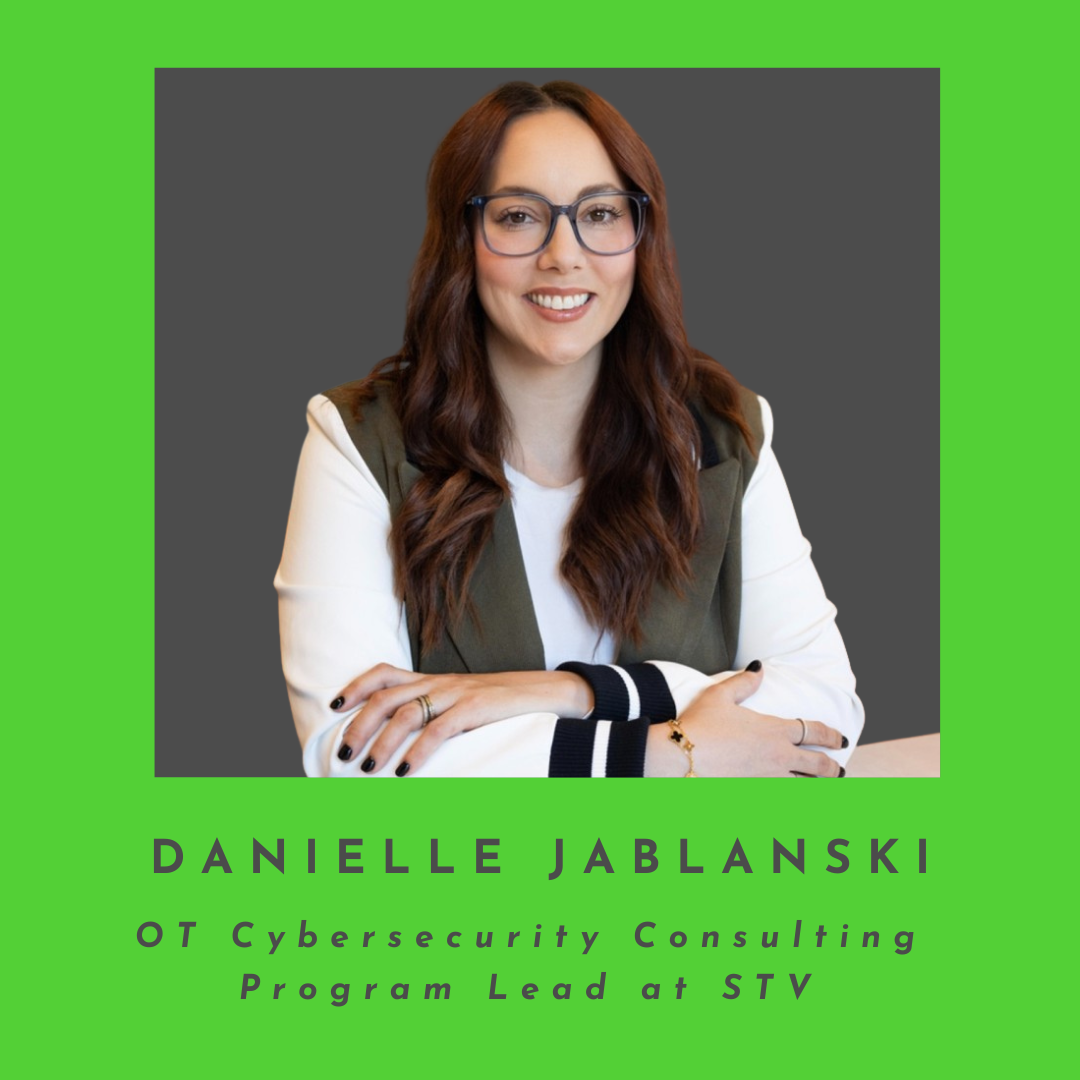
OT Cybersecurity Consulting Program Lead
Danielle Jablanski isn't your typical OT security expert… she studied genocide in Rwanda, analyzed future water wars for her master's thesis, and once received a phishing text inviting her to eat grilled crocodile on the beach. Now leading STV's OT cybersecurity consulting program and teaching at both Middlebury Institute and Dallas College, Danielle brings policy depth, technical expertise, and genuine curiosity to one of the most wide-ranging conversations we've ever had.
We chase every rabbit worth chasing, smart greenhouses, vulnerabilities, food monopolies, insects, data integrity risks, geopolitics and how food travels. Danielle shares lessons from nuclear security, explains why compromised data is scarier than loss of control, and makes the case for why more security pros should care about what ends up on our plates.
This is exactly how Kristin and Danielle talk when the mics aren't rolling… except this time they were.
---------------
Episode Key Highlights
00:01:03 — Creative Phishing Texts
00:10:27 — How Kristin and Danielle Met
00:17:08 — Insects and the Food Chain
00:28:05 — Monopolies and Single Points of Failure
00:30:32 — Rat Trap Sensors vs. Robot Pickers
00:33:46 — Centralization Risk
00:44:25 — Data Integrity vs. Loss of Control
00:55:30 — Food as Critical Infrastructure
01:06:30 — Global Supply Chain and Ports
01:15:45 — China, Soybeans, and Soft Power
---------------
📘 Sign up for early updates, exclusive previews, and launch news of Kristin’s book, “Securing What Feeds Us: Cybersecurity in Food and Agriculture” here.
---------------
🎤 Book Kristin Demoranville to Speak
To invite Kristin to speak at your conference, corporate event, webinar, or workshop, visit the website and submit a request.
---------------
🎤 Bites and Bytes Podcast Info:
Website: Explore all our episodes, articles, and more on our official website.
Merch Shop: Show your support with some awesome Bites and Bytes gear!
Substack: Stay updated with the latest insights and stories from the world of cybersecurity in the food industry.
Schedule a Call with Kristin: Share Your Thoughts
Socials: TikTok; Instagram; LinkedIn; BlueSky
---------------
🛡️ About AnzenSage & AnzenOT
AnzenSage is a cybersecurity advisory firm specializing in security resilience for the food, agriculture, zoo, and aquarium industries. AnzenSage offers practical, strategic guidance to help organizations anticipate risks and build resilience. Learn more about their offerings at anzensage.com.
AnzenOT helps organizations understand and prioritize operational risk faster, without slow or static assessments. Subscription access is available, including a student option. Learn more at anzenot.com.
Listen to full episode :
Episode Guide:
00:00:21 — Welcome to Season Three
00:01:03 — Phishing Texts
00:02:34 — Baking vs. Cooking
00:04:26 — Tyson Facility in Arkansas
00:06:11 — Danielle’s Food Memory
00:10:27 — Meeting at S4
00:12:15 — Women in OT
00:14:07 — Systems Thinking
00:15:38 — Mid-Episode Break
00:17:08 — Insects and the Food Chain
00:18:38 — Robotics in Manufacturing
00:20:57 — AI and Human Behavior
00:22:12 — The AI Grill
00:23:29 — Industry 4.0 and 5.0
00:26:38 — The Next Industrial Moment
00:28:05 — Ownership Models
00:29:30 — Monopolies
00:30:32 — Rat Trap Sensors
00:32:08 — Ag Tech and VCs
00:33:46 — Centralization Risk
00:34:42 — Food System Misinformation
00:35:28 — Dairy Automation
00:36:30 — Food Traceability
00:37:35 — Smart Greenhouses
00:40:00 — Greenhouse Lettuce
00:41:45 — Climate Change and Food
00:43:40 — Tool Over-Adoption
00:44:25 — Data Integrity
00:45:08 — Prison Case Study
00:47:00 — NIST 800-82
00:48:28 — Zoos and Manual Overrides
00:50:14 — Institutional Knowledge
00:51:30 — Business Continuity
00:54:06 — Heinz and Kraft Factories
00:55:30 — Food as Critical Infrastructure
00:57:45 — Food Economy in Schools
00:59:30 — Students Blending Ag and Cyber
01:00:30 — Water Wars
01:02:30 — The Line in Saudi Arabia
01:04:00 — ESG and Cybersecurity
01:06:30 — Taiwan Food Exports
01:07:45 — Ports and Container Shipping
01:09:00 — New Zealand Biosecurity
01:09:50 — Black Market Food Trade
01:11:20 — Drones in Agriculture
01:13:05 — Seed Breeding Vulnerabilities
01:14:00 — Disney Allergen Attack
01:17:30 — Soft Power
01:18:30 — Chinese Farmland Purchases
01:19:15 — Littleton Water Facility
01:21:30 — Japan Rice Standards
01:23:16 — Water Waste in Agriculture
01:23:50 — Closing
01:24:19 — Outro
-
00:00:21 Kristin King
Welcome back to the Bites and Bites podcast.
00:00:23 Kristin King
I am your host, Kristin King, and welcome to the official start of season three.
00:00:28 Kristin King
I love a conversation that makes me smarter.
00:00:31 Kristin King
This is one of those.
00:00:32 Kristin King
Danielle Jablanski is someone I could talk to for hours.
00:00:37 Kristin King
And honestly, we almost did.
00:00:38 Kristin King
She thinks differently, connects things most people don't see, and challenges ideas in ways that leaves you with more questions than you started with.
00:00:47 Kristin King
If you care about keeping food systems running and running
00:00:50 Kristin King
safely, you're going to want to hear all this episode.
00:00:53 Kristin King
This one goes everywhere, and I do mean everywhere, so definitely buckle up.
00:00:58 Kristin King
Let's get into it.
00:01:03 Danielle Jablanski
This has to be publicly stated.
00:01:05 Danielle Jablanski
I've gotten two of the best phishing techs.
00:01:09 Danielle Jablanski
texts recently that I've ever seen.
00:01:11 Danielle Jablanski
So last week I got one that said, are you free tomorrow?
00:01:14 Danielle Jablanski
Question mark.
00:01:14 Danielle Jablanski
Let's go to the beach and eat grilled crocodile.
00:01:17 Danielle Jablanski
Cannot make this up.
00:01:18 Danielle Jablanski
We'll send you the screenshot.
00:01:20 Danielle Jablanski
Then today I got one that said, hey, Matt, I forget, I deleted it, but they said some name, my name's not Matt.
00:01:25 Danielle Jablanski
Obviously they said, hey, Matt, Deborah said you make the best cakes and that they save your soul or something like that.
00:01:31 Danielle Jablanski
Can I get one?
00:01:31 Kristin King
No.
00:01:31 Danielle Jablanski
First of all, I can't bake to save my life.
00:01:36 Danielle Jablanski
But yeah, so I just thought for your podcast, this was wonderful.
00:01:39 Danielle Jablanski
Wonderful.
00:01:39 Danielle Jablanski
These 2 words come together, eating crocodile, baking cakes, and spearfishing, I guess, via SMS fishing.
00:01:45 Kristin King
Not just baking cakes, but ones that save you or something.
00:01:48 Danielle Jablanski
I knew I shouldn't have deleted it immediately.
00:01:50 Danielle Jablanski
I was like, I have to tell Kristin about this.
00:01:51 Danielle Jablanski
And I got rid of it because I'm like, I'll respond, right?
00:01:54 Danielle Jablanski
Just to mess with.
00:01:55 Danielle Jablanski
I'm that person that will reply back and be like, well, what's, what are you hankering for?
00:01:58 Danielle Jablanski
Lavender.
00:01:59 Kristin King
You know, just to see.
00:02:01 Kristin King
Wow, that's intense.
00:02:03 Kristin King
I actually, those are some of the more creative ones I've heard recently.
00:02:06 Kristin King
I get them all the time too, and I just ignore them.
00:02:08 Danielle Jablanski
I also live outside of Dallas.
00:02:09 Danielle Jablanski
So I'm like, what beach are we going to?
00:02:11 Danielle Jablanski
Like, there are alligators, so I'll give you that.
00:02:13 Kristin King
But that's not necessarily meaning you want to eat them.
00:02:16 Danielle Jablanski
Like, no, yeah, what does that say about me that somebody said, you know what, this is the urgency that we'll get Danielle.
00:02:23 Kristin King
Or seriously, who are these people that are sitting in a room with like 25 million screens of text messages up in front of them that are like, and this will work.
00:02:31 Kristin King
This will be your hook.
00:02:33 Kristin King
Yeah.
00:02:34 Danielle Jablanski
And also, I don't know if you've seen Bridesmaids, which is like 100 years old now, but she closes her bake shop or whatever.
00:02:39 Danielle Jablanski
And there's this like line and it's like, you made good cakes, Annie.
00:02:43 Danielle Jablanski
And it's like trying to cheer her up.
00:02:44 Danielle Jablanski
And I think of that line all the time.
00:02:46 Danielle Jablanski
So like, whenever I'm like having a bad day, I'm like, they were good cakes, Annie.
00:02:50 Kristin King
Whatever helps with the mental health of getting to them.
00:02:52 Kristin King
the next moment I'm here for that.
00:02:54 Danielle Jablanski
Again, I can't bake, but you make good cakes, Annie.
00:02:56 Danielle Jablanski
So anyway, those are my, you can use those in your next spearfishing attempt.
00:03:03 Kristin King
I also don't, I don't bake.
00:03:04 Kristin King
I'm not about that measurement life.
00:03:06 Danielle Jablanski
No, I don't really.
00:03:06 Danielle Jablanski
If it has to be precise, I'm out.
00:03:08 Kristin King
No, I like cooking because you can kind of be like, the dash of this, the thing of that, the tastes, and okay, you know, that's fine.
00:03:14 Kristin King
I can do a lot of butter.
00:03:15 Danielle Jablanski
You add in flour, some breadcrumbs, you're good to go.
00:03:18 Danielle Jablanski
You can always save it if it's, if something's gone awry, right?
00:03:22 Danielle Jablanski
The heat's too high, bring it down.
00:03:24 Danielle Jablanski
Something's sticking, you add the oil.
00:03:25 Danielle Jablanski
Like I can cook.
00:03:26 Danielle Jablanski
I cannot.
00:03:27 Kristin King
Yeah, I mean, I like to be clear, I can bake, I just choose not to, because again, I'm not about the measurement life.
00:03:33 Kristin King
I don't really want to spend time faffing with a scale or, proper cup measure.
00:03:39 Kristin King
I just can't.
00:03:40 Kristin King
Like I just, there's so much effort that doesn't need to be put forward for me.
00:03:43 Danielle Jablanski
And Definitely a science.
00:03:45 Danielle Jablanski
But yeah, all these food things that keep popping in.
00:03:47 Danielle Jablanski
Now I think of you every time I think of like anything that has some intersection with food, like the emails I was telling you about earlier, we use all these food related jargon.
00:03:55 Danielle Jablanski
And now I'm like, does this bother people?
00:03:57 Danielle Jablanski
Like we're not actually throwing spaghetti at the wall.
00:03:59 Kristin King
You know?
00:04:00 Kristin King
I appreciate that.
00:04:01 Kristin King
That's nice that you think of me when you think of stuff.
00:04:03 Kristin King
stuff like that.
00:04:03 Kristin King
But I have other people who think of me when they're making dinner and they're about to, cut chicken and they have to remind themselves not to wash it.
00:04:09 Kristin King
And they think of me like yelling at them, which I've never done.
00:04:13 Kristin King
I guess my personality just dictates.
00:04:15 Kristin King
I'm screaming at people.
00:04:16 Kristin King
Yeah, I appreciate that people are thinking about food safety with me, even though I'm not a food safety professional.
00:04:20 Kristin King
But on behalf of the food safety community that I do work with, they're happy to hear that.
00:04:24 Kristin King
But like, I did think it's kind of wild.
00:04:26 Danielle Jablanski
I listened to your recording with Kylie and I don't know if I think I mentioned to you once before she brings up the Tyson facility.
00:04:33 Danielle Jablanski
in Arkansas.
00:04:34 Danielle Jablanski
And I grew up in southern Missouri.
00:04:36 Danielle Jablanski
And so we used to play them in football.
00:04:37 Danielle Jablanski
There's a high school right next to that plant.
00:04:40 Danielle Jablanski
Right next to it.
00:04:41 Danielle Jablanski
Thank you.
00:04:41 Danielle Jablanski
knew immediately.
00:04:42 Danielle Jablanski
And so I know distinctly growing up what that plant smells like.
00:04:46 Kristin King
Yeah.
00:04:46 Danielle Jablanski
And that is my memory.
00:04:48 Danielle Jablanski
But they're a security team.
00:04:49 Danielle Jablanski
They have a great security team.
00:04:51 Kristin King
We actually live close to a water treatment facility here.
00:04:53 Kristin King
It's at the base of our estate.
00:04:55 Kristin King
And there's been people that have been asking like, does it smell?
00:04:58 Kristin King
No.
00:04:58 Kristin King
I mean, you have to get really on top of it for it to smell even on a hot day because it's modern
00:05:03 Kristin King
and it doesn't smell anymore.
00:05:04 Kristin King
I wanted to say to people who are kind of like, oh, I bet it stinks there or whatever.
00:05:08 Kristin King
I'm like, have you ever lived in a chicken house?
00:05:10 Kristin King
I just want to say that, like, but I know there's some kind of like social faux pas that I cannot say that.
00:05:15 Kristin King
Yeah, totally.
00:05:16 Kristin King
So I do not.
00:05:16 Kristin King
But I just, it's so funny to me that people are so misinformed on what things are and how they should be and what they are.
00:05:23 Kristin King
I mean, this isn't like the 60s or the 50s where, yes, wastewater treatment facilities kind of smell gross, but like now it doesn't really smell.
00:05:30 Kristin King
The only time you're ever going to catch it is if they're burning the methane off.
00:05:32 Kristin King
And even
00:05:33 Kristin King
And then you probably won't smell it.
00:05:34 Kristin King
It's wild to me.
00:05:36 Kristin King
But yeah, chicken houses stink.
00:05:38 Kristin King
There was one next to her where I think one of my family members used to live and I always as a child thought it was a very strange, but also a very exciting place.
00:05:45 Kristin King
I was meekly intrigued and disgusted at the same time.
00:05:48 Kristin King
I bet.
00:05:49 Danielle Jablanski
Yeah.
00:05:49 Kristin King
I feel like that's a constant in my professional career anyway.
00:05:52 Kristin King
Yes.
00:05:54 Danielle Jablanski
Yeah, I bet.
00:05:56 Kristin King
Anyways, this is what we've been talking for a few minutes here.
00:05:58 Kristin King
Danielle, I need to ask you what I ask every guest, favorite food and favorite food memory.
00:06:03 Kristin King
They do not need to be the same thing.
00:06:04 Kristin King
And then when we're done with that, we'll go into introductions so everybody knows who does not know you, probably knows you.
00:06:09 Kristin King
A lot of people know you, both setting.
00:06:11 Danielle Jablanski
So this is kind of controversial.
00:06:12 Danielle Jablanski
Like this might be as controversial as pineapple on pizza.
00:06:15 Danielle Jablanski
But one of my favorite foods is a comfort food.
00:06:16 Danielle Jablanski
And it's, some people call it like tuna casserole.
00:06:19 Danielle Jablanski
I grew up calling it tuna Mac, but it's like the casserole bake that's like macaroni.
00:06:23 Danielle Jablanski
And my parents always used extra sharp cheese tuna.
00:06:26 Danielle Jablanski
And then you take the top off and let the top crisp.
00:06:28 Danielle Jablanski
So, but some people think like hot tuna is disgusting, but that's like my comfort food.
00:06:32 Danielle Jablanski
So tuna mac or tuna casserole.
00:06:34 Danielle Jablanski
And I add green peas just to swipe my family because they never put veggies in it.
00:06:37 Danielle Jablanski
But I never ate it growing up.
00:06:39 Danielle Jablanski
It was like a family dish because it was cheap, super cheap, right?
00:06:42 Danielle Jablanski
Tuna and pasta.
00:06:42 Danielle Jablanski
And then they'd spring for the good cheese, extra sharp.
00:06:44 Danielle Jablanski
But I would just have like butter and noodles.
00:06:45 Danielle Jablanski
I was like, ew.
00:06:46 Danielle Jablanski
And now it's like my favorite comfort food.
00:06:48 Danielle Jablanski
My dad makes it every time I come home.
00:06:49 Danielle Jablanski
We'd like have it Sunday.
00:06:50 Danielle Jablanski
We watch football when I was in high school and I finally started eating it.
00:06:53 Danielle Jablanski
And yeah, I add the green peas to it myself.
00:06:55 Danielle Jablanski
And then
00:06:56 Danielle Jablanski
I haven't made it in a long time, but it sounds really good.
00:06:58 Danielle Jablanski
Favorite food memory?
00:06:59 Danielle Jablanski
I started my career in nuclear policy analysis, and I used to do this, I don't know if you call it professional development or not, but it was like this trip you could apply to called Issadarko, and it was actually in northern Italy.
00:07:10 Danielle Jablanski
And I went to that one like two or three times, and it was just a bunch of professors and students that would get together at the ski lodge in the Italian Alps, like 3 hours north of Milan.
00:07:18 Danielle Jablanski
And when I think back on these things, I'm like, why was I traveling by myself to all these like remote places, like a plane, a train, a bus, a taxi, looking back, I was like 25 or whatever.
00:07:26 Danielle Jablanski
whatever.
00:07:26 Danielle Jablanski
It was a really great program and it was relatively cheap to do.
00:07:29 Danielle Jablanski
So my company was covering it then, but it gained some popularity in this, circle of people studying like nuclear policy.
00:07:36 Danielle Jablanski
Italy has really strict visa laws and requirements.
00:07:39 Danielle Jablanski
And so they wanted to do one for like Middle East and North Africa students that wanted to come, but they couldn't come to Italy.
00:07:43 Danielle Jablanski
So they actually did one in Cyprus.
00:07:45 Danielle Jablanski
So I went to Famagusta in Northern Cyprus.
00:07:47 Danielle Jablanski
And I don't know if people know, but Cyprus is basically like a split territory and the North is Turkish and the South is Greek.
00:07:53 Danielle Jablanski
So we're in the North, very Turkish influence, essentially like visiting,
00:07:56 Danielle Jablanski
a part of Turkey that's not connected to Turkey.
00:07:58 Danielle Jablanski
And this was like not a lavish trip, right?
00:08:00 Danielle Jablanski
Like Famagusta has a lot of history.
00:08:02 Danielle Jablanski
It's really, really cool.
00:08:03 Danielle Jablanski
They actually have like an abandoned hotel there and like a completely abandoned like hospitality industry.
00:08:09 Danielle Jablanski
And so you can kind of tour these places.
00:08:11 Danielle Jablanski
But I have this like refreshed memory of actually having the most fresh Mediterranean seafood dish sitting on the beach at a restaurant where it was like fresh caught that day.
00:08:21 Danielle Jablanski
And I know people talk about that.
00:08:23 Danielle Jablanski
For some reason in the Mediterranean there, again, not a lavish trip,
00:08:26 Danielle Jablanski
there were cockroaches in our, we stayed at our university, which, I've been all over the place and I can take a can of hairspray to a cockroach, right?
00:08:33 Danielle Jablanski
No problem.
00:08:34 Danielle Jablanski
But I have this like beautiful memory that I sit back on and it's kind of like when you like see a beach scene open and there's like seagulls.
00:08:40 Danielle Jablanski
And I just have this like the most delicious fresh seafood I've ever had on the coast of Northern Cyprus, which is beautiful for so many different reasons.
00:08:48 Danielle Jablanski
They have like cafe culture, right?
00:08:49 Danielle Jablanski
Because it's too hot during the day, you go out at night.
00:08:51 Danielle Jablanski
So even though it wasn't like a lavish trip for me, it was low spend at the time of my life.
00:08:56 Danielle Jablanski
I have a great memory of that and the tablescapes in Northern Cyprus.
00:09:00 Danielle Jablanski
And it makes me really, really, really want to get to Turkey.
00:09:02 Danielle Jablanski
But yeah, that's the one that pops into my head is this beautiful memory of just this huge table and red wine and delicious fresh.
00:09:08 Kristin King
You haven't been to Turkey yet.
00:09:09 Kristin King
Out of all your travels, you haven't been to Turkey.
00:09:11 Kristin King
So that needs to happen because Istanbul is amazing.
00:09:13 Danielle Jablanski
No, but I did go when, do you remember when they made you separate your laptop?
00:09:17 Danielle Jablanski
I did fly through Turkey during that craze where you had to send your laptop to a separate counter.
00:09:22 Danielle Jablanski
It was like a very short blip.
00:09:23 Danielle Jablanski
I forget what year it was.
00:09:25 Kristin King
I think so.
00:09:25 Kristin King
I've only transitioned
00:09:26 Kristin King
through Turkey.
00:09:27 Kristin King
And then I got out and toured for six hours or whatever they let you do on the layover.
00:09:32 Kristin King
But I never had to separate myself from my laptop.
00:09:34 Danielle Jablanski
Yeah, it was a very short time that they did this.
00:09:36 Danielle Jablanski
I forget what it was, but it was a gut reaction to some incident.
00:09:39 Danielle Jablanski
I'll have to look it up and see.
00:09:40 Kristin King
It might have been around the bombing or something to that effect.
00:09:43 Danielle Jablanski
Yeah, it was chaos in the airport, though.
00:09:45 Danielle Jablanski
So it was like you had to literally hand deliver your computer to another table in the security line.
00:09:50 Kristin King
No, I just remember the border control being quite impressive.
00:09:54 Kristin King
And in terms of, you know, you wouldn't step
00:09:56 Kristin King
These are like some Amazon-looking creatures that are guarding the gates, literally.
00:10:00 Kristin King
Let's go ahead and have you introduce yourself, and then we'll go into all the fun spaghetti on the wall conversation, as you were saying.
00:10:07 Danielle Jablanski
Yeah, all of the analogies we make.
00:10:09 Danielle Jablanski
My name is Daniel Zwansky.
00:10:10 Danielle Jablanski
I normally go by DJ or Jabs, and I currently lead the OT cybersecurity consulting practice at an engineering firm called STV.
00:10:17 Danielle Jablanski
STV is kind of in the EPC world, which is engineering, procurement, and construction, but we also do a lot of architecture and design.
00:10:24 Danielle Jablanski
So sometimes we say EPA.
00:10:26 Danielle Jablanski
And we build a lot of rail infrastructure, utilities, and we do advisory services around that.
00:10:31 Danielle Jablanski
And before that, I spent a year doing OT strategy at CISA, and I was also at Nozomi Networks for a couple of years.
00:10:36 Danielle Jablanski
And I was a research analyst that looked at intrusion detection systems in OT.
00:10:39 Danielle Jablanski
That's kind of how I cut my teeth.
00:10:41 Danielle Jablanski
And before that, like we mentioned, I did some nuclear policy work coming out of Stanford University and other kind of nonprofit organizations that I worked with, Chatham House,
00:10:49 Danielle Jablanski
and some of the Carnegie, that kind of like funded philanthropy world around nuclear weapons when I came out of school.
00:10:55 Danielle Jablanski
So that's my background in a nutshell.
00:10:57 Danielle Jablanski
See, there's another one in a nutshell.
00:10:59 Danielle Jablanski
There are so many.
00:11:00 Kristin King
All the food puns for sure.
00:11:02 Kristin King
We actually officially met, I think we've met at other places and other times, but we officially met actually in the green room right before both of us were going to go on stage and speak at S4.
00:11:10 Kristin King
We were on two different stages.
00:11:11 Kristin King
And it was really a bummer because we wanted to hear each other's talk.
00:11:14 Kristin King
I know, I wanted to hear you.
00:11:16 Kristin King
But thankfully they're recorded, so it's really easy.
00:11:19 Kristin King
We actually ended up having this like incredible conversation about food and water like within like for like 10 minutes.
00:11:25 Kristin King
And it was a very fast conversation.
00:11:27 Kristin King
It was perfect setup for me walking on stage.
00:11:29 Kristin King
I don't know if that helped your talk at all.
00:11:30 Kristin King
But it was.
00:11:30 Danielle Jablanski
Black out every time.
00:11:31 Danielle Jablanski
So do I remember that?
00:11:32 Kristin King
Actually, I'm so glad to hear that because I also totally black out when I do my presentations.
00:11:37 Kristin King
And people tell me that's a sign that you know your material really well and it's fine.
00:11:41 Kristin King
I've never heard that.
00:11:42 Kristin King
Good.
00:11:42 Kristin King
I actually ended up, I usually end up like kind of waking up halfway through my talks and being like, just to check in with the audience and if people are resonating, they're checking, you know, they're nodding or whatever they're doing.
00:11:51 Kristin King
Or if they're looking at their phones, I usually have to change tactics to wake people up.
00:11:55 Kristin King
But that doesn't mean that we aren't present.
00:11:57 Kristin King
It just means that we know what we're doing.
00:11:59 Kristin King
Yeah, it was such a fun conversation.
00:12:00 Kristin King
And I was like, this is the coolest girl I've ever met.
00:12:03 Kristin King
And it was, it was so, I was actually raving about you later on.
00:12:07 Kristin King
She's great.
00:12:08 Kristin King
Yeah, thanks.
00:12:09 Kristin King
Yeah, there was a few other people in the room too.
00:12:10 Kristin King
And it was, we were getting our hair or makeup done.
00:12:12 Kristin King
I figured what it was.
00:12:13 Kristin King
Yeah, it was just, it was such a great conversation.
00:12:15 Kristin King
And then since then, we've just kind of been best friends, you know, like totally chatting whenever we can.
00:12:19 Kristin King
And there's a small group of us and of women and OT.
00:12:23 Kristin King
And so it's nice that we can have common conversations and things of such.
00:12:27 Kristin King
But what I actually really love is like the fact that you've really
00:12:30 Kristin King
taken your whole career and it informs on anything you do.
00:12:33 Kristin King
You've found a way to sort of bridge between the nuclear and CISA and what you're doing now and find the commonalities and be able to have common language and the way that you speak and present.
00:12:43 Kristin King
I don't think I've ever heard anyone say anything negative about you when you've spoken.
00:12:47 Kristin King
Even if they did, I probably have words with them.
00:12:50 Kristin King
The fact that you are such a wealth and a well of information, and I learn something from you every time I talk to you, and I'm like taking notes usually when I'm talking to you, because I'm like, oh, I gotta look
00:13:00 Kristin King
that up.
00:13:01 Kristin King
I don't know what she's talking about.
00:13:02 Danielle Jablanski
Or you're sending links to me?
00:13:04 Kristin King
And you're sending links all the time.
00:13:07 Kristin King
So I always feel really educated.
00:13:08 Kristin King
So I'm so excited that you're here because we're just going to, we're going to kind of rift on like what your career looks like and what's going on with things in the world.
00:13:16 Kristin King
And I love how you always say.
00:13:17 Danielle Jablanski
Systems of systems thinkers, because I didn't think about that until I met more engineers.
00:13:22 Danielle Jablanski
And I actually joke with my partner.
00:13:23 Danielle Jablanski
I said, if I could go back, if we hit the, won the lottery, I used to say that I would go back and get a PhD in like anthropology.
00:13:29 Danielle Jablanski
And now I say I would go back and do
00:13:30 Danielle Jablanski
do material science.
00:13:32 Danielle Jablanski
Because it blows my mind.
00:13:33 Danielle Jablanski
And it's just like extension of engineering and physics that we work with in OT, but it never really dawned on me until I was later into my career.
00:13:40 Danielle Jablanski
Like, I want to know what melts this.
00:13:42 Danielle Jablanski
I want to know, because we talk about all these cyber physical scenarios and real world outcomes and cascading consequences and all of this analysis that we do.
00:13:49 Danielle Jablanski
But I never heard somebody frame it until you as like, if you're in this field and you like it and you're thriving, you're a systems thinker.
00:13:54 Danielle Jablanski
And I was like, wow, like I always thought I was an analyst at heart, but you're right, it's different.
00:13:57 Danielle Jablanski
I'm not just an analyst like numbers that much, right?
00:13:59 Danielle Jablanski
Like I'm not just an analyst for the same.
00:14:00 Danielle Jablanski
at analyzing.
00:14:02 Danielle Jablanski
I'm a systems thinker.
00:14:02 Danielle Jablanski
I love when you put that out there.
00:14:04 Kristin King
I think that the other thing is I recently learned over the last few years, and this is probably because I've met more people that are systems engineers and system thinkers as well, but I used to think that everybody thought like this.
00:14:13 Kristin King
You know, you kind of have a general default of how people think.
00:14:16 Kristin King
And I always thought that people thought in spheres and thought, and you know, hey, if something affects on one side, it affects the other.
00:14:22 Kristin King
Like I thought that was common practice.
00:14:23 Kristin King
No, not at all.
00:14:25 Kristin King
In fact, we are very rare and weird.
00:14:28 Kristin King
And so, and I now realize why I probably
00:14:30 Kristin King
I really had trouble working with others at times because I never understood why they could only think in a flat line and never saw anything else around them or why they chose not to see anything else around them.
00:14:40 Kristin King
And maybe I've spent a lot of time with networking people because I think networking general for IT, I think in system fear, they have to because otherwise, I mean, how could they do their job?
00:14:49 Kristin King
But so it's so funny to me that
00:14:52 Kristin King
It took me until whatever age I am at the moment to, in general, my lifetime to realize, oh yeah, so I'm weird and it's good, okay.
00:15:02 Kristin King
And I don't think like everybody else and nobody else to think like me, but like we really need to acknowledge in OT we are system thinkers because.
00:15:08 Danielle Jablanski
Or do you remember when you learned that some people don't have an internal voice?
00:15:11 Kristin King
Yeah, that kind of freaked me out too.
00:15:12 Danielle Jablanski
That blew my mind.
00:15:14 Danielle Jablanski
I'm like, you don't talk to yourself audibly in your own head.
00:15:17 Kristin King
I mean, I know some people like name like their inner voice.
00:15:20 Kristin King
I have not gotten that far yet, but I
00:15:22 Kristin King
I definitely do find it interesting that people don't have just ongoing thoughts at all times.
00:15:27 Danielle Jablanski
I name all my vehicles, but I have yet to name the internal model.
00:15:30 Kristin King
And it's so interesting.
00:15:38 Kristin King
quick break and a huge thank you for being here and supporting the Bites and Bytes podcast.
00:15:42 Kristin King
I still can't quite believe we've officially come into season three, and I'm constantly amazed by this community and all the conversations we get to have together.
00:15:52 Kristin King
If you're enjoying this episode, please take a moment to follow the show, leave a comment, share it with a colleague or friend, and it really helps these conversations reach more people.
00:16:01 Kristin King
You can find additional details and past episodes at bitesandbytespodcast.com, and you're always welcome
00:16:08 Kristin King
to connect with me if you have feedback, questions, or ideas for future topics.
00:16:12 Kristin King
And in more fun, personal news, my book with Wiley Publishing is officially moving along.
00:16:17 Kristin King
The title is locked.
00:16:19 Kristin King
Our has been approved and the manuscript is almost done.
00:16:21 Kristin King
Securing What Feeds Us, Cybersecurity and Food and Agriculture will be dropping this autumn, and I cannot wait to share it with all of you.
00:16:28 Kristin King
In the meantime, you can sign up for updates on events, pre-orders, and other fun things I am definitely still trying to figure out over on ansonsage.com.
00:16:37 Kristin King
I'm so excited for you to read it, and hopefully together we can continue to secure what feeds us.
00:16:42 Kristin King
All right, back to the conversation.
00:16:46 Kristin King
the different sectors that we work in terms of critical infrastructure.
00:16:50 Kristin King
A lot of those people are also system thinkers, but a lot of them are not as well.
00:16:53 Kristin King
I know like agriculture is a great example, definitely systems thinking.
00:16:56 Kristin King
You are dealing with systems.
00:16:58 Kristin King
living systems that are constantly adapting and evolving in general.
00:17:02 Kristin King
I do think that like the water, because you're dealing with the water cycle, that's also, because you're also dealing with weather in terms of the bugs.
00:17:08 Kristin King
I'm so excited about bugs and I'm so glad you brought this up.
00:17:11 Kristin King
Later on in the season, of this season, we are going to have some insect people come on and talk about how food waste is actually food stock.
00:17:20 Kristin King
Yes, they eat it.
00:17:21 Kristin King
And how we actually engineer bugs to feed to chickens and other livestock to make sure they don't do things or they somehow give them
00:17:29 Kristin King
a boost of whatever they need.
00:17:30 Kristin King
I had no idea.
00:17:31 Kristin King
I had no idea.
00:17:33 Kristin King
My brain did not realize our modern world runs off of bugs.
00:17:36 Kristin King
Like I did not make that connection.
00:17:38 Danielle Jablanski
Yeah, and especially in the wastewater sector, I know that part, but I don't know the one that you're, I know that how they have bugs eat down some of the waste and then they put it into pellets basically and then extract it.
00:17:49 Danielle Jablanski
But I didn't know the reverse, which is what you're saying, the engineering the insects to feed like a microcosm in the diet of the food chain for them.
00:17:56 Danielle Jablanski
That's cool.
00:17:56 Kristin King
Yeah, it's really, it's fascinating.
00:17:59 Kristin King
And also I think how smart, that makes sense because that's still playing to the natural world.
00:18:03 Kristin King
And also, I mean, we have a whole pet industry that eats into sex as well.
00:18:08 Kristin King
Like, or like zoos and aquariums.
00:18:10 Kristin King
I didn't even, didn't even make the connection in my head.
00:18:12 Kristin King
And now that I am, I can't unthink about it.
00:18:15 Kristin King
Like, I'm like, oh, wow.
00:18:16 Kristin King
This is kind of a cool job.
00:18:18 Danielle Jablanski
Yeah.
00:18:19 Kristin King
I mean, I don't, I'm so excited to eventually tour like a fly factory.
00:18:22 Kristin King
Like, I'm so excited about that.
00:18:24 Kristin King
And people are like, wow, you're so weird.
00:18:26 Kristin King
I'm like, no, that's just weird.
00:18:27 Kristin King
This is amazing.
00:18:29 Kristin King
think about how humans have gone from, and I think about this all the time.
00:18:33 Kristin King
And I actually, I was channeling you one night, we were watching the finale of MasterChef, the UK one.
00:18:39 Kristin King
And I was sitting there and I had, sometimes you're sitting there and all of a sudden like things just sort of like, you have this incredible thoughts hit your head in one moment.
00:18:47 Kristin King
Yeah.
00:18:47 Kristin King
And this is exactly why I was thinking of you.
00:18:49 Kristin King
And I thought, how did we go from humans that were eating raw meat to discovering fire and we could cook?
00:18:56 Kristin King
And then we discovered fermentation to we watched
00:18:58 Kristin King
TV, TV, and entertainment of people creating these little dishes with tweezers, with flowers and stuff to win the ultimate glory or whatever.
00:19:10 Kristin King
And I thought, wow, this is amazing.
00:19:12 Danielle Jablanski
There's a whole evolution of like human nature becoming entertainment that we haven't even seen, I don't think the beginning of.
00:19:18 Danielle Jablanski
I mean, it's also the end of the Aldous Huxley plot, which is terrible examination of human behavior.
00:19:25 Danielle Jablanski
Somebody told me once a couple years ago that they leased a vehicle because driving
00:19:28 Danielle Jablanski
is going to become completely obsolete in that people are going to go to basically like go-kart tracks to drive real cars the way that we used to or the way that we do now at some.
00:19:37 Danielle Jablanski
And I was like, wow, that is some futuristic, you know, I'm still going to buy my car, but people have this interesting vision of entertainment that it always kind of recreates.
00:19:47 Danielle Jablanski
history is our artist history, but human entertainment is a lot about human behavior.
00:19:52 Danielle Jablanski
And I think it's so weird.
00:19:53 Danielle Jablanski
Also, like the robotics now that are coming out.
00:19:56 Danielle Jablanski
So I was at this manufacturing and SCADA event in Pittsburgh at the end of August.
00:20:00 Danielle Jablanski
And I was talking about how I hate the AI bubble right now.
00:20:02 Danielle Jablanski
And people are like, it's not even a bubble.
00:20:04 Danielle Jablanski
And I'm like, I don't know what it is, but it's a lot of these things are going to fail, right?
00:20:08 Danielle Jablanski
Just by nature of the hype cycle and how these things work out.
00:20:10 Danielle Jablanski
So I was talking to somebody in the robotics industry and they were talking about how they had developed like these robots that were capable of lifting enough weight to do like
00:20:17 Danielle Jablanski
the pallets in warehouses and how now they've evolved the weight capacity that they can actually lift the EV batteries for semi trucks, for battery electric semi trucks.
00:20:26 Danielle Jablanski
Yeah, so that's like a huge milestone.
00:20:28 Danielle Jablanski
But it was funny because they said years ago when robotics took off, people thought that it was going to be like the Jetsons by now.
00:20:33 Danielle Jablanski
Because we'd have all of these like home things, you know, and I have like a motion sensor, you know, garbage can, and that's good enough for me, right?
00:20:42 Danielle Jablanski
Like I'm okay.
00:20:43 Danielle Jablanski
And you see some of these like out of Asia, some of these like home robotics applications coming
00:20:47 Danielle Jablanski
out for laundry and kitchen and stuff like that.
00:20:49 Danielle Jablanski
And the first thing that springs to my mind is like safety, like put your arm in that, whatever.
00:20:53 Danielle Jablanski
And that's why it didn't take on.
00:20:54 Danielle Jablanski
And so that was what was kind of a limitation in robotics.
00:20:56 Danielle Jablanski
And so I'm really curious with like robotics automation, the Venn diagram of robotics automation and AI, what are some of these use cases that sound good to people that are just completely going to fall flat because human behavior dictates that we do not want to replace that function in our lives?
00:21:11 Danielle Jablanski
Like I'm so curious about this.
00:21:13 Kristin King
Yeah, and also if you think about it from the perspective of there's a big
00:21:17 Kristin King
push in, I don't know if it's a generational thing or what's going on with that, but there's a big push for long form content as well as traditional ways of making things.
00:21:25 Kristin King
So, I mean, think about probably the pandemic helped with this a little bit, but like obviously sourdough and baking it or making like chicken stock from scratch and all these like human type behaviors that we did for so long that got dismissed because we could just go to the grocery store and do it, you know, quickly.
00:21:42 Kristin King
But now people are rolling back to, I want to say like, I don't want to necessarily say like homesteading, but you have this
00:21:48 Kristin King
People have this like real nostalgic desire to kind of go back to simpler ways because we've gotten so far to the technology side.
00:21:56 Kristin King
I think that there's going to eventually be a balance.
00:21:58 Kristin King
Maybe that's where the bubble will burst.
00:22:00 Kristin King
I don't know.
00:22:00 Kristin King
But there'll be some kind of a balance where AI and tech is just going to be more of a helper to us rather than a hindrance.
00:22:06 Kristin King
And right now it feels like a hindrance because there's so much and it's not exactly working right at the moment.
00:22:12 Danielle Jablanski
Well, there's those memes, right?
00:22:13 Danielle Jablanski
That's like, I want AI to do my taxes, not create art.
00:22:16 Danielle Jablanski
I want to make art.
00:22:17 Danielle Jablanski
different things like that.
00:22:18 Danielle Jablanski
Or there's that AI grill.
00:22:20 Danielle Jablanski
Have you seen that?
00:22:20 Danielle Jablanski
My friend has the AI grill and it has a temperature setting, has an app, there's a temperature setting.
00:22:25 Danielle Jablanski
And you basically power everything into it, tells you how to do it, does like a whole recipe prep, you put it in there.
00:22:30 Danielle Jablanski
And my partner's like, no, I like the taste of charcoal.
00:22:33 Danielle Jablanski
We still have a charcoal grill, because we like the taste, the flavor of it.
00:22:35 Danielle Jablanski
And so, but I thought it was cool.
00:22:37 Danielle Jablanski
So it's like, do you, I don't know, what's the, is it marketing that convinces people that they need to, like, that's what I'm really curious about, like, these use cases, who won's going to be in these cases?
00:22:46 Danielle Jablanski
Exactly.
00:22:47 Danielle Jablanski
I'm not convinced on the driverless car.
00:22:51 Danielle Jablanski
I'm not convinced on the robotaxi.
00:22:52 Danielle Jablanski
I don't know if it's a security thing for me, but I don't ever want to get into a robotaxi.
00:22:56 Danielle Jablanski
I'm all set.
00:22:57 Kristin King
Well, maybe it's because partly because, again, as a system thinker, we can understand the fail points in a different way.
00:23:03 Kristin King
Do I think any of these things are bad necessarily?
00:23:06 Kristin King
No.
00:23:07 Kristin King
But original machine learning and automation, especially you know this from an industrial perspective, was created with safety in mind.
00:23:14 Kristin King
I do think robot lines are great, especially in
00:23:17 Kristin King
like slaughterhouses, where that's extremely dangerous occupation between digits loss and other injuries.
00:23:24 Kristin King
Having robots be able to do that up to the speed of what a human can do could be really great beneficial on a safety aspect.
00:23:30 Kristin King
That's brilliant.
00:23:31 Kristin King
But I also think about on the other side of what happens when one of these goes amok.
00:23:35 Kristin King
Like, are we going to have to put people back on the line and to hurry it up?
00:23:39 Kristin King
You know, there's a lot of questions there for me.
00:23:40 Kristin King
Do I think that like the pallet lifting is, that's amazing.
00:23:43 Kristin King
I do think that those robots that flip up and down
00:23:47 Kristin King
inside of, I used to call them big yellows because they were yellow at the time in the factories that I worked in.
00:23:51 Kristin King
These things were amazing.
00:23:52 Kristin King
They would fly down the line, lift up, pull the pallet off and just jack down real fast and go.
00:23:58 Kristin King
And it was like terrifying to watch at the same time, really cool.
00:24:02 Kristin King
I think that's helpful for safety, especially efficiency.
00:24:04 Kristin King
That's great.
00:24:05 Kristin King
But again, I don't know, have we gone too far?
00:24:09 Kristin King
I think about, you know, maritime in this example with the seafood industry.
00:24:14 Kristin King
They're the floating IOT devices.
00:24:17 Kristin King
basically at this point.
00:24:18 Kristin King
I don't know, is that okay?
00:24:20 Kristin King
Like, are we over-efficiently doing things to the point where we're not considering, I don't know, fish stocks or all that kind of thing.
00:24:27 Kristin King
Fish farm or a farm, they're all using some type of digital technology on some level now.
00:24:32 Kristin King
If they aren't, they will be soon because it's just part of the world and how sustainability is going to go.
00:24:37 Kristin King
But are we branding sustainability with marketing for this?
00:24:41 Kristin King
Because in order to be sustainable, we need tech.
00:24:44 Kristin King
And that is pretty much what I'm hearing from science as well.
00:24:47 Kristin King
and researchers, but where's the line drawn there?
00:24:50 Kristin King
Because how sustainable are things if it's not sustainable to create these things?
00:24:54 Kristin King
So there's like this back and forth debate, and this is probably my internal dialogue really coming out now.
00:25:00 Danielle Jablanski
My internal dialogue is I'm a control freak, so I always want to be doing something where I'm in the lead of whatever I'm doing.
00:25:06 Danielle Jablanski
And Data, I asked, I'm going to pose this question back to you because we were talking before we started recording this podcast.
00:25:11 Danielle Jablanski
I had done some research in back 2021 about the adoption of IoT across farming agriculture, and I've told you about this, but I was
00:25:17 Danielle Jablanski
I was asking you kind of like, are we on the 5th wave of automation for farming and agriculture?
00:25:21 Danielle Jablanski
Because I've seen it in other industries.
00:25:23 Danielle Jablanski
Like we know where we're at.
00:25:24 Danielle Jablanski
It's pretty obvious what the industry 4.0 looked like for manufacturing, right, for automobiles.
00:25:29 Danielle Jablanski
I understood that completely.
00:25:30 Danielle Jablanski
If you told me industry 4.0 or industry 5.0 for farming and ag, I'd be like, is that big data round three?
00:25:37 Danielle Jablanski
Is that robotic arms?
00:25:38 Danielle Jablanski
Is that floating IOT?
00:25:39 Danielle Jablanski
Is that an expansion of available telecommunications networking that didn't happen before in rural areas?
00:25:47 Danielle Jablanski
it burden sharing for like, I don't know, satellite applications where I know that there's like farms in India where they all share different technical capacity because not one farm can own it.
00:25:58 Danielle Jablanski
And they do that for like insurance, right?
00:25:59 Danielle Jablanski
So that the satellite can come in and say, hey, we got all this drone footage with a shared cost, but now we can actually confirm that this drought happened or whatever.
00:26:06 Danielle Jablanski
Like, is that the revolution that we're on?
00:26:08 Danielle Jablanski
Like, which one?
00:26:09 Danielle Jablanski
Or is it depending on the sector?
00:26:11 Kristin King
I think it depends on what region in the world we're discussing, because that's actually a good point about India versus other places.
00:26:17 Kristin King
I do think that we are definitely in an evolving evolution stage here with the next sector, but I don't know if it's fifth.
00:26:25 Kristin King
I think that might be extreme.
00:26:27 Kristin King
I think that probably the more AI that's brought in, I think that's going to crash to the next industrial moment, if you will.
00:26:35 Kristin King
I do think that they haven't quite figured out that part yet.
00:26:38 Kristin King
I have talked to a lot of data researchers recently in the farming industry and agriculture in general, and it seems like nobody's really got quite the
00:26:47 Kristin King
handle on what's going to happen next.
00:26:49 Kristin King
There's a lot of speculation, which is, I mean, on a positive note, it's very exciting.
00:26:53 Kristin King
And what is this?
00:26:54 Kristin King
And I'm really excited for what data's going to do.
00:26:56 Kristin King
But on the other half, wearing my security hat, I'm like, you know, like, I don't know about this because we're still not making things secure by design.
00:27:02 Kristin King
There's a lot of questions there.
00:27:04 Kristin King
Adoption's questionable because like you said, rural areas still don't have clear internet, satellite, things like that are still expensive for a lot of people.
00:27:11 Kristin King
What is that actually going to mean?
00:27:13 Kristin King
Do we are we forcing people into a technology, adopting technology?
00:27:17 Kristin King
or are they okay with just using analog tractors?
00:27:21 Kristin King
I mean, there's a lot of questions there, right?
00:27:23 Kristin King
So I think it depends on the region and the world.
00:27:25 Kristin King
I think it depends on the scale of your farming operation or your agricultural operation in general.
00:27:30 Kristin King
But I do think that some, this is the part that's hardest, I think we're uneven with what revolution we're heading towards.
00:27:37 Kristin King
Some might be regressing, some might be increasing.
00:27:39 Kristin King
I don't know.
00:27:40 Kristin King
Right now I feel like we're kind of in this, I want to spin a positively exciting times, I guess is what I'll say, but also I don't
00:27:47 Kristin King
don't know.
00:27:47 Kristin King
And that's something I think researchers can kind of agree to at the moment of we just don't know what we don't know.
00:27:52 Kristin King
And there's a lot of what ifs and not sure moving forward.
00:27:56 Kristin King
So it's, I suppose that's probably what the beginning of another, another revolving upgrade feels like is we don't know what's going on.
00:28:05 Danielle Jablanski
Well, that's why I love your sector.
00:28:06 Danielle Jablanski
I put on this like research hat and just look at it from afar.
00:28:08 Danielle Jablanski
And I'm just so curious, you know, if I put on a researcher hat and kind of analyze it a little bit, it's like, who is actually determining the drivers and the barriers?
00:28:17 Danielle Jablanski
Okay.
00:28:17 Danielle Jablanski
not only do you have those regional differences, but those regional differences are exacerbated by ownership models.
00:28:22 Danielle Jablanski
So of course, in Europe, you have small family-owned farms.
00:28:26 Danielle Jablanski
And in the US, you have these like major conglomerates and monopolies.
00:28:30 Danielle Jablanski
And so the rate of that evolution for data alone, you know, we have millions of data points a day.
00:28:35 Danielle Jablanski
You've got, they can measure the dew and the sunlight and the temperature and the soil and the bacteria, and they can isolate cattle and they can put these, you know, insemination over here.
00:28:44 Danielle Jablanski
Like they have so much data for all of this.
00:28:47 Danielle Jablanski
But
00:28:47 Danielle Jablanski
I don't like creating an over reliance on monopolies because then you have fewer single points of failure.
00:28:53 Danielle Jablanski
And that's a point I've made in cybersecurity a lot of times that I learned from nuclear and it applies to almost every other industry.
00:28:59 Danielle Jablanski
So at what point does tech make things so sustainable, efficient, productive that you have these massive conglomerates that buy everyone else out or are so far exceeding the curve that their products or whatever are just so much better, so much more efficient, more profitable, whatever the driver is in that case, that you're starting
00:29:17 Danielle Jablanski
I mean, to see everyone else, their operations diminish or get bought up, that we create these monopolies, and then you've got three, like right now, there's a handful of major chemical manufacturers, right?
00:29:27 Danielle Jablanski
I don't like how few single points of failure there are in that sector, especially how much they touch our food.
00:29:32 Danielle Jablanski
So have we thought about that when we talk about automation and AI and the way that we're promising all of these benefits?
00:29:37 Danielle Jablanski
And so like the chicken and the egg question for me is like, is it the use case or the marketing that comes first for some of these tools?
00:29:42 Danielle Jablanski
And I've told you this story before, but when I researched this years ago, again, just for fun, not for fun, it was for a paper, for a
00:29:47 Danielle Jablanski
I had, but there were, you'd go to like a conference and they said, these are robot pickers for strawberry farms and they're going to pick the strawberries off, and so that humans don't have to do it.
00:29:57 Danielle Jablanski
And the farmers were like, no, we actually need people to check our rat traps because we have, physical labor that should be doing other things and they have to go and see if the traps have closed and snapped and need to be replaced or not.
00:30:08 Danielle Jablanski
And that can easily be replaced by a sensor.
00:30:10 Danielle Jablanski
And I was like, wow, I never would have thought about that.
00:30:12 Danielle Jablanski
It's like the most simple use case.
00:30:14 Danielle Jablanski
It's easy to produce.
00:30:15 Danielle Jablanski
It's low cost and it would save so much.
00:30:17 Danielle Jablanski
China efficiency, but you go, you see these other groups and they're like, no, driverless, driverless tractors.
00:30:23 Danielle Jablanski
And I'm like, who asked for that?
00:30:33 Kristin King
That nagging feeling, that one that says your operations might be more exposed than you realize, but a full-blown assessment feels out of reach?
00:30:41 Kristin King
Traditional OT, cyber, physical assessments are expensive, time-consuming, and let's be honest, you get a point-in-time report that's outdated the moment something changes.
00:30:52 Kristin King
That's not risk management, that's just a snapshot.
00:30:54 Kristin King
That's exactly why we built Ans and OT, designed by practitioners who've been in your shoes.
00:31:00 Kristin King
It's one of the first subscription-based platforms for continuous, quantified OT cybersecurity risk management.
00:31:07 Kristin King
Not just monitoring or threat detection, but actual risk modeling built for your facilities.
00:31:12 Kristin King
Whether you're managing a processing plant, a distribution center, a zoo, or even a utility, Anzone OT gives you a living picture of your operational risk posture that evolves as your facility does and turns that intelligence into actionable, prioritized tasks so you know exactly what to fix first.
00:31:30 Kristin King
Subscription plans start at prices that might actually surprise you, in a good way.
00:31:35 Kristin King
Visit AnsonOT.com to explore plans and see how continuous, facility-focused risk management finally fits your reality.
00:31:43 Kristin King
AnsonOT, risk intelligence that evolves as fast as your operations do.
00:31:49 Kristin King
Don't get me wrong, the auto drive on tractors is actually really great on efficiency.
00:31:54 Kristin King
They can drive in straight lines, that just makes it easier all along.
00:31:57 Kristin King
I'm genuinely asking, I want to know.
00:31:59 Danielle Jablanski
Where they go to get these, like, you know, what their field studies look like?
00:32:03 Kristin King
So a lot of times, ag tech generally starts on the farm.
00:32:07 Kristin King
So there is a really smart farm kid that's like, hey, we've got this issue.
00:32:12 Kristin King
I bet I could come up with something, whether they're in college or they just start having ideas or talking to people.
00:32:17 Kristin King
They create this tech, whatever it is.
00:32:20 Kristin King
The latest one I've seen is giant bugs as weeders, like they're robot bugs that go in weed.
00:32:26 Kristin King
But
00:32:27 Kristin King
That comes from initially, hey, we have this thing.
00:32:30 Kristin King
We should try to figure this out.
00:32:31 Kristin King
And innovation happens, and you've got access to technology and that kind of thing.
00:32:35 Kristin King
So you start creating.
00:32:35 Kristin King
The problem becomes as the VCs get it, and they don't care.
00:32:40 Kristin King
So they just will run the product to the ground, they'll market the crap out of it, and then whatever.
00:32:45 Kristin King
It's just that this is not just an agriculture food type problem.
00:32:50 Kristin King
This happens in all sectors.
00:32:52 Kristin King
We've seen it many, many times, including security.
00:32:54 Kristin King
I think the intentions are always good, but we know that the
00:32:57 Kristin King
Road is paved in gold, we've got it, but it doesn't always follow through.
00:33:02 Kristin King
Agriculture in general adopt technology that works for them, just like you said.
00:33:05 Kristin King
If the rat traps had sensors on them, that's great, because then they don't have to go out and check them every day manually.
00:33:11 Kristin King
They can just be alerted.
00:33:13 Kristin King
Or within food manufacturing, same thing.
00:33:15 Kristin King
They also have those same traps that sit on the perimeter of their buildings.
00:33:18 Kristin King
I look at that and think, that's amazing.
00:33:20 Kristin King
That's solving one problem, but that's also an end point that needs to be monitored.
00:33:24 Kristin King
That's what I think in my head.
00:33:25 Kristin King
But do people think that necessarily?
00:33:27 Kristin King
Not necessarily, right?
00:33:29 Kristin King
Because that's not something that they're going to pop in their head of, oh, I need to secure that because that could be an in into my facility.
00:33:34 Kristin King
They don't think that.
00:33:35 Kristin King
Yeah.
00:33:35 Kristin King
And that's kind of the where I come in and meet is, hey, just heads up, we should be thinking about these kind of things.
00:33:42 Kristin King
Do I think that technology will continue to evolve?
00:33:44 Kristin King
Sure.
00:33:45 Kristin King
I think that we're going to come up some really great ways to make farming and agriculture and food more efficient and easier to deal with on the supply chain aspects.
00:33:55 Kristin King
What I'm
00:33:55 Kristin King
more worried about, and I think we've talked about this too before, and I know you're alluding to it, is what's the Jenga peg, right?
00:34:01 Kristin King
One thing that knocks it all out, we've already seen that with CrowdStrike and Microsoft.
00:34:05 Kristin King
And when that happened, we all kind of went, because- Yeah, the centralization risk.
00:34:09 Kristin King
Exactly.
00:34:10 Kristin King
And I think that that's concerning.
00:34:12 Kristin King
Food is very much already centralized in a lot of ways.
00:34:14 Kristin King
There's only like 4 chicken houses, like big companies that own all the chicken houses.
00:34:19 Kristin King
If you look at any of the big, your favorite brands, they're probably owned by a bigger brand, a parent company.
00:34:25 Kristin King
And there's very
00:34:25 Kristin King
few left.
00:34:26 Kristin King
In fact, even pet food brands are being bought up in the same way as well.
00:34:30 Kristin King
So I think this is the problem is that people don't necessarily want to do their due diligence to understand that.
00:34:36 Kristin King
When they find out that there's only a few companies that own these things, it's very shocking.
00:34:40 Kristin King
And it becomes sensory overload in a lot of ways because people don't want to necessarily understand that because they don't understand the food system.
00:34:48 Kristin King
And this is where I think the role of meat and potatoes, to use a full pun here.
00:34:52 Kristin King
of the issues lies the disinformation and misinformation with when it comes to how our food gets to our table.
00:34:58 Kristin King
And it's really aggravating to the farming community because they don't, first of all, they're not being compensated probably for what they're doing.
00:35:05 Kristin King
Let's be real.
00:35:06 Kristin King
But the other part is that a lot of
00:35:08 Kristin King
A lot of people think that they are still red barn, tractor, milking cows by hand.
00:35:14 Kristin King
Absolutely not.
00:35:15 Kristin King
The dairy industry is one of the most highly automated industries we have, and that is why it's under attack more regularly than any other sector because of that.
00:35:23 Kristin King
The more connected you are, the more you're a target.
00:35:26 Kristin King
But the other part of this is that people need to do their due diligence just as a general human being of where your food is coming from.
00:35:33 Kristin King
It does not go from farm straight to your table unless you are literally buying it from a farmer.
00:35:38 Kristin King
It has many
00:35:38 Kristin King
steps in between.
00:35:39 Kristin King
And processed food is different.
00:35:41 Kristin King
It's.
00:35:42 Danielle Jablanski
Almost years ago for like that provenance or chain of custody aspect to put like QR codes on tons of food so you could, scan it and check where it came from.
00:35:51 Danielle Jablanski
Did that die or is that still a thing?
00:35:52 Danielle Jablanski
I've just not used it at the grocery store.
00:35:53 Kristin King
So that is a really interesting concept.
00:35:57 Kristin King
The transparency clause in FISMA is still somewhat tied to that.
00:36:03 Kristin King
However, it's the corporations that probably nixed that in the long run because that is
00:36:08 Kristin King
just one more step that's really difficult to manage.
00:36:11 Kristin King
The little tags that you have on your fruits and vegetables actually have little lot numbers on them, and that actually will link to where it came from.
00:36:18 Kristin King
And that is important for transparency.
00:36:20 Kristin King
But however, we know that those little stickers fly off, they stick to other things or whatever.
00:36:24 Kristin King
It's not foolproof.
00:36:25 Kristin King
You can't exactly, I don't know, scan something into a tomato.
00:36:29 Kristin King
You know what I mean?
00:36:30 Kristin King
Like, it doesn't really work.
00:36:31 Kristin King
So the traceability rules are really interesting, and they are there for food safety purposes, not just, you know.
00:36:38 Danielle Jablanski
But I wondered if that would somehow become like a key differentiator, right?
00:36:43 Danielle Jablanski
Where you see some of these brands where it's like very clean, no seed oil, whatever the marketing thing is of the day, like if they had that providence, transparency, something that would somehow set them apart.
00:36:54 Danielle Jablanski
And then, you know, these otherwise informed consumers, which is a very privileged way to consume, could then go, of course, it probably would be more expensive, but I was just curious if that would take off or not.
00:37:03 Danielle Jablanski
And I'm also, I'm just here to actually bug you about trends that I looked at years ago, but like smart greenhouses,
00:37:08 Danielle Jablanski
We've talked about this, that company, AppHarvest, I looked in two years ago.
00:37:12 Danielle Jablanski
They had a really cool system.
00:37:14 Danielle Jablanski
My immediately thought for that setup was exactly what you said about the endpoints.
00:37:18 Danielle Jablanski
It was just so much connected technology and they had not really thought about cybersecurity because most startups don't, especially in a new tech business, right?
00:37:26 Danielle Jablanski
There's these like incubators that I've seen one in Ireland.
00:37:28 Danielle Jablanski
It's really cool.
00:37:29 Danielle Jablanski
There's, I think Purdue has one.
00:37:30 Danielle Jablanski
The university has a really cool incubator with Hewlett Packard, if I'm not mistaken.
00:37:34 Danielle Jablanski
HP has a non-profit wing that does a lot of research in ag tech.
00:37:38 Danielle Jablanski
Very
00:37:38 Danielle Jablanski
cool, but same thing, but the neat thing about AppHarvest was none of their tech, it was their location.
00:37:45 Danielle Jablanski
And so it was like Kentucky had like 5 truck routes out of that Appalachia that could reach all of the US basically in a day drive.
00:37:54 Danielle Jablanski
And so it was like if other parts of the food industry
00:37:57 Danielle Jablanski
fell down, they kind of had figured out centralization risk on accident, but only for like tomatoes and a couple other products.
00:38:03 Danielle Jablanski
Have we seen more of that like isolated analysis?
00:38:07 Danielle Jablanski
I know that smart greenhouses kind of dropped off a little bit, but like where'd that trend go?
00:38:11 Kristin King
So smart greenhouses are actually pretty predominant and they're expanding, especially when it comes to leafy greens, because I have said this on the show and I will continue to say this, I always look at leafy greens with a little bit of suspicion, especially since there's no laws around certain ways that they're grown and I'm not blaming anybody on any side.
00:38:27 Kristin King
guide on that.
00:38:28 Kristin King
There's just a lot of situations that, whether it's just water runoff from a storm or something like that, could cause a lot of problems.
00:38:34 Kristin King
That's why people are going and buying from greenhouses.
00:38:37 Kristin King
I buy my lettuce from greenhouses.
00:38:38 Kristin King
I just find it's a little safer, I guess, is what I'll say.
00:38:41 Kristin King
Now, I'm not advocating for either way.
00:38:43 Kristin King
You do you.
00:38:44 Kristin King
I just choose this route.
00:38:45 Kristin King
Also, I really like the idea of promoting more technology-based growing, because I feel like as a technologist, as a cybersecurity professional, as all those things, I should be supporting that aspect.
00:38:55 Kristin King
That's where my dollar is going.
00:38:57 Kristin King
Again, I'm
00:38:57 Kristin King
I'm not pushing this on anybody.
00:38:59 Kristin King
But yes, there's an absolute crap ton of tech inside of those buildings and they are expanding.
00:39:04 Kristin King
There's several brands, I won't name them, but if you've had, you'll see them in the store.
00:39:08 Kristin King
I do find what they're doing to be quite fascinating.
00:39:10 Kristin King
I also find it really interesting that they are taking like their uglier varieties of lettuce and bagging that and selling it as like ugly lettuce variety, which people are grabbing towards because, you know, just because a vegetable has like a little dent in it doesn't mean it's bad.
00:39:25 Danielle Jablanski
There was like a service that did that, right?
00:39:28 Kristin King
It was a food company that was doing that.
00:39:30 Kristin King
They still do actually.
00:39:31 Kristin King
And I think that's really great because I do think that like acknowledging food waste and things like that is really important inside of these particular industries or where are they sending their food to.
00:39:39 Kristin King
Again, because I've worked in zoos and aquariums, a lot of the food, human grade food gets dropped off at zoos as well.
00:39:46 Kristin King
So I think that that's important to do that as well because, you know, a gorilla is not going to care if it's got a little bit of a bruise on it.
00:39:52 Kristin King
They're still going to eat it.
00:39:54 Kristin King
Right.
00:39:54 Kristin King
So that's really
00:39:55 Kristin King
interesting.
00:39:56 Kristin King
But I do think that we should be looking at that, especially with global climate change, because obviously like Florida may not be growing oranges, it might be Ohio, and they might be growing papayas.
00:40:07 Kristin King
I think that we're going to have to bring things into greenhouses a little more regularly.
00:40:10 Kristin King
I think about Japan a lot too when I think about greenhouses, because they've got that technology pretty on lock now.
00:40:15 Kristin King
They are growing strawberries that are like the most amazing things on the planet inside of these greenhouses.
00:40:20 Kristin King
So I mean, there's an ability to control
00:40:23 Kristin King
and perfect in greenhouses.
00:40:26 Kristin King
And it's really interesting tech for sure.
00:40:29 Kristin King
What I do worry about is, can we adapt that out onto the, take it out of the greenhouse?
00:40:35 Kristin King
Can we adopt that in a different space?
00:40:37 Kristin King
Because the greenhouse is a stationary unit, right?
00:40:40 Kristin King
You can control that situation just like a factory, right?
00:40:43 Kristin King
But everything else in agriculture is moving.
00:40:45 Kristin King
It's a moving target.
00:40:47 Kristin King
So how do we do that in a way that isn't cumbersome to the people that are in those sectors while keeping them safe and secure and also making them
00:40:53 Kristin King
and realize that it needs to be safe and secure as well, not just because it has to happen because of compliance.
00:40:58 Kristin King
It's because we need to make sure this is happening.
00:41:00 Danielle Jablanski
Well, and because there's so much interdependence.
00:41:02 Danielle Jablanski
I mean, that's what I harp on in my practice.
00:41:03 Danielle Jablanski
I mean, I talk about competence, I talk about capacity and then capabilities, because there's been this huge rush to buy tools, and then we don't know how to use the tools, and then you're only as secure as your weakest link.
00:41:13 Danielle Jablanski
And that could actually be one of your tools or the way your deployment works or your coverage and things like that.
00:41:18 Danielle Jablanski
And so thank you for letting me interview you on your own podcast.
00:41:20 Danielle Jablanski
But I mean, that single point of failure
00:41:23 Danielle Jablanski
nuclear is not just a monopoly problem that we're talking about where more companies own things, but it's also this kind of over-adoption of technology and over-reliance.
00:41:32 Danielle Jablanski
And I mean, when AI did start years and years and years and years ago, this machine bias question of even if I lean into the technology, how much can I trust it?
00:41:41 Danielle Jablanski
What is the integrity of that data?
00:41:42 Danielle Jablanski
And that's really where OT security comes into my mind.
00:41:44 Danielle Jablanski
It's like, this is what I borrowed from nuclear and I've done this for years too.
00:41:48 Danielle Jablanski
And it's not really an aha moment, but when I talk to people about their OT, it's not the loss of
00:41:53 Danielle Jablanski
control that I'm worried about.
00:41:54 Danielle Jablanski
It's the question of integrity that you've never thought through.
00:41:57 Danielle Jablanski
So years ago when I wrote a methodology for the Mainland Council Fellowship, I did it on a prison case study specifically because they use PLCs for their doors and it's a hub and spoke model.
00:42:07 Danielle Jablanski
And a lot of the operators in that facility don't actually think about the network connectivity of PLCs, right?
00:42:13 Danielle Jablanski
But then they have all this other connectivity, including food, right?
00:42:16 Danielle Jablanski
So they have their commissary, they have apps, they have the library, they've got vehicles with video recording and footage being sent back.
00:42:23 Danielle Jablanski
There's
00:42:23 Danielle Jablanski
tons of connectivity that's already been exploited.
00:42:25 Danielle Jablanski
There's a bunch of prison examples out there.
00:42:28 Danielle Jablanski
And I brought all these OT cybersecurity experts to the table to discuss these scenarios in a prison setting that they'd never thought of, like, what are all these third-party risks with people bringing the food in and having all these apps and connectivity to the spending and education and all these things.
00:42:41 Danielle Jablanski
And the reason I bring this up is that they looked through the NIST 800-82 scenarios.
00:42:46 Danielle Jablanski
There's like 6 in that document that could apply to all the different sectors.
00:42:49 Danielle Jablanski
And we did a bunch of, we worked through this methodology and we did some
00:42:53 Danielle Jablanski
ranking, essentially, for these scenarios.
00:42:55 Danielle Jablanski
And they were actually prepared for a loss of control.
00:42:57 Danielle Jablanski
They knew what it looked like to create some kind of order out of chaos if the doors weren't functioning properly, or what the biggest risk scenario would be to health and human safety in their facilities if there was a loss of control.
00:43:08 Danielle Jablanski
But there's one in there that basically is like information or data is sent to an operator that would then cause them to take the next step in the operation.
00:43:17 Danielle Jablanski
So the actual critical flaw would be the next function of an operator.
00:43:22 Danielle Jablanski
And then
00:43:23 Danielle Jablanski
then the exploit was just manipulating the integrity of the data they received to then alter something in the operation.
00:43:29 Danielle Jablanski
And nobody in some of these like controlled research that we did on these different scenarios was prepared for that scenario.
00:43:37 Danielle Jablanski
The compromise of the integrity of the information they received to then take the next step in that functionality.
00:43:41 Danielle Jablanski
So maybe some sensor reading is saying, you know, in your HMI, hey, this is kind of the old SMAR example, the water instant in Florida that wasn't actually a hack, of like, hey, this chemical is wildly off.
00:43:52 Danielle Jablanski
You actually need to
00:43:53 Danielle Jablanski
enter in this new setting, right?
00:43:55 Danielle Jablanski
Your new set point should be X.
00:43:57 Danielle Jablanski
And you're actually being manipulated to do something that you've now created the exploit or the issue or the incident in your environment.
00:44:05 Danielle Jablanski
But it's because that integrity was completely called into question.
00:44:07 Danielle Jablanski
And if you can't tell me that integrity is protected, it's always never rule in nuclear, right?
00:44:12 Danielle Jablanski
Nuclear systems, weapons have to always be ready to function and never accidentally go off, right?
00:44:18 Danielle Jablanski
Always never.
00:44:18 Danielle Jablanski
That principle in all of these OT domains is so difficult.
00:44:23 Danielle Jablanski
to pinpoint and protect all the time.
00:44:26 Kristin King
It's so interesting you bring it up because ultimately it's about what's your risk tolerance and risk understanding.
00:44:34 Kristin King
I think, again, this goes back to system thinking because we're always evaluating risk in a spherical way.
00:44:40 Kristin King
And even that aha moment of I never thought about it like that, we still get those, of course, because we're not privy to all information.
00:44:46 Kristin King
It's interesting because while you were saying that, and this is a really bad comparison, I'll be honest, but I remember having a conversation with different
00:44:53 Kristin King
CEOs and presidents of zoos.
00:44:55 Kristin King
And somebody asked me how close we were getting to Jurassic Park.
00:44:58 Kristin King
They didn't mean like the dinosaur aspect.
00:45:00 Kristin King
They meant like the gates and electronic locks.
00:45:02 Kristin King
The best part of the ice.
00:45:04 Kristin King
Yeah.
00:45:04 Kristin King
And I smiled because I said, we're probably never going to be there because there's always 2 secondary.
00:45:09 Kristin King
There's 2, there's your internal, which is for the animals and the external is for the people.
00:45:13 Kristin King
I said, maybe on the external for the people side, we might have electronic locks.
00:45:17 Kristin King
And I'm sure in many places that can afford them are already there, thinking of the big zoo houses, but there'll always be a
00:45:23 Kristin King
key.
00:45:23 Kristin King
There will always be manual process.
00:45:25 Kristin King
And this is where I get worried about the more we automate and the more we push forward, the more we forget and lose the manual aspects.
00:45:33 Kristin King
And this is actually something that lessons are learned recently, especially with different attacks that have been happening around the world, all those retail hacks that have been happening in the UK.
00:45:41 Kristin King
They actually are, the government's going forward and asking people to have a physical paper documented incident response plan because we need to have that even to that level.
00:45:52 Kristin King
And this is actually
00:45:53 Kristin King
Something that I really enjoy with working in food and agriculture is a lot of them already have their manual processes on lock, but the problem is it's those people are retiring and they're not capturing them.
00:46:02 Kristin King
So that whole aspect of managing risk from the aspect of the subtle nuances of how to do what your job is.
00:46:10 Danielle Jablanski
Standard operating procedures.
00:46:11 Kristin King
Correct, needs to be implemented.
00:46:13 Kristin King
It's a business risk at that point.
00:46:15 Kristin King
So it's how do we tie in all of this OT situation and risk?
00:46:20 Kristin King
And for me, I find that as long as I tie it into safety, people get it.
00:46:23 Kristin King
it's the stop, drop, and roll moment.
00:46:25 Kristin King
We all have that ingrained into us on whatever culture you come into.
00:46:28 Kristin King
We understand that's what you're going to do in a fire.
00:46:30 Kristin King
Yeah.
00:46:31 Kristin King
I also think that movies and TV, I think people need to be reminded that's not real life and that we need to.
00:46:37 Kristin King
Exactly.
00:46:38 Kristin King
So like even the prison scenarios, like, whoa, you know, that's necessarily the case.
00:46:42 Kristin King
However, I do think that it's.
00:46:46 Danielle Jablanski
Hollywood scenarios are pulled from research to like Mr.
00:46:49 Danielle Jablanski
Robot.
00:46:50 Danielle Jablanski
I actually worked with the same research team that their prison episode is about.
00:46:55 Danielle Jablanski
And they actually show their research, it's the father-daughter team, and they're cited in my Atlantic Council work.
00:47:01 Danielle Jablanski
They actually show a printout of their paper that was presented at DEFCON, I want to say, in 2012.
00:47:05 Danielle Jablanski
And it's a real world scenario.
00:47:07 Danielle Jablanski
But that manual operations, the standard operating procedures, there's a lot to borrow from nuclear there as well, because the intercontinental ballistic missiles, the ones that are in the silos and the Western
00:47:16 Danielle Jablanski
part of the United States still have a two turnkey system.
00:47:19 Danielle Jablanski
As they should.
00:47:20 Danielle Jablanski
We're talking about all these technological advances and satellite imagery about our second strike capability and how many seconds we need to be able to respond.
00:47:26 Danielle Jablanski
And so there's a huge debate, there has been for 10 plus years in the nuclear weapons community of whether or not there's this dead hand reaction of an automatic second strike capability.
00:47:36 Danielle Jablanski
And what really kind of threw that off years ago was social media.
00:47:38 Danielle Jablanski
So how do you confirm things happening in real time that take review, revision, quality analysis to say, yes, this did happen or no, that didn't happen?
00:47:46 Danielle Jablanski
And we were seeing all these tests out of North Korea, and actually people were finding out about the missiles tests on Twitter faster than any government agency could confirm or deny it.
00:47:55 Danielle Jablanski
So you could actually create this like misinformation capacity that would then skew your response capacity.
00:48:00 Danielle Jablanski
Of course, weapon systems are not, there's not a really great analogy to most of the OT, right?
00:48:04 Danielle Jablanski
But if you're talking about meantime to recovery and dollars that amount to seconds or minutes down, there is a large impact typically.
00:48:12 Danielle Jablanski
So the safety aspect works sometimes, but then other times it's
00:48:16 Danielle Jablanski
just mission critical, right?
00:48:17 Danielle Jablanski
You have to do it because it's demanded of you.
00:48:20 Danielle Jablanski
And so when actually, when I got to SCV, when they hired me, I was like, this seems to be part of our standard of care.
00:48:25 Danielle Jablanski
Like if we're doing engineering anywhere in the world, we need to offer cybersecurity as a greenfield recommendations.
00:48:30 Danielle Jablanski
Like if we have people working on HVAC and we say we're going to build this building, and here's the list of the systems that go into that, we need to do one more step and say, of these systems, these ones have vulnerability disclosure processes.
00:48:43 Danielle Jablanski
These ones require compensating controls.
00:48:46 Danielle Jablanski
These ones are a little bit more insecure by design.
00:48:48 Danielle Jablanski
These ones lack encryption, right?
00:48:49 Danielle Jablanski
We need to go one step further.
00:48:51 Danielle Jablanski
And STD was like, I get that.
00:48:52 Danielle Jablanski
Like they bought into that from an engineering practice.
00:48:56 Danielle Jablanski
But some owners and operators don't have either of those oaths.
00:48:59 Danielle Jablanski
I don't know what else to call it, right?
00:49:01 Danielle Jablanski
For that mission critical to be so important that it's baked into everything they do for cybersecurity, that it's tied to that mission.
00:49:07 Danielle Jablanski
It's tied to the standard operating procedures.
00:49:09 Danielle Jablanski
It's tied to their manual operations plans, right?
00:49:11 Danielle Jablanski
That's the missing link I see in that.
00:49:13 Danielle Jablanski
What's the driver?
00:49:14 Danielle Jablanski
What's the barrier?
00:49:15 Danielle Jablanski
Are they ready for the technology?
00:49:16 Danielle Jablanski
Is it just a lot of marketing, right?
00:49:18 Danielle Jablanski
Because I always remind people, cybersecurity is a completely unregulated market.
00:49:21 Danielle Jablanski
And I joke all the time with my friends, you and I could start a company today, get $30 million in seed funding and sell anything to anyone saying that it has these capabilities out-of-the-box, single pit of glass, right?
00:49:32 Danielle Jablanski
We could use all the marketing and just be as convincing as possible.
00:49:36 Danielle Jablanski
You and I are very capable of being in our leadership roles and it could completely fall flat and not meet the mission.
00:49:42 Danielle Jablanski
And then we would have convinced people to care about something and then not solved any problem.
00:49:46 Danielle Jablanski
problems, not made anything better.
00:49:47 Danielle Jablanski
And that's a huge factor in this field.
00:49:50 Kristin King
That is why it's maybe cybersecurity in general is not really played well inside of food and ag because it's extremely trust, trust adverse and you have to earn that trust type of environment.
00:50:03 Kristin King
I definitely, I've seen people kicked out of factories, food factories.
00:50:07 Kristin King
I've seen people get kicked out of agricultural settings because they're trustworthy where they lied.
00:50:12 Kristin King
I think that may be why, and I'm not saying that all cybersecurity are a bunch of snake
00:50:16 Kristin King
oil salespeople.
00:50:17 Kristin King
I don't think that's true.
00:50:19 Kristin King
But I do think that it takes a different type of understanding people and process over the tech.
00:50:24 Kristin King
If you don't deal well with the people and process, the technology is not going to do **** to be honest.
00:50:29 Kristin King
But that's something that I've noticed too, especially when I talk to different sectors inside of food and ag, a lot of people are like, I'm just not a technology person.
00:50:38 Kristin King
I don't understand this.
00:50:39 Kristin King
And I said, well, do you use your phone?
00:50:41 Kristin King
Do you use e-mail?
00:50:42 Kristin King
Well, yeah, of course I do.
00:50:43 Kristin King
That's just part of life.
00:50:44 Kristin King
I said, sure, but that also makes you somewhat
00:50:46 Kristin King
capable and have an aptitude for tech.
00:50:48 Kristin King
And they're like, I don't see it that way.
00:50:50 Kristin King
And I said, I do.
00:50:51 Kristin King
I definitely do.
00:50:52 Kristin King
I think that people who are, I mean, I think about the younger generations in general, and I sound like I'm some old, but I'm not.
00:50:58 Kristin King
They were doing, you know, modifications on HTML for like social media before we even knew what that was.
00:51:05 Kristin King
You know what I mean?
00:51:05 Kristin King
Like, you know, and that's something that I find to be really interesting is like, it just depends on your perspective, right?
00:51:11 Kristin King
Do I think that food and agriculture need to have all of the new automated
00:51:16 Kristin King
everything AI?
00:51:17 Kristin King
No, I do not.
00:51:18 Kristin King
I think that people need to proceed with caution and test and verify that it works in their environment and do not add another attack vector for whatever purposes.
00:51:27 Danielle Jablanski
You mentioned the younger generation, and I think that's why I remember that Purdue incubator is because there was somebody who had gone off to college and they come from a farming family and they were kind of unsure if they wanted to do family business.
00:51:39 Danielle Jablanski
I lived in Iowa, you know, I have a lot of farming friends and family, and there's a debate in those families of like, who's the next generation?
00:51:45 Danielle Jablanski
What does this look like?
00:51:46 Danielle Jablanski
Can we keep this going?
00:51:47 Danielle Jablanski
Is it going to be profitable?
00:51:48 Danielle Jablanski
What happens this winter?
00:51:49 Danielle Jablanski
All these different contingencies.
00:51:51 Danielle Jablanski
And it was, there was like a really cool story about young people going to university, learning about new tech, bringing it back to the farming and agriculture kind of practices that they came from and trying to enhance things and do startups and try these cool new tools.
00:52:03 Danielle Jablanski
But then, like you mentioned, they have to go get that funding and they have to market it, right?
00:52:07 Danielle Jablanski
And they have to bring it, you know, proof of concept, all these things that get back into that technology world where I think some of those use cases and drivers start to skew a little bit.
00:52:15 Danielle Jablanski
Unfortunately, I don't know how we
00:52:16 Danielle Jablanski
fix that.
00:52:16 Danielle Jablanski
But I did want to tell you one thing that I don't think I've ever told you before.
00:52:19 Danielle Jablanski
My first job out of grad school in nuclear policy, I actually lived in Iowa City and the job was in Muscatine, Iowa.
00:52:25 Danielle Jablanski
And so it was called the Stanley Foundation.
00:52:27 Danielle Jablanski
Then now it's the Stanley Center for Peace and Security.
00:52:30 Danielle Jablanski
And this was one of the Stanley family, the New Yorker poster in my office was one of the Stanley family pieces like in the office when one of the Stanleys actually passed away that used to run the company.
00:52:41 Danielle Jablanski
And this was given to me when I left there.
00:52:42 Danielle Jablanski
And it's how New Yorkers see the world because I was born and raised in New York and then moved to the Midwest.
00:52:46 Danielle Jablanski
And so it's like this joke about how we see the rest.
00:52:49 Danielle Jablanski
And Muscatine is just written in there in pencils and you can't see it, but it's in there somewhere near Kansas City, just written in.
00:52:56 Danielle Jablanski
And if you know, John Deere is right there, one of the headquarters, and they have all the tractors lined up.
00:53:00 Danielle Jablanski
And so there was always this weird overlap with my professional life and farming and agriculture.
00:53:06 Danielle Jablanski
So John Deere, a lot of farming families there, and then including my partners, and then the Heinz and Kraft factories.
00:53:13 Danielle Jablanski
So I always used to joke that it smelled like macaroni, macaroni and cheese.
00:53:16 Danielle Jablanski
everywhere on the river when we would go to work.
00:53:19 Danielle Jablanski
That's funny.
00:53:19 Danielle Jablanski
And then also Han Furniture is the owner of big industry and Pearl Buttons.
00:53:23 Danielle Jablanski
But the other reason I bring this up is like, you mentioned all of these, you can always look back in your career and draw a line, but we always point out in OT these processes around us and how we can see electricity, we can see water.
00:53:34 Danielle Jablanski
And for some reason, food never gets to that part of the conversation of like being so critical.
00:53:39 Danielle Jablanski
And I always think about it from chemical, right?
00:53:41 Danielle Jablanski
Because I worked in that a little bit in government, but we don't see people driving down the road enough.
00:53:46 Danielle Jablanski
seeing, Nestle, Starbucks.
00:53:49 Danielle Jablanski
Like where does this all come from that we put into our bodies?
00:53:52 Danielle Jablanski
And how do we facilitate more awareness of all of these different like interwebs of technology and AI and even the reference to the robotics industry and like where it's going and where it's been.
00:54:05 Danielle Jablanski
And honestly, my question is like, who cares about it?
00:54:07 Danielle Jablanski
Because I want to know people that care about it.
00:54:09 Danielle Jablanski
And I just think that that's really interesting.
00:54:10 Danielle Jablanski
And that's what your platform has done for me is to help me find other people that are like, I love this conversation.
00:54:14 Danielle Jablanski
I know so little.
00:54:15 Danielle Jablanski
That's me, right?
00:54:16 Danielle Jablanski
And I want to learn more.
00:54:17 Danielle Jablanski
I want to learn which bugs eat waste.
00:54:19 Danielle Jablanski
I want to learn which companies own too much and might be a risk factor for that monopoly.
00:54:25 Danielle Jablanski
I want to learn what the incubators are doing for the farms in Ireland just because I like learning.
00:54:30 Kristin King
I really do find it interesting that we talk about food, we celebrate with food, we say goodbye with food, we have disorders with food, we talk, we go to coffee, we go to lunch, we do all these things, right?
00:54:43 Kristin King
But yet nobody has had that conversation of how do we
00:54:46 Kristin King
be protected.
00:54:47 Kristin King
And the people that are on the front lines that are doing this work are just still so completely flabbergasted of why no one knows.
00:54:54 Kristin King
Like it is, we have removed ourselves so far from our food that, I mean, there's literally kids that have never even really seen soil before.
00:55:03 Kristin King
I mean, we have really come to that place now.
00:55:06 Kristin King
Or the fact that people don't really understand what food insecurity really is.
00:55:10 Kristin King
And there's so many, there's so much disinformation and misinformation running around it.
00:55:13 Kristin King
And then you have this whole sub genre of
00:55:16 Kristin King
that are pushing supplements and different diets and different ideas.
00:55:20 Kristin King
And I'm not saying anything that's bad, like whatever, have your own opinion about it.
00:55:23 Kristin King
But we have, we have created this mess.
00:55:26 Kristin King
We have created the complexities here.
00:55:28 Kristin King
This is a human problem.
00:55:29 Kristin King
And I am, I feel so honored to be with these people and working alongside them in this industry.
00:55:37 Kristin King
It's so humbling to me every day.
00:55:39 Kristin King
And it's also so infuriating because there's such a part of me that wants to just scream from the rooftops of, hey, there's so many people doing amazing things.
00:55:46 Kristin King
things and stop saying bad things about the community and don't think that way.
00:55:51 Danielle Jablanski
That's kind of how I started to learn like the utility space, right?
00:55:55 Danielle Jablanski
Line workers.
00:55:55 Danielle Jablanski
And there's actually a day of recognition for line workers.
00:55:57 Danielle Jablanski
We just like don't think about them the same way we think of like emergency response personnel and 911, you know, dispatcher.
00:56:02 Danielle Jablanski
They should be right in that same category, right?
00:56:04 Kristin King
Like it's the sexy factor, right?
00:56:08 Kristin King
Like it only becomes important when it's right in your face.
00:56:11 Kristin King
You know, people don't think about that.
00:56:13 Kristin King
Nobody's going to spend time to think about.
00:56:16 Danielle Jablanski
And educationally, I think it would be amazing if first, I don't know what political and economic powers right now are, obviously there's a lot of contingencies that apply, especially to education.
00:56:30 Danielle Jablanski
But if I look back, we always
00:56:32 Danielle Jablanski
joke, like we took civics, right?
00:56:33 Danielle Jablanski
I definitely took civics, but we didn't learn a lot about the world around us.
00:56:37 Danielle Jablanski
And there's this joke that like I learned to play hot cross buns on a recorder, but I didn't learn how, you know, how taxes work, right?
00:56:43 Danielle Jablanski
Very true.
00:56:44 Danielle Jablanski
I wonder why food and the economies that shape how we get food out of season even, right?
00:56:50 Danielle Jablanski
Why is that not taught as part of the curriculum for economy, right?
00:56:55 Danielle Jablanski
Economics in school, the same way that like diet is taught in health education.
00:57:00 Danielle Jablanski
You know, why is that food economy left out
00:57:02 Danielle Jablanski
so much of that civic or economic criteria for our base education is.
00:57:08 Kristin King
Or even the conversation of how food impacts war, or whether armies move and things like that.
00:57:14 Kristin King
Yeah, exactly.
00:57:15 Kristin King
So water is definitely left out, it's definitely not on the table either.
00:57:20 Kristin King
It's in the glass, haha.
00:57:22 Kristin King
Anyways,
00:57:23 Kristin King
It's so fascinating and it's something that I'm still actively curious about is what I'll say.
00:57:29 Kristin King
I don't think I have a good answer for that.
00:57:31 Kristin King
However, I will say that I have a lot of hope because we have a lot of college students who listen to the podcast who are pursuing an agricultural degree or animal science or vet or something to that effect that want to take electives that are about cybersecurity and about tech.
00:57:46 Kristin King
And they're trying to figure out how they blend their careers.
00:57:48 Kristin King
So this actually is happening, which I'm so psyched about.
00:57:52 Kristin King
But the problem is
00:57:53 Kristin King
there still isn't a larger conversation around it.
00:57:55 Kristin King
I mean, this is why I'm excited about my book, because I'm actually going to have it in one place finally, rather than having to scour the internet.
00:58:02 Kristin King
And not just because like I'm writing it and yay, it's my book, but the fact that there's finally something that's there.
00:58:07 Kristin King
I think that there's a lot of professors out there that are doing a lot of really good research and work, but they need to be brought into the spotlight because nobody knows that they're doing this good work.
00:58:19 Kristin King
Hi, we're Ains and Sage.
00:58:21 Kristin King
And if you're in food production, agriculture, and even running a zoo or an aquarium, you need to talk.
00:58:28 Kristin King
Because let's be honest, your operation relies on a lot more technology than most people realize.
00:58:33 Kristin King
Rain dryers, hatchery controls, life support systems for animal habitats, all connected, all critical, all often overlooked when it comes to cybersecurity.
00:58:44 Kristin King
That's where we come in.
00:58:46 Kristin King
At Anson Sage, we help industries that grow, feed, and inspire the world,
00:58:50 Kristin King
manage cybersecurity and operational risks.
00:58:53 Kristin King
Without the fear tactics, the fluff, or the 200-page audit, you'll never read.
00:58:58 Kristin King
Whether you're producing milk, processing seafood, or running life support systems, we focus on what matters.
00:59:04 Kristin King
Keeping your operations safe, your people protected, and your business running, even when things go sideways.
00:59:10 Kristin King
And hey, we know not everyone on your team speaks cyber.
00:59:13 Kristin King
And because not everyone on your team speaks cyber, we've created a free resource library at anzonsage.com.
00:59:19 Kristin King
Inside you'll find sectors
00:59:20 Kristin King
specific infographs built for teams in agriculture, seafood, zoos and aquariums.
00:59:26 Kristin King
They're clear, practical, a little witty, and designed to help frontline teams understand their risks without needing a translator.
00:59:33 Kristin King
No logins, no e-mail required, no catch.
00:59:36 Kristin King
There's usable tools that make cybersecurity stick.
00:59:39 Kristin King
If you're responsible for keeping food moving, animals safe, and systems online, Ans and Sage is your partner in real-world resilience.
00:59:46 Kristin King
Visit AnsandSage.com to download your free infographs, book
00:59:50 Kristin King
consult, or just learn more about how we're helping critical infrastructures secure what matters most.
00:59:56 Kristin King
Hanson Sage, helping the industries that grow, feed, and inspire the world manage cybersecurity and operational risks.
01:00:04 Danielle Jablanski
So I studied international war, basically, civil violence. I went to Rwanda, I studied genocide, I went to Northern Ireland. I wanted to be an international lawyer at one point. And my master's capstone was, I studied in the Middle East, I studied Arabic. And I looked at the future wars over water, water scarcity in the Middle East and desalinization and how expensive it is and how all of these
01:00:25 Danielle Jablanski
how global warming will change, some of the, that will displace people in the future. So that was actually what my master's looked at. My capstone of my master's, my master's was international security and Middle East geopolitics. But I didn't think about tech. And then I got into the tech world and I was looking at the rate at which the Middle East spends on cybersecurity is 25% on all their new projects. It is incredible, right? And so to take and borrow from how different regions are kind of incorporating security into their new markets, right?
01:00:55 Danielle Jablanski
their new, what's that city? Is it in Dubai, that like row city that they're building? Have you seen that?
01:01:00 Kristin King
The line. Yeah. It's a line. It's called the line, yeah.
01:01:03 Danielle Jablanski
It's insane, right? And so, but my point is like that, those ideas started with exactly the multidisciplinary, multidisciplinary approach you just mentioned. And it's one that we, I don't think we seed enough in the US at least that I've seen in education.
01:01:17 Kristin King
No, we don't. But there is, there's a lot of change. So I'm going to keep coming back to hope for this because there is a lot I've seen a lot of it. So I've actually
01:01:25 Kristin King
I've actually been sponsoring A Northeastern graduate class for a few semesters with my good friend, Dr. Darren Detwiler, who's also been a guest on the show. He is a food safety expert, but he teaches environmental social governance classes, so ESG classes. And what I've been doing with these graduate students is we assign a region, and each one of them picks a country out of a region. There's predefined, so it's not like everybody. That would be a lot for me to manage. And we add a cybersecurity lens onto it. Now, none of them are cyber. Some of them might have a cyber degree, some of them do not.
01:01:55 Kristin King
A lot of them have policy or their foreign policy or something like that. But having them look at different regions and countries and from a cyber lens has been super fascinating. So like, where's your point of failure? Like what's going to cause problems moving forward in these regions? Are they developing nations? All these things. So it's really interesting because they focus on one country themselves, but then they have to come out as a group and talk about the region around those countries.
01:02:18 Kristin King
And I'm telling you, like some of the stuff that they were researching and talking about was one of those things that even took me back. Like I wouldn't have thought about like underwater cables as an example. Because it's such a something, it's not something I would think about, even though that's how the internet is delivered in some parts of the regions. And it's interesting to talk about how
01:02:38 Kristin King
with how the countries are interacting with each other when it comes to cyber. There's a bit of a standoffishness in some regions of, oh, this is an attack factor. You could hurt me this way. Or more of them are like, hey, if we bound together and have these more common goals, then maybe we won't do that to each other. You know, it's such an interesting way to look at it from that like ESG perspective. So I have a lot of hope that there's some interesting ways of looking at this. And moving forward, I really do. I will see people that have agricultural degrees with a minor in cyber. We'll see cybersecurity, agriculture.
01:03:08 Kristin King
we'll see all of this at some point. I mean, I'm probably walking myself into my own PhD at some point, let's be honest.
01:03:15 Danielle Jablanski
But I'm curious for your book, is there a section on like global transportation and commerce and how food is delivered? And like, I mean, I mean, you know, Taiwan, people don't realize how much food comes from Taiwan and that's a geopolitical consideration. Like when I learned, I took a course on, it was like terrorism
01:03:33 Danielle Jablanski
an illicit crime. And I learned that the number one smuggled good into the US for a long time with cigarettes, right? Like these kinds of things, is this part of like how things move, essentially how food moves, right? Food and food products. Is that a portion of your book?
01:03:49 Kristin King
Yes, I definitely put it there. And also having a future conversation, what does the future look like in that regard as well? Or what's the speculation coming forward?
01:03:57 Kristin King
And if anybody's listening who wants to contribute to that, please just give me a holler.
01:04:00 Danielle Jablanski
I'm so interested like ports and container shipping and how much it would slow down the economy to search every container and what does that mean for food security and supply chains. And we talked about all these ship to shore crane vulnerabilities and for a long time everyone is screaming about that, but it's like, it might be a necessary evil to get the goods and products that we need for our economy to keep moving. So what's the trade-off?
01:04:20 Kristin King
Yeah, this is actually such an interesting conversation because it's a lot larger than just my book because there's so many subtle nuances.
01:04:27 Kristin King
that you could just go after with that. I'm really, this is going to be a glad overview, but I'm sure there's going to be several books that will come from this at some point. Or I'm hoping other people will spin off and write their own as well. I'm not discouraging people from doing that type of research and work. But what's interesting to me is the supply chain, the food supply chain, the global food supply chain even, is so huge. And there are so many segments to it that to talk about it in such a subtle nuance is going to be really hard in this regard. But I really am going to do my best to try
01:04:57 Kristin King
to touch on all points because we have to. Nobody's talking about this, or at least nobody's talking about it in this capacity on a very loud way. There are people that are really great about it. Now, in terms of food inspection and things like that at the borders, like you said, there's a lot of contingency there at the moment of how we're doing that. So it's going to be interesting to see how different nations respond to that based on where the food is transferring from. We also have invasive species that have decided to jump ship because of that in a lot of ways, whether it's animal
01:05:27 Kristin King
insect or plant. We're dealing with that. Witch weed is a big problem in the United States. I'm not going to get into what it is. Feel free to look it up. There's a lot of other things that are happening.
01:05:36 Danielle Jablanski
I did visit.
01:05:37 Danielle Jablanski
New Zealand a couple of years ago for work, but I also have family there. So I was lucky enough to be able to see some family and go. And you like can't bring running shoes into New Zealand because of the, introducing organisms and things into the environment that would otherwise, cripple parts of their ecosystem. And I was like, I knew about that coming back into the US, right? I couldn't bring, a coconut from the Bahamas or whatever, but I'd never seen it going the other way. And how serious and adamant they were about it. And I was like, wow, I mean, I knew that this mattered, but.
01:06:07 Kristin King
the black market, they don't think food or animal, but they are the top two things that are probably the most traded. And people are like, well, why animals? There's so many varieties of reasons of why animals get traded. It's pretty disgusting, to be honest. And I don't want to get into the ethical dilemmas of all of that. It's gutting, actually, really how much we move products like that. And nobody knows. But there's so much to that side of the industry that's really deep and dark. Probably somebody could write a whole book on that.
01:06:35 Danielle Jablanski
I'm just individually curious what we can learn.
01:06:37 Danielle Jablanski
and security from transnational crime that we can apply to cybersecurity and, Correct.
01:06:42 Kristin King
And I, maybe that's just a book in itself. Some editor might be listening to this and want you to write it all.
01:06:47 Danielle Jablanski
No, not me.
01:06:49 Kristin King
Not I. Yes, but I do, I have so much hope, you know, in general. There's so many unanswered questions, but to me, the unanswered questions are also an opportunity to be able to figure out how do we work with this and how we do it. But again, that's just my systems thinking hat coming back on. Like, oh,
01:07:04 Kristin King
there's so many different subtle nuances and so much to this. But we, as human beings did this to ourselves. We did this.
01:07:10 Danielle Jablanski
Yeah. What do you think is the next ubiquitous thing? So for farming agriculture, when I looked into it, was drones. Like drones have become small and affordable and so more could use them for more applications. What do you think that next thing is?
01:07:23 Kristin King
Drones are so cool. Actually, I was talking to a farmer the other day who just bought irrigation drones and they're really cool. They're very cool. They're actually pretty, they're actually bigger than you think they are. Because when people think drones, they probably think of like
01:07:33 Kristin King
the hobby drones that aren't so big.
01:07:36 Danielle Jablanski
I think DJI, just because Nazomi did a lot of research on DJI.
01:07:39 Kristin King
Yeah, of course. Yeah, that's what most people think of the big drones. These are like the big drones. But yeah, I think that tech is actually going to become even more accessible. And I think you're going to see that more regularly or readily available for farmers at a different price point. They are expensive. It's no joke, though. They are still really high up. I think the next big thing is actually going to be something that we're not necessarily going to see. I think it's going to be what are we doing with all this data from all these data points? And how is that going to be?
01:08:03 Kristin King
be used to drive consumer purchase for purchase for different agricultural sectors. I think that's actually, I think data is really going to be the next big thing if I'm thinking about this in a definitely a holistic manner. Because AI is there now, it's going to take a lot of that big data that we've got and start making some sense of it. I think it'll be really interesting because there's so many touch points for us as consumers that we don't even realize.
01:08:28 Danielle Jablanski
Yeah, water scares me and then seed breeding. It's so, they've gotten down to such a great
01:08:33 Danielle Jablanski
granular level, right, of being able to create and scope the breeding process to get these seeds.
01:08:40 Kristin King
And again, the big has his own that too.
01:08:42 Danielle Jablanski
Yeah, but like if that's all computerized with data, et cetera, what do I need, what system do I need to game to alter that product in a way that I can impact that supply chain? And it also comes back to that supply chain attack in food and ags. That's a big one.
01:08:57 Kristin King
Perhaps. I mean, that is definitely one of the ones to think about. But the other thing you've already mentioned this is, and you've seen this in lab
01:09:03 Kristin King
demonstrations as well as I have. Are we going to know if it's actually been attacked because the system has been rigged to have a green light instead of a red light? So that is something that is already happening. We've seen that in the chicken plant in South Carolina that was, chemicals were being introduced at the final phase rather than when they're put in the beginning of the phase, which is very dangerous for people to consume. But thankfully that was caught and dealt with. We've seen it with the Disney allergen attack. That person is now in jail.
01:09:31 Kristin King
for changing the allergen issue to say that it's a non-allergy when it was an allergy. That I think we're going to see more of that on a consumer level, potentially as an attack factor. That scares me because the food safety teams are very aware of it. Food defense is very aware of it. And they are making a lot of contingency plans for that business continuity as well as disaster recovery. But the problem is, that we don't know what we don't know. And because we've got so much data, we don't know where that data is going or what's happening to it. So there's a lot of like circle the wagons, if you will, that need
01:10:01 Kristin King
to happen in that perspective, but I do think that we're going to see some really interesting data manipulation moving forward, whether that's, like you said, seed or whether that's consumer products or whatever that is.
01:10:12 Kristin King
And I want to say a little bit more outside of the food we ingest. What about the stuff we put on our bodies, we wash our hair with, our soap, those kind of products.
01:10:19 Danielle Jablanski
That's a lot of things our foot for that. Oh my God.
01:10:21 Kristin King
Yeah, and that's actually something that's hit the market as well. That's actually something that's traded on the black market too, for sure. I do think that is something that's going to be really interesting moving forward as well is it's not just the ingest, it's what we're doing. Anything that comes in personal hygiene, that's going to be really an interesting moment as well in terms of data and how that's.
01:10:40 Danielle Jablanski
I've done some incident response plans for.
01:10:42 Danielle Jablanski
for food warehouses, but I would love to be part of business continuity into disaster planning for some of these big brands, not on the crime space, like the Tylenol issues, right, where they had to then put the safety caps on, but I'm curious, like I would love to be part of some of the systems thinking around, wow, we didn't think about this criticality or vulnerability. It's been brought to our attention and it's how we fix it. It's how we solve for it. This is how we build those plans and to recover, to build that resilience, to continue our operations, to make sure that it's a health and safe, healthy and
01:11:12 Danielle Jablanski
safe product or environment. I would love to be part of some of that. I know I have a daughter and to hear you say that you have hope, while there are so many scary stories and examples and
01:11:23 Danielle Jablanski
some things out there, right, that can harm and kill us. It really does make me feel a little bit better about raising a tiny person in this world.
01:11:30 Kristin King
Well, there's, I mean, I think it's because I spend so much time talking to the people that are closest to the product. So I have a lot of hope because I know that they're good people and they're really trying to do things correctly and right and care. I just think it's the stages that are a little bit after that become to muck it up a little bit. It's that middle management layer, if you will. And it's, that's the problem. And I also think that, yeah,
01:11:53 Kristin King
Yeah, there's a lot of disinformation, misinformation because of marketing.
01:11:56 Danielle Jablanski
Well, it's hard to be an agenda consumer, right? We can't overlook it. It's difficult. It is time consuming. People are busy. They have so many priorities.
01:12:04 Kristin King
This is why I think it's important that people need to go on farm tours and they need to understand the product and where it's come from and understand the people that are producing it. I do think that I would be highly encouraging to anyone to do that. Just do not please mess with their Wi-Fi or do any of that weird stuff while you're there. That's why I would say, please don't touch that stuff.
01:12:21 Kristin King
I do think that it's important to, especially at an early age, and we've talked about this before off air, is introducing to this is where your meat comes from. This is where your veggies come from. We've had those conversations. I have those conversations with my niece and nephew as well. I really want to make sure that we're not just saying, oh, it comes from the grocery store, which is not an incorrect statement, but also is incorrect.
01:12:42 Danielle Jablanski
It just shows up here.
01:12:44 Danielle Jablanski
I haven't gone to the farm, but I teach a class at Dallas College and Middlebury Institute Online. It used to be the midterm, but now it's the final paper. And I actually do a bottling facility. And it's a Dallas bottling facility. It's A subsidiary for Coca-Cola. It's like Southwest Coca-Cola beverage or something like that. And so they get a portion of the product from Coca-Cola, but you don't get their recipe, right, their secret recipe. And they mix it with the soda water. And so I give them all of the batch operations in the facility for bottling, labeling, et cetera, like everything that happens. And then I give them the Coca-Cola
01:13:14 Danielle Jablanski
a business model, right? This is how they have these kind of distributed supply chains. This is what gets sent here, and this is how they make money off of that, right? Because they're not actually responsible for the entire end-to-end product, right? It's distributed, there's subsidiaries, yada, yada. And then I go through and I say, like, here's a plant network. And I say, here's a recent update for a Wi-Fi thing that they've done for the plant. And I basically have them act as consultants and look at this network topology that's, there's some obvious things, like it's missing a DMZ, but there are actually pictures of the facility in Dallas that have like open PLC racks.
01:13:44 Danielle Jablanski
online that you can on Google. And so I walked them through this entire kind of put your security hat on. And as a consultant, tell me what we could do better, what we could bring in house, what you would recommend exporting, what we don't necessarily understand, what we can learn from other breaches. There was a Pepsi incident that I linked into the thing. And so it starts that systems of systems thinking is really the main takeaway. And if they've been paying attention to the whole force, they can borrow from every single week to say, oh, you know, the MITRE attack tells me that this is a vulnerability
01:14:14 Danielle Jablanski
in this type of a facility. But I really look to see at the end of the day, are they building on what they've learned to apply it to the real world, which is something that they consume, not understanding not only the equipment and machines that make that happen, but the processes and the layers of how it gets from A&Z. So not an organic product, obviously, but
01:14:35 Danielle Jablanski
one that's manufactured that I hope is like illuminating for students where they're like, wow, I have never thought about the world around me like this. Of course, we do a week on the electric sector, right? I actually have Kylie Clinehan as a guest lecturer. I use a recording of her describing the grid to the students. But yeah, that's mine for my class, which is a bottling facility. And there's so much that goes into a bottle of Coke. You have no idea in that process. And so.
01:14:56 Kristin King
It's the rubber meets the road for me is anything that is the technology touches inside of our food is not only a food safety scare.
01:15:04 Kristin King
concern, it's a cybersecurity concern. And then anything that cybersecurity is a food safety concern. So I think there's a lot of joint realities that are happening now, which again, contributes to in terms of our sectors, that will be the latest and biggest thing coming up is how do we take all that data and all that understanding and people in process and actually merge it into a proper risk management process and prioritize it without giving people fatigue. And that's the trick, especially in food and agriculture, we can't fatigue people because they're already
01:15:34 Kristin King
fatigued. So I don't want to do that anymore. Like, well, here's your priorities. These are your actual priorities that are going to make an impact to your bottom line and your business, as well as the food that you're creating or harvesting.
01:15:46 Danielle Jablanski
And that's where I see cybersecurity companies swallowing like the pride of like, use our product everywhere all the time. When I see a company or a product that says, you're not ready for us yet because these are your priorities, right? You need to work on this or you need this framework or you need this structure in place before you can deploy our sensors or our single pane of ****. That's where I'm like, aha, like they get it. This is
01:16:04 Danielle Jablanski
great. We can work with this. And that's, there's a lot of companies that do that too. So again, we talked about the unregulated ones and how much money you could make, but there are some companies that say, hey, you're not ready for this tool yet, but we'll help you when you're ready for it.
01:16:16 Kristin King
I also think there's a market for helping to get to the readiness of whatever that is as well. That's me.
01:16:23 Danielle Jablanski
That's why I left. I just didn't see enough readiness. Yeah, I'm right there.
01:16:27 Kristin King
I think that that's actually something that's really interesting, and I realized that this is an extremely long podcast episode, but that's okay. And I do think
01:16:34 Kristin King
I think that what's really interesting is the subtle nuances and different aspects of, emergency response, preparedness in terms of, where is our food coming from? How are we going to get it? What happens when there's an acute issue that happens in a community disaster wise? How do we share and shoulder that burden? Countries that are community focused first, it's probably a lot easier. In the United States, we're more individualism and not necessarily community, which is really stressful. So it creates these big wide gaps. I do think that we have to look
01:17:04 Kristin King
at risk differently in the future, especially with AI coming in and tech and different data points. There's a lot to this. There's a lot. It's a very big, very big, very stressful space.
01:17:14 Danielle Jablanski
Do you know of any con ops for like hospitals and schools or facilities just for food incidents?
01:17:21 Kristin King
No, unless it's food safety related. Right. If it's a if it's a food safety, food defense issue, yes.
01:17:26 Danielle Jablanski
I see supply chain, right? Like what would you do if X supplier?
01:17:31 Kristin King
There, so the JBS incident is actually a really good one to call out on that because they actually didn't know what to do on a regional level and it caused a lot of chaos and backed up. Because we actually supply a lot of food to overseas. The United States actually is a huge producer for food overseas. This is where I have a lot of issues with what's going on with China because China needs us to feed their population. So they're not really going to mess with us as much as people think they are.
01:17:55 Kristin King
Again, this is my opinion and my speculation in that perspective because I have a different understanding.
01:18:00 Danielle Jablanski
No, this is what they teach in school. So I have a master's in international security and that cooperative, like semi-cooperative, dual hegemony is the reality. Like there's this whole conversation of how many Chinese students study in the US. We're not going to, you know, have a massive armed conflict with a country that you're actively sending multiple students to.
01:18:20 Kristin King
I agree with that.
01:18:21 Danielle Jablanski
There's soft power and hard power, but I'm right there with you in that line of thinking.
01:18:24 Kristin King
I think that it's interesting that because it's a
01:18:25 Kristin King
cooperation that's there, which actually is really good for international relationships. I think that's actually really great. Do I think that Chinese nation buying up farmland in the United States is suspect? Not necessarily. It's kind of continuing on their food supply for their nation. However, I can understand where people would be a little uncomfortable with it because they're misinformed or don't have all the information. Right.
01:18:47 Danielle Jablanski
And the reliance on tech and the security implications, I think it's a totally separate conversation for the one we're having.
01:18:52 Kristin King
But yeah. Exactly. And I also think there was, I'm sure you saw
01:18:55 Kristin King
There's plenty of little like clips you can watch and stuff that ran about the Littleton, Massachusetts water facility being taken over by the Chinese. Now, I grew up in Massachusetts, so I know where Littleton is. And I, yes, it is rather a strange place to target, but you and I being security professionals think, oh, cool, test bed, poke, poke, let's see what happens.
01:19:17 Danielle Jablanski
Mule Shoe, Texas.
01:19:19 Kristin King
Exactly.
01:19:20 Danielle Jablanski
Yeah, no, absolutely.
01:19:21 Kristin King
But I also think that I think sometimes that these soft
01:19:25 Kristin King
relationships that are there, the soft political relationships you were saying, I think sometimes people need to be reminded that they can do things in order to get things moving again. So there is probably purpose in poking in different utilities to remind people that, oh, hey, we do have our finger on the button here.
01:19:42 Danielle Jablanski
And culture, like you were saying, with food being such a big part of everyone's culture, that is a soft power leverage. And I mean, another one that was huge is like one of the first leaders from China to visit the US,
01:19:55 Danielle Jablanski
a leaf came to Texas, if I remember right, from my education, for a ping pong tournament. Okay, soft power goes a long, way.
01:20:04 Kristin King
It does.
01:20:05 Kristin King
And if you think about it too, like Japan had a really bad harvest season, I don't remember the year and date, for rice.
01:20:14 Kristin King
And the US helped them out.
01:20:16 Kristin King
by sending rice.
01:20:17 Kristin King
And they didn't want to buy our rice because we didn't have the same quality of rice as they were used to.
01:20:23 Kristin King
So there's a lot of cultural, subtle nuances to this as well.
01:20:26 Kristin King
Like, hey, if you're not going to grow up the standard that we expect, we don't want your stuff.
01:20:29 Kristin King
So it's this really weird, real world we live in right now where the UK might be a viable place to grow rice at some point because of the way climate change is going, right?
01:20:39 Kristin King
So but who's going to buy that rice because maybe it's not the kind of rice that they want?
01:20:43 Kristin King
Again, there's a lot of questions there.
01:20:45 Kristin King
There's a lot of really.
01:20:46 Danielle Jablanski
Is back, not to make it about me, but back to the thread.
01:20:49 Danielle Jablanski
I just remembered one of the people at the Stanley Foundation in Iowa was editing this book about the history of Chinese relations in Muscatine, Iowa of all places, like talking about small towns and cultural impact and soft power.
01:21:00 Danielle Jablanski
Xi Jinping, 1985 visit, part of an agriculture study mission and has since led to numerous cultural exchanges and business partnerships.
01:21:08 Danielle Jablanski
The Friendship House, established in Muscatine, Iowa, serves as a hub for international friendship and cultural exchange.
01:21:14 Danielle Jablanski
And I remember my good friend at this company, she's the
01:21:16 Danielle Jablanski
director was editing this book all about Chinese relations in Muscatine, Iowa.
01:21:20 Danielle Jablanski
And I was like, I never would have guessed.
01:21:22 Danielle Jablanski
But you have so much going on in these agricultural regions that we don't pay enough attention to.
01:21:26 Kristin King
It is so interesting based on cultures have intersected with American life in general and how we perceive certain foods and things like that.
01:21:35 Kristin King
I mean, what do you want tonight?
01:21:37 Kristin King
The conversation isn't, I would like meat and potatoes.
01:21:40 Kristin King
The conversation is what type of cuisine would you like?
01:21:42 Kristin King
Because that is what will determine the meal you're going to make.
01:21:46 Kristin King
I think that a lot of people forget how that soft power in itself in a lot of ways is our choice, our power of choice.
01:21:53 Kristin King
Were we going to continue to have that choice?
01:21:54 Kristin King
I don't know.
01:21:55 Kristin King
Because again, global climate change is going to be interesting.
01:21:57 Kristin King
The data is showing us some really interesting figures of how that's going to affect pricing and things of such.
01:22:02 Kristin King
I'm not even going to get into the pricing with the grocery stores and things like that and all those other things.
01:22:07 Kristin King
And I think a lot of people had a lot of misunderstanding of what's going on with the markets right now because of it.
01:22:12 Kristin King
It's really fascinating stuff, but fascinating on a research level, not fascinating on a human aspect of I have to spend more money.
01:22:20 Kristin King
That's not fun, but there's so many.
01:22:22 Kristin King
I mean, this is sometimes I wish I could go back and you want the anthropology degree.
01:22:26 Kristin King
I'm thinking sociology, like the whole social aspects around this.
01:22:30 Kristin King
and how we, it drives culture is so fascinating to me.
01:22:35 Kristin King
And we'll see, I guess is what we'll say.
01:22:38 Kristin King
I think this has been such a fascinating conversation for me.
01:22:41 Kristin King
I always, again, left with being stimulated on an intellectual level when I speak to you because it's just, we, there's so much, there's so much.
01:22:50 Kristin King
And it's.
01:22:50 Kristin King
Thank you.
01:22:50 Kristin King
This is a little.
01:22:51 Danielle Jablanski
Outside of my like day-to-day real house, but it's something I've been interested in for a really long time.
01:22:54 Danielle Jablanski
And I think more people should care about it.
01:22:56 Danielle Jablanski
I honestly wish I could spend more time caring about it as well.
01:22:58 Danielle Jablanski
And so I cannot wait.
01:23:00 Kristin King
And I think the fact that you actually even acknowledged that this is a thing is like the majority of the battle for me, because I can't even express to you how many times people were like, why is this a problem?
01:23:09 Kristin King
Or why should I care about this?
01:23:10 Kristin King
Or who would do?
01:23:11 Kristin King
And I want to snap back and say, did you eat today?
01:23:15 Kristin King
But I have to be like polite.
01:23:16 Danielle Jablanski
My introduction was actually how much water is wasted.
01:23:19 Danielle Jablanski
When I did that research, the very first thing I looked at was how much water is used and wasted by the agricultural industry and then the reasons and how people were working to try to fix some of those problems.
01:23:29 Danielle Jablanski
That was the
01:23:30 Danielle Jablanski
the very first thing I looked at and I was like, wow.
01:23:31 Kristin King
This is very fascinating.
01:23:33 Kristin King
there's so much water waste actually, and just water used in general in food production, regardless of agriculture or not.
01:23:39 Kristin King
It's a ton of, and people don't realize how much water actually really impacts their day, not just because you like brush your teeth and drink water, but there's so much that goes into the creation of the things around you with water.
01:23:50 Kristin King
Thank you so much for being here and everything that you shared.
01:23:53 Kristin King
I literally find you to be a ball of wisdom, and I find it so fascinating.
01:23:57 Kristin King
The way your mind works is incredible to me, so I really
01:24:00 Kristin King
Enjoy your conversations, and I know to the listeners this probably feels like it was all over the place, but literally this is a stream of consciousness.
01:24:05 Danielle Jablanski
A stream of consciousness is just how I exist.
01:24:08 Danielle Jablanski
Yeah, thank you.
01:24:08 Danielle Jablanski
I really appreciate that, and I appreciate everything you do for the community.
01:24:11 Danielle Jablanski
Thanks, Kristin.
01:24:12 Kristin King
Oh, thanks.
01:24:19 Kristin King
Thank you so much to Danielle for being here today.
01:24:22 Kristin King
That was such a fun conversation.
01:24:24 Kristin King
And thank you for listening.
01:24:26 Kristin King
If you enjoyed this episode, please follow the show, leave a review, and share it with someone who definitely needs to hear it.
01:24:32 Kristin King
Remember, stay safe, stay curious, and we'll see you on the next one.
01:24:37 Kristin King
Bye for now.
