
Ep. 046 - Your Food Waste Has a Second Life. Meet Insect Agriculture with Dr. Heather Jordan & Cheryl Preyer
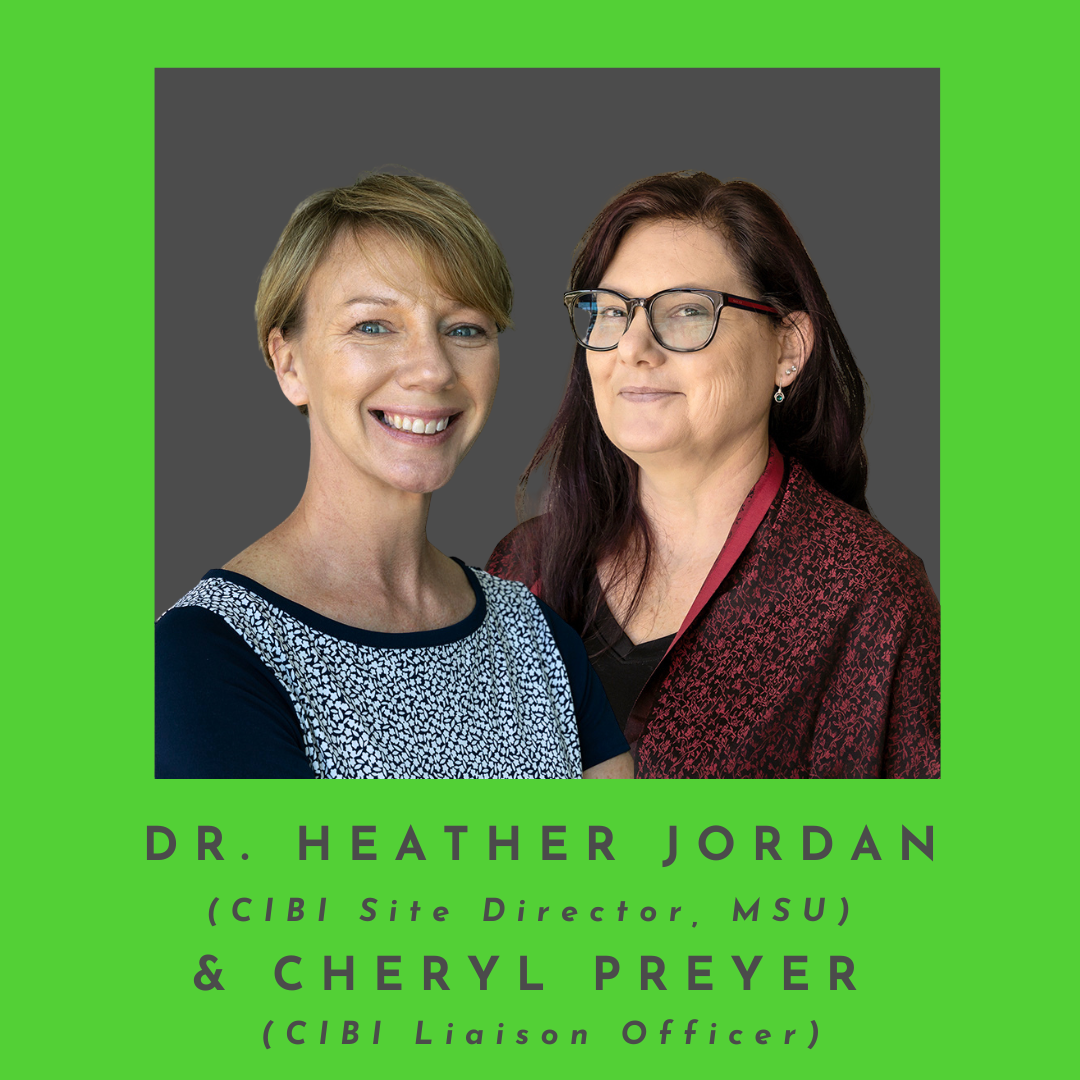
Most people have never heard of insect agriculture. By the end of this episode, you’ll wonder how you missed it.
Bites & Bytes Podcast host Kristin King sits down with Dr. Heather Jordan, microbiologist, professor at Mississippi State University, and site director for the NSF-funded Center for Insect Biomanufacturing and Innovation (CIBI), and Cheryl Preyer, the center's industry liaison and former fast food executive, to unpack one of the most quietly consequential shifts happening in the global food system right now.
For consumers, this is where your food waste is going next and why that matters for everything from the fish on your plate to the cost of your groceries. Black soldier fly, cricket, and mealworm farming aren’t science fiction. They’re converting food waste into high-quality livestock feed, fertilizer, and protein at scale. Research is even showing promise in using these insects to remove plastics, antibiotics, and heavy metals from our environment.
For professionals in cyber-physical risk, OT security, and food and agriculture cybersecurity, pay attention. Insect agriculture facilities are automated, sensor-dependent production environments with real operational technology vulnerabilities, and this industry is scaling fast with limited security frameworks in place (aka a factory)
This is the circular bioeconomy in action. And it already exists.
---------------
Guest Contact Information:
Dr. Heather Jordan
Professor of Microbiology and Molecular Biology, Mississippi State University (Profile)
Site Director, Center for Insect Biomanufacturing and Innovation (CIBI)
LinkedIn
Cheryl Preyer
Industry Liaison Officer, Center for Insect Biomanufacturing and Innovation
LinkedIn
Center for Insect Biomanufacturing and Innovation (Website)
---------------
Episode Key Highlights
00:08:01 — "I Traded Fries for Flies" — Cheryl’s Origin Line
00:11:49 — Insect Farming Is Livestock Farming
00:12:37 — "Feed the Food That Feeds Us."
00:16:02 — What a Black Soldier Fly Actually Does as an Adult
00:23:19 — Why Organic Chickens Need Synthetic Methionine
00:23:50 — The Lauric Acid and Coconut Connection
00:28:34 — Using Everything But the Oink
00:39:51 — The Cricket Densovirus Crisis That Wiped Out Facilities
00:50:15 — Heather’s West Africa Origin Story
---------------
📘 Info on Kristin’s upcoming book📘
“Securing What Feeds Us: Cybersecurity in Food and Agriculture”
Publish Date: September 29, 2026
Published by Wiley
📘 Pre-Order Links:
Pre-Order Link (Amazon): https://www.amazon.com/Securing-What-Feeds-Cybersecurity-Agriculture/dp/1394391005#detailBullets_feature_div
Barns & Noble: https://www.barnesandnoble.com/w/securing-what-feeds-us-kristin-king/1149440985
⭐ If you prefer to order from a local bookstore, you can give them the ISBN.
---------------
🎤 Book Kristin Demoranville to Speak
To invite Kristin to speak at your conference, corporate event, webinar, or workshop, visit the website and submit a request.
---------------
🎤 Bites and Bytes Podcast Info:
Website: Explore all our episodes, articles, and more on our official website.
Merch Shop: Show your support with some awesome Bites and Bytes gear!
Substack: Stay updated with the latest insights and stories from the world of cybersecurity in the food industry.
Socials: TikTok; Instagram; LinkedIn; BlueSky
---------------
🛡️ About AnzenSage & AnzenOT
AnzenSage is a cybersecurity advisory firm specializing in security resilience for the food, agriculture, zoo, and aquarium industries. AnzenSage offers practical, strategic guidance to help organizations anticipate risks and build resilience. Learn more about their offerings at anzensage.com.
AnzenOT helps organizations understand and prioritize operational risk faster, without slow or static assessments. Compliance supported, including NIST, ISA/IEC 62443-2-1, NIS2 Directive, CMMC, and many other industry-specific frameworks. Subscription access is available, including a student option. Learn more at anzenot.com.
Listen to full episode :
Episode Guide:
00:00:12 — Introduction
00:01:32 — Favorite Foods and Food Memories
00:06:12 — Guest Introductions
00:08:11 — Mid-Roll Break and Book Announcement
00:09:48 — What Is Insect Agriculture?
00:13:08 — Black Soldier Fly and the Fish Feed Connection
00:15:07 — What Does a Black Soldier Fly Look Like?
00:17:12 — Food Waste as Feedstock
00:20:26 — AnzenOT Ad Read
00:22:40 — Nutritional Science: Lauric Acid, Methionine, Calcium, Omega-3s
00:25:23 — Live Feeding and Animal Enrichment
00:26:41 — Insect Farms and Production Facilities
00:27:11 — Genetics and Strain Development
00:28:16 — Biomanufacturing Beyond Protein
00:29:48 — Why CIBI Was Founded
00:31:37 — The Municipal Insect Facility Dream
00:35:50 — Policy, Regulation, and AAFCO
00:37:56 — AnzenSage Ad Read
00:39:51 — The Cricket Densovirus Crisis
00:41:03 — Other Insects Being Commercialized Globally
00:42:46 — Global Leaders in Insect Agriculture
00:43:53 — AI and Computational Biology in Insect Research
00:45:19 — Scaling Production: HVAC, Logistics, Automation
00:47:41 — Measuring for Change: Energy, Quality Control, Data
00:48:32 — What Drew Each Guest to This Work
00:51:40 — Shared Mission: Betterment and Systems Thinking
00:52:11 — Closing and Where to Find CIBI
00:53:21 — Outro
-
00:00:12 Kristin King
Hey everyone, welcome back to the Bites and Bites Podcast.
00:00:15 Kristin King
I am your host, Kristen King.
00:00:17 Kristin King
I have to be honest with you, before I recorded this episode, I knew almost nothing about insect agriculture.
00:00:24 Kristin King
And I mean, almost nothing.
00:00:26 Kristin King
I thought insects were something zoos fed to reptiles or people gave to their backyard chickens.
00:00:31 Kristin King
And that was pretty much the beginning and the end of my knowledge on the subject.
00:00:35 Kristin King
What I didn't know is that there is an entire industry backed by federal research funding doing some of the most fascinating work in the food system right now.
00:00:45 Kristin King
Closing the loop on one of agriculture's biggest inefficiencies,
00:00:49 Kristin King
building a circular bioeconomy that most of us have never heard of, but probably should learn it.
00:00:55 Kristin King
My guests today are Dr.
00:00:57 Kristin King
Heather Jordan.
00:00:58 Kristin King
She's a microbiologist and site director at Mississippi State University for the NSF-funded Center for Insect Biomanufacturing and Innovation.
00:01:08 Kristin King
And Cheryl Pryor, the center's industry liaison who spent decades in fast food before making, which she describes as the move from fries to flies.
00:01:18 Kristin King
By the end of this conversation, I
00:01:19 Kristin King
I promise you, you are not going to look at the insects of the world the same way again.
00:01:24 Kristin King
Let's get into it.
00:01:32 Kristin King
And tradition.
00:01:32 Kristin King
We're going to start with favorite food and favorite food memory.
00:01:35 Kristin King
I actually have two guests today, so whoever wants to start first can go for it.
00:01:39 Kristin King
What is your favorite food and your favorite food memory?
00:01:41 Kristin King
They don't have to be the same thing.
00:01:42 Dr. Heather Jordon
Okay, I can start.
00:01:44 Dr. Heather Jordon
I love homemade squash casserole with fresh squash or in a pinch, you know, frozen and topped with breadcrumbs and a nice bit of cheddar cheese.
00:01:58 Dr. Heather Jordon
It's, you know, it's a great comfort food, re-eatable, love it.
00:02:01 Dr. Heather Jordon
And
00:02:02 Dr. Heather Jordon
Favorite food memories.
00:02:04 Dr. Heather Jordon
Spent a lot of time at my grandparents growing up on the weekends and rural, they grew up in a rural setting.
00:02:10 Dr. Heather Jordon
And so they had a garden and we would go out there on the weekends and, you know, work the garden and or sit up on the porch and shell peas and things like that.
00:02:22 Dr. Heather Jordon
And everything was made, you know, from scratch and everything was also utilized, right?
00:02:27 Dr. Heather Jordon
Even, you know, if it weren't in the compost pile or fed to the hogs,
00:02:32 Dr. Heather Jordon
we were eating it, whether it was a little bit bruised or anything like that.
00:02:36 Dr. Heather Jordon
So really, that time food equates to family for me.
00:02:40 Dr. Heather Jordon
And that also really instilled in me like the waste not, want not, everything is used and everything is a food, every bit of that food is a food for something.
00:02:50 Dr. Heather Jordon
So that's for me.
00:02:51 Kristin King
That's great.
00:02:52 Kristin King
So what kind of squash though?
00:02:53 Kristin King
Cause I was trying to picture like what kind of squash?
00:02:55 Dr. Heather Jordon
I like the yellow crook necked squash in the squash casserole.
00:02:59 Dr. Heather Jordon
Now having said that, I've used
00:03:02 Dr. Heather Jordon
Zucchini, I've used, what are the big ones?
00:03:06 Kristin King
Butternut.
00:03:07 Dr. Heather Jordon
Yeah, I've used butternut as well for that.
00:03:09 Dr. Heather Jordon
But I love all squash and all things.
00:03:13 Dr. Heather Jordon
I also make squash brownies, which is an aside.
00:03:14 Dr. Heather Jordon
But anyway, but yeah, and usually it's yellow, the crookneck squash.
00:03:19 Kristin King
It's actually funny because I grew up in New England and we don't call yellow squash yellow squash, we call it summer squash.
00:03:24 Kristin King
So when I moved out of that area, people were like, what are you talking about?
00:03:27 Kristin King
And I'm like, summer's the yellow one?
00:03:29 Kristin King
They're like, oh, yellow squash.
00:03:30 Kristin King
And I'm like, oh, like I felt like it against anything.
00:03:32 Kristin King
No, I mean.
00:03:34 Dr. Heather Jordon
If you say summer squash, I'm like, what, okay, what is, I thought they were all grown in the summer.
00:03:38 Dr. Heather Jordon
So I mean, it's, you know, regional.
00:03:40 Kristin King
I just, it's funny because zucchini, zucchini, or obviously for the UK list center's courgettes, I'm a big fan of zucchini.
00:03:46 Kristin King
So I completely appreciate that.
00:03:47 Kristin King
Thank you, Heather.
00:03:48 Kristin King
Cheryl, go for it.
00:03:50 Cheryl Preyer
Is so hard to just choose one.
00:03:52 Cheryl Preyer
So for me right now, I'm really loving snow pea tips or pea leaves.
00:03:58 Cheryl Preyer
And they're really hard to find.
00:04:00 Cheryl Preyer
You know, you can get there if you go out for dim sum at a Chinese restaurant, but we have found an Asian grocery store here that sometimes we'll have them.
00:04:07 Cheryl Preyer
And so we'll buy a big bag fulls and come home and make them.
00:04:10 Cheryl Preyer
And they're just as good as they are at the restaurant with a little.
00:04:14 Kristin King
How do you just steam them or you fry them or how do you fry them?
00:04:18 Cheryl Preyer
Two hours, and then you have to rinse them.
00:04:21 Cheryl Preyer
And you want to get a lot of that water out because you're going to fry them in a wok and they cook down a bit.
00:04:26 Cheryl Preyer
So you fry them with a little bit of oil and garlic and add a little salt and pepper and sesame oil.
00:04:32 Cheryl Preyer
And then salt and the fried chili in the oil.
00:04:34 Cheryl Preyer
They're just delicious.
00:04:35 Kristin King
That's great.
00:04:36 Cheryl Preyer
And your favorite food memory then?
00:04:37 Cheryl Preyer
Favorite food memory, again, so many to choose from.
00:04:40 Cheryl Preyer
And the one that's popping up is going out to eat with a family visiting with my little nephew when he was
00:04:48 Cheryl Preyer
maybe 3 when we lived outside of Columbus, Ohio.
00:04:52 Cheryl Preyer
And he had all boy energy acting up, climbing over this fountain at the patio at the French restaurant.
00:04:58 Cheryl Preyer
And I told him, hey, listen, little boys who don't behave themselves get to eat snails with their dinner.
00:05:03 Cheryl Preyer
So we ordered our dinner and he comes up to me.
00:05:06 Cheryl Preyer
He said, did you get the snails?
00:05:08 Cheryl Preyer
I said, are you going to eat snails?
00:05:09 Cheryl Preyer
Yes.
00:05:10 Cheryl Preyer
So I walked up to the waiter and I said, add some escargot to our order.
00:05:13 Cheryl Preyer
And so he brought them out and my little nephew and I ate snails together.
00:05:18 Kristin King
That's amazing.
00:05:18 Kristin King
That's a great one.
00:05:19 Cheryl Preyer
I'm a boy to this day.
00:05:20 Cheryl Preyer
He's 12 now.
00:05:22 Kristin King
Oh, well, that's a quality memory.
00:05:23 Kristin King
I love that.
00:05:27 Cheryl Preyer
I love the curiosity and the openness.
00:05:30 Cheryl Preyer
And that's sort of how I feel about food too.
00:05:32 Cheryl Preyer
if I see something on the menu I haven't tried, I want to try that.
00:05:36 Cheryl Preyer
And I'm hoping that I've instilled a little bit of that in him.
00:05:38 Kristin King
I mean, adventure eating is difficult for kids this day and age.
00:05:41 Kristin King
I think that we're all of the generation that if it was on our plate, we're going to eat it regardless if we care for it or not, unless we were allergic to it, of course.
00:05:48 Kristin King
But a lot of picky eaters these days, so the fact that he did eat snails is pretty amazing in itself.
00:05:53 Kristin King
I mean, regardless of the situation, I think
00:05:55 Kristin King
That's awesome.
00:05:56 Cheryl Preyer
And also, I think kids today are exposed to a lot more ethnic choices than maybe I was when I was growing up.
00:06:03 Cheryl Preyer
So, I think he's already been exposed to a lot more flavor profiles than I was at his age.
00:06:10 Kristin King
Thank you very much, ladies.
00:06:11 Kristin King
That's great.
00:06:12 Kristin King
Let's go through some introductions.
00:06:13 Kristin King
Heather, why don't you go with yours first?
00:06:16 Dr. Heather Jordon
Sure.
00:06:16 Dr. Heather Jordon
Heather Jordan.
00:06:17 Dr. Heather Jordon
I'm a professor in the Department of Biology at Mississippi State University, and I'm a microbiologist by training.
00:06:26 Dr. Heather Jordon
We focus on post-microbe interactions, microbial ecology, and environmental pathogens.
00:06:33 Dr. Heather Jordon
So what we've focused on really in the context of insects as food and feed is how
00:06:40 Dr. Heather Jordon
how microbes can help to optimize the system, either to make the insects healthier, safer, allow them to become more nutritious, allow them potentially to convert that byproduct, that, you know, substrate into their own biomass.
00:06:58 Dr. Heather Jordon
Well, I'm the site director for our Mississippi State site for the Center for Insect Biomanufacturing and Innovations, which is NSF, Industry University Cooperative Research.
00:07:10 Dr. Heather Jordon
Research Center as well.
00:07:11 Dr. Heather Jordon
So that was a lot.
00:07:13 Dr. Heather Jordon
So hopefully, yeah, Microbiologist Site Direct.
00:07:17 Kristin King
Thank you so much.
00:07:18 Kristin King
Cheryl, go ahead.
00:07:19 Cheryl Preyer
I'm Cheryl Pryor.
00:07:20 Cheryl Preyer
I am the industry liaison officer for CB, the Center for Insect Biomanufacturing and Innovation, the NSF IUCRC.
00:07:28 Cheryl Preyer
That is one of our acronyms.
00:07:30 Cheryl Preyer
I am not a scientist, so I came at this from a little bit of a different direction.
00:07:36 Cheryl Preyer
I spent a lot of time in the world of quick service restaurants, more familiarly known as fast food.
00:07:43 Cheryl Preyer
I worked with McDonald's and Wendy's, and I got really interested in insects as part of a solution to deal with food waste.
00:07:52 Cheryl Preyer
So, you know, taking byproducts or food waste and bioconverting those and bringing them back into the food
00:08:00 Cheryl Preyer
chain.
00:08:01 Cheryl Preyer
And so I like to say shorthand that I traded fries for flies.
00:08:05 Cheryl Preyer
It's.
00:08:06 Kristin King
Awesome.
00:08:07 Kristin King
It should be a t-shirt.
00:08:08 Kristin King
It really should.
00:08:11 Kristin King
We're going to take a short break here.
00:08:14 Cheryl Preyer
But before we do, thank you so much for being here.
00:08:17 Kristin King
Genuinely, seriously, I mean that.
00:08:19 Kristin King
Thank you.
00:08:21 Kristin King
This show exists because of the community that keeps showing up, listening, sharing, sending me the most thoughtful messages about what they want to learn about.
00:08:29 Kristin King
If you are enjoying this episode, please take a second to like, comment, and share it with someone who needs to hear this conversation.
00:08:35 Kristin King
It helps more than you know, and it also helps us reach more people who are doing this work and need to be part of this community.
00:08:42 Kristin King
Speaking of community, if you have a guest suggestion or a topic you want me to cover, please reach out.
00:08:47 Kristin King
I read everything that is sent to me, and some of the best episodes on this show
00:08:51 Kristin King
come directly from listeners' suggestions.
00:08:53 Kristin King
This is your show as much as mine.
00:08:56 Kristin King
Also, a quick personal note, my book, Securing What Feeds Us: Cybersecurity in Food and Agriculture, is available for pre-order now.
00:09:04 Kristin King
The link is in the episode description.
00:09:06 Kristin King
If you've been following the show for any length of time, you know this book has been a long time coming, and it covers everything from vulnerabilities in our food supply chain to what the industry needs to do to get ahead of the threats.
00:09:17 Kristin King
If you want to get your hands on it the moment it comes out, pre-order is the
00:09:21 Kristin King
way to go.
00:09:21 Kristin King
If you prefer a physical copy in your hands, mark your calendars.
00:09:25 Kristin King
September 29th, 2026 is the publication date.
00:09:29 Kristin King
Lastly, thank you to everyone who's already pre-ordered.
00:09:32 Kristin King
The book spiked the charts and hit number one in its category.
00:09:36 Kristin King
I am still trying to find the words to express just how much your support for this work means.
00:09:41 Kristin King
Thank you all so very, very much.
00:09:44 Kristin King
Okay, back to the conversation.
00:09:48 Kristin King
I realize a lot of listeners just like me didn't realize how much insect production actually really is for our food supply.
00:09:56 Kristin King
We need to do it now because of the amount of food we have and what's going on.
00:09:59 Kristin King
So can we do a quick explanation of insect agriculture and what that means and what kind of insects are we talking about and where are these insects going?
00:10:08 Kristin King
Because I think most people when they hear this think, are we eating insects?
00:10:11 Kristin King
And that's not the case.
00:10:13 Kristin King
But can we have that explained?
00:10:14 Cheryl Preyer
I'll start, and Heather, if you would like to jump in.
00:10:18 Cheryl Preyer
In terms of the center, we really focus on what we call the three big insects that are in insects as feed and food that we're looking at in North America.
00:10:30 Cheryl Preyer
So those are the black soldier fly, cricket, and mealworm.
00:10:34 Cheryl Preyer
Cricket and mealworm have been around for a while.
00:10:37 Cheryl Preyer
If you have had some of the, I guess they're traditional pets, but not the dogs and cats, right?
00:10:43 Cheryl Preyer
So the bearded dragons and other pets like that, you may have purchased crickets
00:10:49 Cheryl Preyer
or mealworms to feed them.
00:10:50 Cheryl Preyer
If you've had backyard chickens, you've probably purchased mealworms to feed them, or more recently, black soldier fly.
00:10:57 Cheryl Preyer
But black soldier fly is a newer insect in the space.
00:11:01 Cheryl Preyer
It was not really raised commercially until much more recently.
00:11:05 Cheryl Preyer
And it's actually had to go through several approval processes from a regulatory standpoint to be able to be used as a feed for animals.
00:11:14 Cheryl Preyer
And it has now been approved for several animals.
00:11:17 Cheryl Preyer
So really, it's those three
00:11:19 Cheryl Preyer
insects.
00:11:19 Cheryl Preyer
And in terms of how they're raised, they're fed different substrates based on the insects.
00:11:28 Cheryl Preyer
That black soldier fly can really bioconvert a lot of different organic materials.
00:11:33 Cheryl Preyer
It's not terribly picky.
00:11:35 Cheryl Preyer
Crickets and mealworms, I think, are a little bit more picky in terms of what they'll eat.
00:11:40 Cheryl Preyer
So crickets, a lot of produce, and mealworms, more grains.
00:11:45 Cheryl Preyer
And Heather, I don't know if you have anything to add to that.
00:11:47 Dr. Heather Jordon
Yeah, I mean, that was a good
00:11:48 Dr. Heather Jordon
explanation.
00:11:49 Dr. Heather Jordon
But one thing that came to my mind is, this is livestock farming, essentially, right?
00:11:54 Dr. Heather Jordon
I mean, but with insects.
00:11:56 Dr. Heather Jordon
And so some cows and pigs and chickens, we're using insects.
00:12:01 Dr. Heather Jordon
We're feeding them food, just like, you know, you would feed.
00:12:04 Dr. Heather Jordon
But as Cheryl said, and not to pee exactly what she said, but, you know, these insects are wonderful because they can eat, their feedstock can be something that are byproducts for us.
00:12:16 Dr. Heather Jordon
So they're not competing with us for
00:12:18 Dr. Heather Jordon
our own food, right?
00:12:20 Dr. Heather Jordon
We can feed them waste streams like food scraps, agricultural byproducts and things like that of lower quality.
00:12:27 Dr. Heather Jordon
And then they can use that to convert their own biomass and others into high quality products.
00:12:33 Dr. Heather Jordon
So their biomass is now a feed for cows, pigs and chickens.
00:12:37 Dr. Heather Jordon
So I say feed the food that feeds us or their digestive, you know, what's left over the residue from where they've fed on these food scraps can become a soil amendment
00:12:48 Dr. Heather Jordon
or a fertilizer as well.
00:12:50 Dr. Heather Jordon
So it has this circular system.
00:12:53 Dr. Heather Jordon
And if they're reared on high quality food grade products, they can also be used as human food as well.
00:13:01 Dr. Heather Jordon
So I mean, to me, it's livestock that can be used for multiple purposes, just as with cows, pigs, and chickens.
00:13:08 Cheryl Preyer
And also fish.
00:13:10 Cheryl Preyer
And fish.
00:13:11 Cheryl Preyer
Oh, and fish.
00:13:12 Dr. Heather Jordon
Yes.
00:13:13 Cheryl Preyer
So, and I know people have looked at different insects to feed fish, but I'm
00:13:18 Cheryl Preyer
probably a little bit more familiar with black soldier fly.
00:13:21 Cheryl Preyer
If you harvest the black soldier fly larvae and convert them into a protein, we'll talk about the fat later because you have to remove a lot of the fat just in order to work with the protein to make a meal.
00:13:34 Cheryl Preyer
But the meal from black soldier fly larva has an amino acid profile very similar to fish meal.
00:13:42 Cheryl Preyer
And if you look at fish meal markets, fish meal has gotten a lot more expensive.
00:13:48 Cheryl Preyer
You will see that the seasons for fishing, for those forage fish that get turned into fish meal, sometimes they're just canceled because the schools of fish move and for whatever reason, right?
00:14:01 Cheryl Preyer
And so that whole model is very fragile.
00:14:06 Cheryl Preyer
And if you have another substance that can help you at least extend it, if not replace it, that's very helpful, especially as you're seeing farm-raised fish surpassing wild-caught fish in terms of what we're eating.
00:14:20 Cheryl Preyer
So black soldier fly at scale should really make a difference in terms of being able to feed fish.
00:14:26 Kristin King
It's fascinating because I have some seafood people that are going to join the show and I'm totally going to
00:14:31 Kristin King
to ask them about this.
00:14:32 Cheryl Preyer
Are you feeding them insects?
00:14:33 Cheryl Preyer
I'm going to definitely ask this.
00:14:35 Kristin King
I'm actually really excited.
00:14:36 Cheryl Preyer
They're probably not.
00:14:37 Cheryl Preyer
Yeah, there are some that are, but we're just not really at capacity as an industry yet to be there.
00:14:44 Cheryl Preyer
That's so fascinating.
00:14:45 Cheryl Preyer
I'm assuming we're going to, especially if it's a viable option for secondary feed, if not probably first class feed at some point.
00:14:53 Kristin King
That's such an interesting.
00:14:54 Kristin King
And I keep hearing you both talking in cycles, like this is the cycle of how things are going to be.
00:14:59 Kristin King
And I really resonate with the systems thinking approach to this because that's how our food is.
00:15:04 Kristin King
Everything is a cycle in nature.
00:15:06 Kristin King
So that makes complete sense to me.
00:15:07 Kristin King
So black soldier fly.
00:15:08 Kristin King
So obviously you brought it up a couple of times, Cheryl.
00:15:11 Kristin King
I don't think the average public knows what that is.
00:15:13 Kristin King
When they think of a fly, they think of like a house fly or I don't know, one of those biting flies or those nasty little horse flies.
00:15:19 Kristin King
That's what I was thinking.
00:15:20 Kristin King
All those green-headed ones used to get me when I was a kid in the cave, those kind of things.
00:15:23 Kristin King
So can you kind of,
00:15:24 Kristin King
I know we can't visually show to the listeners here what a black soldier fly, but generally speaking, what are the characteristics of it?
00:15:32 Cheryl Preyer
Sure, but anybody who's listening can look it up.
00:15:35 Kristin King
It is a third Google.
00:15:37 Cheryl Preyer
It's a delightful insect.
00:15:39 Cheryl Preyer
So the black soldier fly as an adult may look a little bit like a wasp.
00:15:43 Cheryl Preyer
It's mostly black and they are, they're really gentle.
00:15:47 Cheryl Preyer
They're a very beneficial insect.
00:15:50 Cheryl Preyer
They don't really need to bite or eat.
00:15:54 Cheryl Preyer
as adults.
00:15:55 Cheryl Preyer
I mean, they'll drink water, right?
00:15:58 Cheryl Preyer
Their job as adults is to hydrate and make more flies.
00:16:02 Cheryl Preyer
And you'll see, if you look at the picture of them, they've got these beautiful little windows in their abdomen.
00:16:08 Cheryl Preyer
So as larvae, and they're eating all the time, and they're growing, growing, growing, and they're accumulating this fat.
00:16:13 Cheryl Preyer
I said we'd talk about that later, and we will.
00:16:15 Cheryl Preyer
So as adults, they'll have the windows in their abdomen, and they'll look kind of green when they're full of that fat.
00:16:22 Cheryl Preyer
And those are the fat stores that they bring into adults.
00:16:25 Cheryl Preyer
But when you see one and they're kind of clear, it means they've gone through those fat stores and they're getting close to the end.
00:16:31 Kristin King
That's fascinating.
00:16:32 Kristin King
I'm actually looking at pictures while you're talking, Cheryl.
00:16:34 Kristin King
And I just, yeah, you're right.
00:16:35 Kristin King
They do look a little bee-like, but it's not, it's very clearly not a bee.
00:16:39 Kristin King
And you can tell that it's not a bee, but it has that bee-like in terms of insects, varieties, or fashion, insect fashion, we'll say that.
00:16:47 Cheryl Preyer
And they're all over the, if you have a comp pile near your home, or a compost pile near your home, and it gets a little hot and sticky, you probably have
00:16:54 Cheryl Preyer
have black soldier fly.
00:16:55 Kristin King
That makes sense.
00:16:56 Kristin King
Or if you're on a farm, you more than likely have them as well.
00:16:58 Kristin King
I would assume they'd be hanging around.
00:17:01 Cheryl Preyer
House flies don't learn black soldier flies.
00:17:03 Cheryl Preyer
Because the more black soldier flies you have, probably the less house flies you have.
00:17:06 Kristin King
Well, let's release more of those guys then, because I prefer them over the house flies any day.
00:17:11 Kristin King
Thank you.
00:17:11 Kristin King
That's fantastic.
00:17:12 Kristin King
So I was speaking to Cheryl before we started recording a while back.
00:17:16 Kristin King
We were talking about how food waste is food stock.
00:17:19 Kristin King
And Heather, you learned to that briefly when you were doing your introduction and talking.
00:17:24 Kristin King
Can we talk a little
00:17:24 Kristin King
little bit of more about that, because I find that I, that blew my mind that we're actually using our quote food waste as food stock for these insects.
00:17:33 Kristin King
That's so fascinating to me.
00:17:35 Dr. Heather Jordon
Yeah, I mean, and for getting into the nuts and bolts, I mean, to me, it's just building on this circular bioeconomy, right?
00:17:42 Dr. Heather Jordon
I mean, rather than our food waste, which, oh gosh, the statistic, Cheryl, you may know the statistic of how much food is wasted per year, but it's a lot of food waste.
00:17:55 Cheryl Preyer
I think it's around 1/3 of the food we produce in this country is wasted.
00:17:59 Dr. Heather Jordon
I think, yeah.
00:18:01 Dr. Heather Jordon
It really is.
00:18:02 Dr. Heather Jordon
And most of this food is diverted to landfills, right?
00:18:07 Dr. Heather Jordon
And so with that landfill diversion, it's, you know, taking up landfill space, it's creating greenhouse gases, it has the potential for harboring pathogens, it can bring pests into that area.
00:18:18 Dr. Heather Jordon
So, you know, not a good thing in general.
00:18:21 Dr. Heather Jordon
But rather than doing that, we can divert
00:18:25 Dr. Heather Jordon
our pre-consumer food waste, so the food that is left over at restaurants that's not used or the grocery store food that perhaps is, going a little south that consumers would not want.
00:18:38 Dr. Heather Jordon
We can use those pre-consumer.
00:18:40 Dr. Heather Jordon
We're working on also trying to divert post-consumer food waste as well.
00:18:44 Dr. Heather Jordon
So, you know, the leftover scraps that would be going, you know, that are left on our plates at the restaurant.
00:18:51 Dr. Heather Jordon
So those things are substrates for
00:18:54 Dr. Heather Jordon
or feedstocks for these insects.
00:18:58 Dr. Heather Jordon
So there's that.
00:18:58 Dr. Heather Jordon
There's also byproducts of agriculture.
00:19:02 Dr. Heather Jordon
One thing that comes to mind are like spent brewer's grain would be something.
00:19:06 Dr. Heather Jordon
And while spent brewer's grain is fed a great deal to cows as a potential feedstock, there's a lot of spent brewer's grain that's left over that can also harbor pathogens, toxins, you know, all of these things.
00:19:20 Dr. Heather Jordon
And not just, I mean, it's accumulating and we need to, as you said, create
00:19:24 Dr. Heather Jordon
a way to make things circular and to utilize them to their full extent.
00:19:28 Dr. Heather Jordon
Really squeeze the value out of things.
00:19:30 Dr. Heather Jordon
So we can do that.
00:19:32 Dr. Heather Jordon
Manure management is another, what else?
00:19:36 Dr. Heather Jordon
Those are the three things that I think of.
00:19:38 Dr. Heather Jordon
But we're also looking into, outside of food, but we're looking also into plastics as well, to remove plastics, to remove antibiotics, to remove heavy metals from environments as well.
00:19:52 Dr. Heather Jordon
Because these insects, you know, although
00:19:54 Dr. Heather Jordon
research still needs to be conducted to really, determine mechanisms and things like that.
00:19:59 Dr. Heather Jordon
But there's research showing promise in removing some of these materials as well.
00:20:04 Dr. Heather Jordon
Now, from that, removing, you know, utilizing this waste, again, you're getting these products of value.
00:20:11 Dr. Heather Jordon
And again, more research needs to be done on a lot of this, but food, feed, fertilizer, you know, building local economies, creating jobs, and that sort of thing.
00:20:21 Dr. Heather Jordon
So that was more than just feed waste.
00:20:23 Dr. Heather Jordon
Sorry.
00:20:23 Dr. Heather Jordon
No, that's perfect.
00:20:26 Kristin King
that nagging feeling, that one that says your operations might be more exposed than you realize, but a full-blown assessment feels out of reach?
00:20:34 Kristin King
Traditional OT, cyber, physical assessments are expensive, time-consuming, and let's be honest, you get a point-in-time report that's outdated the moment something changes.
00:20:44 Kristin King
That's not risk management, that's just a snapshot.
00:20:47 Kristin King
That's exactly why we built Anzen OT, designed by practitioners who've been in your shoes.
00:20:53 Kristin King
It's one of the first subscription-based platforms for continuous quantified OT cybersecurity risk management.
00:20:59 Kristin King
Not just monitoring or threat detection, but actual risk modeling built for your facilities.
00:21:04 Kristin King
Whether you're managing a processing plant, a distribution center, a zoo, or even a utility,
00:21:10 Kristin King
Anzen OT gives you a living picture of your operational risk posture that evolves as your facility does, and turns that intelligence into actionable, prioritized tasks so you know exactly what to fix first.
00:21:23 Kristin King
Subscription plans start at prices that might actually surprise you, in a good way.
00:21:27 Kristin King
Visit anzenot.com to explore plans and see how continuous, facility-focused risk management finally fits your reality.
00:21:36 Kristin King
Anzen OT, risk intelligence that evolves as fast as your operations do.
00:21:42 Kristin King
Globally, it would be really great if we knew what to do with our waste.
00:21:45 Kristin King
I try not to waste food.
00:21:47 Kristin King
I'm a big believer that we can't, you know, we have to eat what we need to eat, and that's the end of it.
00:21:51 Kristin King
So it's really, I was so heartened to hear that food waste is being converted to food stock for these insects.
00:21:57 Kristin King
And yeah, insects are kind of creepy and gross, and sure, everybody's got their little bug of booze with it.
00:22:01 Kristin King
My sister hates bees with a dying passion.
00:22:04 Kristin King
It's just so fascinating to me.
00:22:06 Kristin King
I have been so excited about this particular episode because it's such a new fascinating topic
00:22:10 Kristin King
for me.
00:22:11 Kristin King
And since I'm such a curious, infectious person, I was like, oh, insects are so cool.
00:22:15 Kristin King
And when I finished talking to Sheryl the first time, I had visited a good friend of mine who has chickens at her backyard.
00:22:22 Kristin King
And I didn't realize she had chickens.
00:22:24 Kristin King
She didn't tell me.
00:22:24 Kristin King
And I went to go have dinner with her.
00:22:26 Kristin King
And I was like, are you feeding your chickens, mealworm?
00:22:28 Kristin King
She's like, oh, yeah, they're a total snack.
00:22:30 Kristin King
They love them.
00:22:31 Kristin King
And I said, oh, and I told them the story about the black soldier flies and chickens and how we add additives, you know, so they won't like cannibalize each other.
00:22:38 Kristin King
And I had no idea.
00:22:40 Kristin King
So is there any other fun little facts that we do to these insects to improve the health of our livestock, whether it's adjusting and we talk about fats here too, Cheryl, if you want to go down that road.
00:22:51 Cheryl Preyer
Well, and so like the black soldier fly for backyard chickens, they're not beneficial because of what we add to them.
00:22:57 Cheryl Preyer
They naturally carry things that are good for the chickens.
00:23:01 Cheryl Preyer
So the lysine that's in there is
00:23:05 Cheryl Preyer
What's that one for feathers?
00:23:08 Cheryl Preyer
The, what's the one that starts with an M, Heather?
00:23:12 Cheryl Preyer
Okay, it's going to come back to me.
00:23:14 Cheryl Preyer
Normally it just rolls right off my tongue, but you know, there are amino acids in there that are very important.
00:23:19 Cheryl Preyer
Methionine.
00:23:20 Cheryl Preyer
Oh, methionine.
00:23:21 Cheryl Preyer
Yeah, I thought you, okay, yes.
00:23:23 Cheryl Preyer
Methionine, yeah.
00:23:24 Cheryl Preyer
So that's one that even for organic chickens, based on the organic standards board, they are allowed to feed them synthetic methionine because it's just so hard to get and they need it so that they don't count.
00:23:35 Cheryl Preyer
Chickens are so funny.
00:23:38 Cheryl Preyer
Wow, right?
00:23:39 Cheryl Preyer
And calcium.
00:23:41 Cheryl Preyer
Calcium is very important, especially for egg production and things.
00:23:44 Cheryl Preyer
Black soldier fly tend to deliver more calcium than, say, mealworms.
00:23:48 Cheryl Preyer
Mealworms are a great protein play.
00:23:50 Cheryl Preyer
The fat, the fat from black soldier fly, this is crazy.
00:23:53 Cheryl Preyer
They deliver high amounts of lauric acid, which is great for building immunity.
00:23:57 Cheryl Preyer
You normally find lauric acid in coconuts.
00:24:00 Cheryl Preyer
So this is a non-tropical source of lauric acid.
00:24:04 Cheryl Preyer
It's been great.
00:24:05 Cheryl Preyer
for use in piglets, little baby pigs that often get this awful diarrhea that can be deadly, and it builds immunity and helps them stay healthy.
00:24:15 Cheryl Preyer
And it's really a great way to build health, especially in livestock, where you're seeing a real focus on reducing antibiotic use, right?
00:24:25 Cheryl Preyer
There's a type of typhoid
00:24:27 Cheryl Preyer
in chickens that we don't really see here, but in Indonesia, it's really a problem.
00:24:32 Cheryl Preyer
And there was a study done a few years ago feeding black soldier fly to chickens there, and the lauric acid in the black soldier fly really helped combat this typhoid that these chickens suffer from there.
00:24:44 Cheryl Preyer
So the luric acid is really an amazing aspect of black soldier fly.
00:24:50 Cheryl Preyer
That's fascinating.
00:24:51 Kristin King
And again, I laugh at the fact that there's varieties of how these black soldier flies get to the chickens.
00:24:58 Kristin King
There's, you know, they could feed them live, they could feed them freeze-dried, and you'd say little crispy ones that are sort of like rice, rice-y, puffed up like rice.
00:25:06 Kristin King
Yeah.
00:25:06 Kristin King
And I just, there's a whole market that nobody knows about that this is happening.
00:25:11 Kristin King
And it's wild.
00:25:12 Kristin King
And also coconuts, that's cool.
00:25:14 Kristin King
That's crazy.
00:25:15 Cheryl Preyer
It's like coconut.
00:25:16 Cheryl Preyer
It's the lauric acid.
00:25:17 Cheryl Preyer
And then crickets are really strong in omega-3s, I believe.
00:25:21 Kristin King
My mind is now blown.
00:25:23 Dr. Heather Jordon
Well, one thing I'll also add to that is, you know, you talked about feeding live.
00:25:28 Dr. Heather Jordon
And, you know, insects are a natural food source for many animals, right?
00:25:32 Dr. Heather Jordon
And so feeding them live also promotes foraging behavior and natural behaviors in these animals.
00:25:39 Dr. Heather Jordon
We're not, you know,
00:25:41 Dr. Heather Jordon
It's nice to feed them dried things, but this way it can allow some exercise and things like that as well.
00:25:49 Kristin King
Yeah, when I was at the zoo, Heather, when I was a research associate at the zoo, and we called it enrichment because it just added to the natural experience of a natural environment, the best that they could.
00:26:00 Kristin King
And I always find it interesting, especially when they were feeding certain types of insects to primates, for example, they would freak out.
00:26:06 Kristin King
I mean, they're these three, 400 pound animals.
00:26:08 Kristin King
And they're like, what is this?
00:26:09 Kristin King
And I just thought,
00:26:11 Kristin King
But in the natural world, that's probably how they would respond as well for the first time.
00:26:14 Kristin King
They wouldn't know what it was.
00:26:16 Kristin King
I mean, you're going to fight or flight.
00:26:17 Kristin King
That's a real thing.
00:26:18 Kristin King
But yeah, I never made the connection with insects and animals until we've all met.
00:26:24 Kristin King
And it was such a, it's so wild that they're so important and a key element to our food supply now.
00:26:30 Kristin King
And obviously to animals in general, just full stop, because so many things eat insects.
00:26:35 Kristin King
And that's such, that's crazy.
00:26:37 Kristin King
So black soldier flies and any of the other insects you talked about, they are
00:26:41 Kristin King
actually created and manufactured in production in terms of, I guess, an insect factory, let's just say hypothetically.
00:26:48 Kristin King
Am I misspeaking there or is that where they're created?
00:26:51 Dr. Heather Jordon
Yeah, I would call them maybe an insect farm or production facility.
00:26:56 Dr. Heather Jordon
Yeah, but that's, there are some small scale people that maybe rear them in their backyard, but yes, in larger scale, there are companies that farm these insects.
00:27:09 Cheryl Preyer
Yes.
00:27:09 Cheryl Preyer
They breed them and they rear them.
00:27:11 Cheryl Preyer
them.
00:27:12 Cheryl Preyer
So you'll have a breeding colony.
00:27:15 Cheryl Preyer
They'll hold some of the some of the production back to breed.
00:27:21 Cheryl Preyer
There are people who are working in genetics on black soldier fly.
00:27:24 Cheryl Preyer
I mean, we're doing research in genetics as well, you know, looking to really focus on specific strains like you've seen in other livestock, right?
00:27:34 Kristin King
Yeah, like the slip gene in cattle, right?
00:27:36 Kristin King
As an example, you know, being able to have cattle stand at 105 degrees Fahrenheit, that helps.
00:27:42 Kristin King
I'm assuming they're doing similar types of genetic modification for various reasons, of course.
00:27:47 Cheryl Preyer
Yeah, I don't know how much is modification.
00:27:50 Cheryl Preyer
at this point versus just identifying lines and identifying, strengths.
00:27:57 Cheryl Preyer
And it's really interesting because I think, when we talk about biomanufacturing, this is probably an area where we will see genetic modification over time.
00:28:08 Cheryl Preyer
But also a lot of people who are playing in this space are very focused on natural and regenerate.
00:28:16 Dr. Heather Jordon
And to build on that, which may be tangential for where you were going as you
00:28:20 Dr. Heather Jordon
with me, but with the biomanufacturing too, it's rearing, but also trying to determine what products we can deconstruct from the whole, where the parts are greater than the whole, just like you do with a cow, right?
00:28:35 Dr. Heather Jordon
or a pig, you use everything but the oink, right?
00:28:38 Dr. Heather Jordon
And so from the production standpoint and working with researchers, trying to figure out what we can tease apart from these insects to get the maximum amount of value.
00:28:53 Kristin King
That's amazing.
00:28:54 Kristin King
And I'd like to talk a little bit about how this intersects with the center that you mentioned, Cheryl, and the research that's being done there.
00:29:02 Kristin King
And also, I've been meaning to say this point multiple times
00:29:05 Kristin King
It just popped my head again.
00:29:06 Kristin King
This is almost like the origins of sustainability, the fact that we are using the natural world to continue to keep our food supply functional.
00:29:15 Kristin King
And I don't think enough people have made that connection necessarily.
00:29:18 Kristin King
And I know that sustainability is kind of a dirty word in a lot of places and a lot of people get freaked out by that concept, but they shouldn't.
00:29:24 Kristin King
It's just about putting our natural cycles to work for us or we work with them rather than be so abrasive to them.
00:29:31 Kristin King
So I think that insects could lead the way on this, especially when you're talking about the fish meal and versus the insect feedings.
00:29:37 Kristin King
I mean, my mind is actually like now pattering and figuring this out because I can't help myself.
00:29:42 Kristin King
But let's go back to the center and let's talk a little bit about why it was formed and the mission behind it and what kind of research you're doing moving forward.
00:29:48 Kristin King
Because again, I find this massively fascinating.
00:29:51 Kristin King
I'm sure the listeners will too.
00:29:52 Cheryl Preyer
Well, you know, Heather, I think in terms of the center forming, we had Heather and the two other site directors
00:30:01 Cheryl Preyer
who put together a proposal on this, and they really saw the growth in this space.
00:30:08 Cheryl Preyer
And I think as they were seeing the growth in this space, this industry was also starting to grow up a little bit from a very idealistic space to really talking about the economic impact that insects would make.
00:30:23 Cheryl Preyer
And really, you know, to approach the National Science Foundation with a proposal to form a research center, we're talking about the National
00:30:31 Cheryl Preyer
the Science Foundation making an investment in research and in a center in conjunction with industry, right?
00:30:37 Cheryl Preyer
But making an investment, what's the reason?
00:30:39 Cheryl Preyer
The reason is there's an economic factor here, right, to build business in the United States.
00:30:45 Cheryl Preyer
And what we saw, and Heather, you can correct me if I misspeak, but what we saw is there were other parts of the world that were ahead of us in terms of insect agriculture.
00:30:55 Cheryl Preyer
And we really saw an opportunity for the United States or for North
00:31:01 Cheryl Preyer
America to catch up and potentially lead.
00:31:04 Kristin King
For sure.
00:31:05 Kristin King
And thank you for that, because again, I adore, I think most people know, especially my listeners, that I adore research heavily.
00:31:13 Kristin King
And I find it to be so fascinating that someone has an idea and they want to figure it out on what this really means, and then moving forward, what we're going to do with it.
00:31:20 Kristin King
And I think that's so great that it's such a, and I'm sure a lot of people are like, but why would you want insects of all the things?
00:31:27 Kristin King
We need them.
00:31:28 Kristin King
We need them.
00:31:29 Kristin King
If we needed them for a long time, I guess we're just really acknowledged.
00:31:31 Kristin King
challenging it more now in our modern world and our modern supply chain and our very complex food supply chain at that.
00:31:37 Kristin King
I really want to talk about, you mentioned before, Heather, about the landfills and things like that.
00:31:42 Kristin King
And how are we dealing with that with the insects?
00:31:45 Kristin King
Are we hoping that we're going to have some type of a trade-off where the landfill won't necessarily go there or they'll separate it out?
00:31:51 Kristin King
Just curious to like how that looks in the future, because I know people are concerned about that.
00:31:55 Dr. Heather Jordon
Yeah, I have, we all actually have a dream that with all, the two site directors, Christine, Jeff, and me and Cheryl have talked about this.
00:32:06 Dr. Heather Jordon
I would love to bring in municipalities where there's, you know, maybe there's an anti-brewing space that's co-localized with that area where, yeah, there's a diversion of food waste and however that may look, whether it's, you know, only vegetable
00:32:21 Dr. Heather Jordon
or pre-consumer or post-consumer or whatever, but that gets diverted.
00:32:25 Dr. Heather Jordon
And then it's co-localized with another bit of industry that are drying these insects down or putting them in a way where it's products that can be sold by some company as well.
00:32:39 Dr. Heather Jordon
So that's sort of the goal.
00:32:41 Dr. Heather Jordon
And even here in the university, before we get to the bigger scale, which is my big dream, but even here at the university, the idea would be to divert food waste from
00:32:51 Dr. Heather Jordon
dining halls, right?
00:32:52 Dr. Heather Jordon
And then we have a localized space to rear these insects, maybe with a drying oven and a grinder and, things that are needed to, in a nursery and rearing all these things in a centralized location to rear these insects on this substrate.
00:33:07 Dr. Heather Jordon
And then all of a sudden you can have products that the university can sell, fertilizer or, you know, bird to feed, whatever.
00:33:16 Dr. Heather Jordon
And so that's sort of the dream.
00:33:18 Dr. Heather Jordon
And I really think that there will be buy-in
00:33:21 Dr. Heather Jordon
And we've talked to, through different outlets, municipalities who've shown interest.
00:33:28 Dr. Heather Jordon
I mean, right now, there's still a lot of work that needs to be done, right?
00:33:32 Dr. Heather Jordon
There's regulations that need to be put into place.
00:33:34 Dr. Heather Jordon
There's more education that needs to be done.
00:33:35 Dr. Heather Jordon
And there's more research that needs to be done.
00:33:38 Dr. Heather Jordon
But
00:33:39 Dr. Heather Jordon
People are not necessarily opposed, right?
00:33:42 Dr. Heather Jordon
I mean, you would think people just turn and that you just say, that's no way I would do that.
00:33:47 Dr. Heather Jordon
There is curiosity like yourself, right?
00:33:49 Dr. Heather Jordon
I mean, there are lots of people that are curious and there's a need.
00:33:53 Dr. Heather Jordon
We need to divert these.
00:33:57 Dr. Heather Jordon
these substrates into some and to create products.
00:33:59 Kristin King
I love the creativity of this because you automatically made me think about how smaller or even water utilities in general, whether they're small or large, are selling to data centers.
00:34:10 Kristin King
They're, you know, they're some other water.
00:34:12 Kristin King
And I kept thinking there's going to be some type of a partnership there as well that would be easy to blend as much as that is.
00:34:19 Kristin King
And I'm not dismissing how difficult that is.
00:34:21 Kristin King
That is for a difficult process.
00:34:22 Kristin King
However,
00:34:24 Kristin King
You made me think of that because I recently just tore at a facility that actually was selling 2 data centers in the area.
00:34:29 Kristin King
And I just found that to be really fascinating because they're bringing money in so the utilities can be stronger, both in their security posture and also how they're doing the water in general.
00:34:39 Kristin King
And I'm just thinking about that, how it's a cycle again, you're being able to, you know, spend and accrue finances in a way that makes sense rather than against the cycles of the natural water, if you will.
00:34:51 Kristin King
Grants at a data center is not natural by any
00:34:54 Kristin King
where it does use water for cooling.
00:34:55 Kristin King
So there you go.
00:34:56 Kristin King
But I'm sure there's some kind of synergy there.
00:34:58 Kristin King
And I like that you're starting on the collegiate level.
00:35:00 Kristin King
I literally could see the universities branding their own feed.
00:35:02 Kristin King
I mean, come on now.
00:35:04 Kristin King
The collegiate culture is so strong in this country.
00:35:07 Kristin King
In fact, there's no other way to describe it globally.
00:35:10 Kristin King
It's not, you know, whether it's our sports love or our alumni love or anything like that, I'm sure people would be very happy to buy a branded university feed, whether it's their backyard or their whole production in general.
00:35:21 Kristin King
Yeah, I definitely see that be a moneymaker.
00:35:23 Kristin King
Somebody get on that investor who's listening.
00:35:26 Kristin King
But that's the creativity there, I think, is what we're going to need to move forward in the future anyways.
00:35:31 Kristin King
We have to start thinking with the cycles, not against the cycles.
00:35:35 Kristin King
So it sounds like you've already definitely gone down that pathway.
00:35:38 Kristin King
And I love your vision.
00:35:39 Kristin King
I would love to see that come true.
00:35:40 Kristin King
I think that a lot of what we do needs to start in those places.
00:35:44 Kristin King
I've often said that we need to teach people how to grow food.
00:35:47 Kristin King
We need to teach people what cooker production looks like.
00:35:50 Kristin King
You mentioned policy and regulation, which is obviously a hot button topic all
00:35:53 Kristin King
all over the place.
00:35:54 Kristin King
In general, there's a lack of cybersecurity regulations all over the place.
00:35:57 Kristin King
There's a lack of food regulations in a lot of places, or they're not strong enough, or they're not enforceable, I suppose, is probably more of the way I should say it.
00:36:05 Kristin King
What type of policy and regulations do we need in this sector to try to help move forward?
00:36:10 Cheryl Preyer
Well, I think we need some around safety of different feedstock, right?
00:36:16 Cheryl Preyer
We've talked a little bit about pre-consumer waste streams or byproduct streams.
00:36:21 Cheryl Preyer
We've talked about post-consumer.
00:36:22 Cheryl Preyer
So today,
00:36:23 Cheryl Preyer
if you are producing products that are going to be sold.
00:36:27 Cheryl Preyer
And let's just talk about into livestock feed.
00:36:30 Cheryl Preyer
You have to be feeding them, by and large, pre-consumer waste streams or byproduct streams.
00:36:36 Cheryl Preyer
Now, that is a simplified statement.
00:36:39 Cheryl Preyer
It's based on whatever is in the AFCO handbook, and AFCO is the Association of American Feed Control Officials, right?
00:36:48 Cheryl Preyer
So you have to have an ingredient definition in there for anything that you're feeding to any livestock.
00:36:52 Cheryl Preyer
So there might be some things that don't qualify
00:36:53 Cheryl Preyer
fly as pre-consumer, but by and large, pre-consumer.
00:36:56 Cheryl Preyer
In other countries, people are feeding different things to insects, including black soldier fly, or there's other insects that are being raised in other places too.
00:37:05 Cheryl Preyer
And those safety standards are
00:37:08 Cheryl Preyer
are different in different countries.
00:37:10 Cheryl Preyer
I think here we have a burden of proof to prove safety in steps.
00:37:17 Cheryl Preyer
Going back to chickens' natural behavior, right?
00:37:20 Cheryl Preyer
If you're in a polyculture environment and you've got cows in a field dropping cow patties and you have chickens coming across them later, I can guarantee you those chickens are scratching into the cow patties and they're picking out black soldier fly and they're eating them and those chickens are fine for us to eat.
00:37:36 Cheryl Preyer
But you're not going to be feeding
00:37:38 Cheryl Preyer
in a production facility, manure to chickens, right?
00:37:42 Cheryl Preyer
Or whatever, or anything that's come out of manure.
00:37:45 Cheryl Preyer
So I think that from a regulatory standpoint, we've got a burden of proof of safety of different things.
00:37:51 Cheryl Preyer
Yeah.
00:37:56 Kristin King
Hi, we're Ames and Sage.
00:37:58 Kristin King
And if you're in food production, agriculture, and even running a zoo or an aquarium, you need to talk.
00:38:05 Kristin King
Because let's be honest, your operation relies on a lot more technology than most people realize.
00:38:11 Kristin King
Grain dryers, hatchery controls, life support systems for animal habitats, all connected, all critical, all often overlooked when it comes to cybersecurity.
00:38:21 Kristin King
That's where we come in.
00:38:23 Kristin King
At Anson Sage, we help industries that grow, feed, and inspire the world.
00:38:28 Kristin King
manage cybersecurity and operational risks.
00:38:30 Kristin King
Without the fear tactics, the fluff, or the 200-page audit, you'll never read.
00:38:35 Kristin King
Whether you're producing milk, processing seafood, or running life support systems, we focus on what matters.
00:38:41 Kristin King
Keeping your operations safe, your people protected, and your business running, even when things go sideways.
00:38:47 Kristin King
And hey, we know not everyone on your team speaks cyber.
00:38:50 Kristin King
And because not everyone on your team speaks cyber, we've created a free resource library at AnsonSage.com.
00:38:57 Kristin King
Inside, you'll find sectors
00:38:58 Kristin King
specific infographs built for teams in agriculture, seafood, zoos and aquariums.
00:39:04 Kristin King
They're clear, practical, a little witty, and designed to help frontline teams understand their risks without needing a translator.
00:39:11 Kristin King
No logins, no e-mail required, no catch.
00:39:13 Kristin King
There's usable tools that make cybersecurity stick.
00:39:16 Kristin King
If you're responsible for keeping food moving, animals safe, and systems online, Ans and Sage is your partner in real-world resilience.
00:39:24 Kristin King
Visit AnsandSage.com to download your free infographs, book a
00:39:28 Kristin King
consult, or just learn more about how we're helping critical infrastructures secure what matters most.
00:39:33 Kristin King
Hanson Sage, helping the industries that grow, feed, and inspire the world manage cybersecurity and operational risks.
00:39:42 Cheryl Preyer
We've had a burden of proof of safety as we commercialize.
00:39:47 Cheryl Preyer
new insects.
00:39:48 Cheryl Preyer
Black soldier fly had to go through a commercialization process.
00:39:51 Cheryl Preyer
Years ago, there was, we haven't talked about viruses and insects or pathogens, years ago there.
00:39:58 Cheryl Preyer
Years ago, there was a densovirus in crickets.
00:40:02 Cheryl Preyer
And at that point, the house cricket was the primary cricket that was raised and sold here.
00:40:08 Cheryl Preyer
And we're not even talking about the current setup that we have now.
00:40:12 Cheryl Preyer
This was, you know, for bait and for pet shops and things.
00:40:14 Cheryl Preyer
And that was the Acheta domesticus, the
00:40:17 Cheryl Preyer
house cricket, wiped out some facilities.
00:40:21 Cheryl Preyer
And people that were around then worked with APHIS, part of the USDA, and very quickly got another type of cricket approved for production.
00:40:31 Cheryl Preyer
Apparently, all these crickets have some of this densovirus inside them, kind of like most of us have Epstein-Barr inside of us.
00:40:38 Cheryl Preyer
And it just kind of hangs out there and doesn't do anything until something happens and it hits critical mass.
00:40:43 Cheryl Preyer
But Acheta domesticus can be really difficult because it's a really.
00:40:48 Kristin King
It's a lot to think about, actually.
00:40:50 Kristin King
All of a sudden, my goodness.
00:40:52 Kristin King
Has there been other insect species that they've tried to commercialize that are not adapting and did not adapt?
00:41:01 Kristin King
I'm curious.
00:41:02 Cheryl Preyer
It's a great question.
00:41:03 Kristin King
I mean, I was thinking fruit flies.
00:41:05 Kristin King
They're in production, I believe.
00:41:07 Kristin King
I'm not sure for sure, but I know we use fruit flies.
00:41:10 Dr. Heather Jordon
Yeah, I can't think of any.
00:41:13 Dr. Heather Jordon
I mean, it's generally the big three.
00:41:15 Dr. Heather Jordon
And then, you know, honeybees are mass produced, Drosophila mass produced, maybe even house flies that may be mass produced because they also have value for waste digestion also.
00:41:28 Dr. Heather Jordon
That makes sense for sure.
00:41:29 Cheryl Preyer
Other places.
00:41:32 Cheryl Preyer
I think in some places they're raising cockroaches.
00:41:36 Cheryl Preyer
Some places, Mopani worms.
00:41:39 Dr. Heather Jordon
Yeah, choppers or food?
00:41:42 Cheryl Preyer
Crickets.
00:41:45 Cheryl Preyer
Locusts.
00:41:48 Kristin King
I'm sure most people are like, wait, we're raising locusts.
00:41:50 Kristin King
That seems counterproductive to things.
00:41:52 Cheryl Preyer
And we are.
00:41:53 Cheryl Preyer
Okay, so in Israel, there's a company that is very specifically raising locusts.
00:41:59 Cheryl Preyer
And if you are looking for biblical references of eating insects, there are biblical references that certain insects are okay to eat.
00:42:08 Cheryl Preyer
Maybe locusts and katydids, if I remember correctly.
00:42:11 Kristin King
All of those seem like really appetizing.
00:42:14 Kristin King
I mean, yikes.
00:42:15 Cheryl Preyer
You know what?
00:42:17 Cheryl Preyer
Listen,
00:42:17 Cheryl Preyer
We're not in the desert and there's nothing else.
00:42:20 Cheryl Preyer
Sure, Absolutely.
00:42:21 Cheryl Preyer
When we were in COVID and the grocery shelves were pretty bare, I remember telling people that if we get to the point that I have to kill what I'm going to eat, I'm going to eat a lot more insects because I don't think I kill bigger things.
00:42:34 Kristin King
Yes, I probably made some comments similar when I was in desperation at the time.
00:42:40 Kristin King
But yeah, it's funny.
00:42:41 Kristin King
You mentioned international.
00:42:43 Kristin King
Which countries are excelling in this?
00:42:46 Kristin King
And I'm assuming we're using them as a
00:42:47 Kristin King
model for the US as well, because obviously why reinvent the wheel of things are working in places.
00:42:52 Cheryl Preyer
So Europe, a lot of places in Europe have been pretty far ahead and they're very buttoned up in terms of how they put things together for the regulatory process.
00:43:05 Cheryl Preyer
They've got a lot, they're pretty far ahead in terms of what they've put together there.
00:43:11 Cheryl Preyer
And it's not all countries throughout Europe, but I think there's a lot of activity in France, especially, and in the Netherlands, I'd say.
00:43:19 Cheryl Preyer
And there's a lot of insect production throughout Asia.
00:43:22 Cheryl Preyer
That makes sense.
00:43:23 Cheryl Preyer
And in Africa, there's quite a bit.
00:43:25 Cheryl Preyer
There's a research organization there, ICPE, ICIPE, that's been around for over 50 years doing this type of work.
00:43:34 Cheryl Preyer
Australia is another thing as well.
00:43:36 Kristin King
I would think anywhere that probably has a high level of agriculture would more than likely have
00:43:41 Kristin King
going on.
00:43:42 Kristin King
That makes sense.
00:43:42 Kristin King
Australia, for sure.
00:43:43 Kristin King
Wow, that's really fascinating.
00:43:45 Kristin King
And I'm not surprised to hear about Europe with the regulatory.
00:43:47 Kristin King
They are on lock with a lot of the regulatory aspects and just about every sector I've ever interacted with.
00:43:53 Kristin King
Let's just quickly switch gears a little bit since, you know, I am a bit of a technology podcast, so I suppose I should talk a little bit about tech.
00:44:01 Kristin King
What's been the most surprising ways technology showed up in the insect world?
00:44:07 Kristin King
Just out of curiosity, especially when it comes to research, because I'm quite sure it was quite a bit.
00:44:11 Dr. Heather Jordon
For me, I've been thinking about that.
00:44:14 Dr. Heather Jordon
It's like, okay, what kind of, so I'm a molecular person, right?
00:44:18 Dr. Heather Jordon
So I mean, we do a lot of molecular, but the computational biology component is huge.
00:44:25 Dr. Heather Jordon
And the amount of computational needs that are there to, you know, to have these sequencing of the insects, the microbes, not just proteins, the proteins.
00:44:36 Dr. Heather Jordon
So all of this computational, the amount of computational
00:44:41 Dr. Heather Jordon
educational resources needed is pretty big.
00:44:45 Dr. Heather Jordon
But also, using AI in the sense, machine learning, predictive capabilities as well.
00:44:56 Dr. Heather Jordon
And that's from our research side of things.
00:44:59 Dr. Heather Jordon
And Cheryl can speak probably more to the industrial side, but there's a lot of, you know, there's industry partners that are using AI for prediction or for trying to automate the system, trying to have better engineering
00:45:11 Dr. Heather Jordon
for the systems as well.
00:45:13 Dr. Heather Jordon
But for me, it's just the sheer amount of computational needs, the research side.
00:45:18 Dr. Heather Jordon
But Cheryl, definitely jump in.
00:45:19 Cheryl Preyer
Well, I think...
00:45:21 Cheryl Preyer
In terms of the production facilities, we've, as we're looking to grow to scale, you've had so many people start with pilot projects.
00:45:30 Cheryl Preyer
And I think about HVAC really.
00:45:34 Cheryl Preyer
When you, every time you try to increase the size of your production, you find new problems you have to solve.
00:45:42 Cheryl Preyer
Oh yeah.
00:45:42 Cheryl Preyer
And it is, anybody I talk to, it's never easy.
00:45:46 Cheryl Preyer
You may think it's gonna be easy, but it never is.
00:45:50 Cheryl Preyer
And, I can't necessarily speak to the specifics, but in terms of getting the right temperature consistently everywhere, I know that there've been a lot of different models played with in terms of how do you consistently get the feedstock to the insects based on your model.
00:46:10 Cheryl Preyer
in a lot of places, we're seeing trays that are stacked with insects.
00:46:14 Cheryl Preyer
So are the trays moving, is the feed moving, et cetera?
00:46:18 Kristin King
Yeah, and then all the transportation and logistics that go around that, whether it's, like you said, getting the food to the insects or then moving the product out after at the other end of it, that is.
00:46:28 Kristin King
There's so much room and margin for error in that regard.
00:46:32 Kristin King
We see that with food production anyways.
00:46:34 Kristin King
I mean, that's usually when things go wrong.
00:46:36 Kristin King
It's not necessarily on the middle of the production line.
00:46:38 Kristin King
It's usually on one end or the other.
00:46:39 Kristin King
Things are getting better.
00:46:40 Kristin King
It's always an efficiency game.
00:46:42 Kristin King
And then obviously digital transformation is going to consistently continue happening.
00:46:46 Kristin King
I'm sure we're going to go through lots of rounds of this in the next few decades anyways, because AI becomes more predominant.
00:46:53 Kristin King
Right.
00:46:54 Dr. Heather Jordon
And even just everything at this, we're at a scale now where we can really try to fine-tune, right?
00:47:00 Dr. Heather Jordon
Because every part of this is data-driven.
00:47:03 Dr. Heather Jordon
And so as we are scaling up, as Cheryl said, we are trying to advance and refine and optimize
00:47:12 Dr. Heather Jordon
and we're in early stages, but it's really, I'm optimistic.
00:47:18 Cheryl Preyer
Energy usage.
00:47:19 Cheryl Preyer
I think we had a guest speaker a while ago that had a report where they had looked at energy usage, really in processing insects after the insect production, and had seen very high energy usage.
00:47:31 Cheryl Preyer
And our members
00:47:34 Cheryl Preyer
said, that's not true, So just even having that conversation around that information where change had happened so rapidly, because, if you're measuring something, you can affect change, right?
00:47:49 Cheryl Preyer
So if you're measuring it and you see it and say, oh, we have an opportunity here to tighten this up and make it better.
00:47:56 Cheryl Preyer
And that's again, where research is so important, right?
00:47:58 Cheryl Preyer
Because we are keying in and measuring
00:48:03 Cheryl Preyer
and looking for areas to make improvement.
00:48:05 Kristin King
For sure.
00:48:06 Kristin King
And then there's quality control aspects to this.
00:48:08 Kristin King
You want to send out quality, well, you want to give quality to the animals you are dealing with, and then also quality on the other end of whatever that byproduct is.
00:48:15 Kristin King
So there's so many layers to this, and it sounds like the evolution of it is going to be a really interesting journey moving forward, because it just sounds like it's going to continue to be more efficient and get better, and the data's going to be
00:48:28 Kristin King
easier to analyze.
00:48:29 Kristin King
You'll have more of it probably to look at.
00:48:31 Kristin King
It'd be wild.
00:48:32 Kristin King
As we're about to close out, I want to quickly just switch to the human side of what drew you to this research, Heather?
00:48:39 Kristin King
What drew you to this, Cheryl?
00:48:40 Kristin King
Like what brought you here?
00:48:42 Kristin King
Because I'm quite sure you didn't wake up when you were a child and were like, yes, insects.
00:48:45 Kristin King
I want to do it.
00:48:45 Kristin King
I mean, unless you did.
00:48:46 Kristin King
I mean, it's possible.
00:48:47 Kristin King
But what drew you to this career path?
00:48:50 Dr. Heather Jordon
Cheryl, do you want to lead off?
00:48:51 Cheryl Preyer
Sure.
00:48:51 Cheryl Preyer
Well, first of all, I did love insects as a kid.
00:48:54 Cheryl Preyer
I'll just say.
00:48:55 Cheryl Preyer
I will tell you, had I known that entomology was
00:48:59 Cheryl Preyer
a career, I might have gone down that path back in the day.
00:49:02 Cheryl Preyer
I used to go out and collect bugs as a kid.
00:49:05 Cheryl Preyer
I loved them.
00:49:07 Cheryl Preyer
But for me, it really was about tackling food waste, right?
00:49:11 Cheryl Preyer
I mentioned before.
00:49:13 Cheryl Preyer
Having worked in the food industry, in the restaurant industry, and seeing those numbers about the amount of food that we waste, when I also grew up in a family that was very focused on not wasting food and reusing whatever you didn't eat, just it's shocking to me how much food we waste, especially knowing how many people are food insecure in this country.
00:49:36 Cheryl Preyer
That's right.
00:49:37 Cheryl Preyer
Just unbelievable.
00:49:38 Cheryl Preyer
And so to be able to do something about that, to bring nutrients back into the
00:49:43 Cheryl Preyer
system to feed more people is amazing work.
00:49:47 Cheryl Preyer
And to be able to do it with this little bundle of creature that is already here that nature provides us, on top of which, when you meet people in this space,
00:49:59 Cheryl Preyer
They're super interesting people.
00:50:01 Cheryl Preyer
They're just really fun to spend time with.
00:50:03 Cheryl Preyer
So it's been a really great space to work in.
00:50:06 Kristin King
It's amazing.
00:50:07 Kristin King
And I can echo that because I'm already fascinated and think you two are pretty much the most amazing people I've talked to in a long time.
00:50:13 Kristin King
So.
00:50:14 Kristin King
That's great.
00:50:14 Kristin King
Heather, do you want to add?
00:50:15 Dr. Heather Jordon
Yeah, so as I mentioned, in the beginning, I'm A microbiologist, and historically, my research has been on environmental pathogens, and I work in a disease system that causes a disease in humans in West Africa and other places.
00:50:30 Dr. Heather Jordon
And so
00:50:32 Dr. Heather Jordon
One of the hypotheses associated with this disease is that there were potentially insects involved.
00:50:37 Dr. Heather Jordon
So I worked with Dr.
00:50:39 Dr. Heather Jordon
Jeff Tomberlin, who is a terrestrial insect expert.
00:50:44 Dr. Heather Jordon
I didn't know the set of tone, black soldier fly expert.
00:50:46 Dr. Heather Jordon
So we're walking around the village in West Africa conducting research for the disease work.
00:50:50 Dr. Heather Jordon
And as we do, we say, what else do you do?
00:50:53 Dr. Heather Jordon
And he starts telling me about this black soldier fly.
00:50:55 Dr. Heather Jordon
And I'm not an entomologist by any stretch.
00:50:58 Dr. Heather Jordon
He started telling me about the system.
00:50:59 Dr. Heather Jordon
And I just fell in love with the system because it's a beautiful
00:51:02 Dr. Heather Jordon
system, when you start drawing the arrows out, it's the circle, where everything is leaning back into itself.
00:51:08 Dr. Heather Jordon
And, I'm walking around this village where there's a lot of waste, there's a lot of things, and there's a need for food, there's a need for feed.
00:51:15 Dr. Heather Jordon
And I'm just like, what a great system to try to implement.
00:51:18 Dr. Heather Jordon
And as a microbiologist, my next question was, well, where do microbes fit in?
00:51:22 Dr. Heather Jordon
And it just, it led from there.
00:51:25 Dr. Heather Jordon
But for me, the system has such potential to solve a lot of problems both now and with our growing
00:51:32 Dr. Heather Jordon
human population and to create jobs and provide security in so many different ways.
00:51:38 Dr. Heather Jordon
And so that's how I got into it.
00:51:40 Kristin King
I think that it's so admirable that you both came to it from an angle of betterment in general, just let's make things better.
00:51:49 Kristin King
And I really admire that.
00:51:50 Kristin King
That's how I journeyed into cybersecurity in a lot of ways.
00:51:54 Kristin King
It was the same feeling of we can do better, we have to do better, and that we need to make sure we protect people.
00:51:59 Kristin King
And how I fell in love with operational technology because then it tied safety into it.
00:52:03 Kristin King
And then it's not just about the data, it's about safeguarding lives.
00:52:07 Kristin King
So I think we're all in the same mission, just different paths, of course.
00:52:11 Kristin King
Thank you both for being here.
00:52:12 Kristin King
I absolutely adore the conversation.
00:52:13 Kristin King
I am such a nerd.
00:52:14 Kristin King
I am here for all of this.
00:52:16 Kristin King
I am, nobody's going to look at insects the same way after listening to this episode, I'm quite sure.
00:52:20 Kristin King
But thank you very much.
00:52:21 Kristin King
And I will make sure that all of your information is linked below and any kind of research so people can find you and read and get into it.
00:52:27 Kristin King
Because again, this is such a subject that we're going to continue to visit because I'm sure everything's going to change and evolve at that point.
00:52:34 Kristin King
And I would love to see insect utilities pop up next to our other type of utilities because I think that would be so cool.
00:52:41 Kristin King
That would be absolutely cool.
00:52:42 Kristin King
But again, total nerd here.
00:52:44 Kristin King
So absolutely.
00:52:45 Kristin King
Thank you both.
00:52:46 Kristin King
As we sign off, is there anything else we want to include before we go?
00:52:49 Cheryl Preyer
Well, I was going to say thank you.
00:52:50 Cheryl Preyer
And, you know, if anybody is interested in learning more, our website is easy to find, insightcenter.org.
00:52:58 Cheryl Preyer
Happy to have a conversation with more information.
00:53:02 Cheryl Preyer
And we didn't even talk about chitin.
00:53:04 Cheryl Preyer
Like there's a whole other thing.
00:53:06 Kristin King
Oh yeah, there's so many things.
00:53:07 Kristin King
We could have probably gone on for three hours.
00:53:08 Dr. Heather Jordon
One more.
00:53:11 Dr. Heather Jordon
Yeah.
00:53:11 Dr. Heather Jordon
Thank you for the opportunity to chat about things that we love to talk about.
00:53:15 Dr. Heather Jordon
So thank you.
00:53:18 Cheryl Preyer
Thank you both.
00:53:21 Kristin King
And that's a wrap on today's episode of the Bytes and Bytes podcast.
00:53:24 Kristin King
Dr.
00:53:24 Kristin King
Heather and Cheryl, thank you so much for being here.
00:53:27 Kristin King
I said it during the recording, and I will say it again here.
00:53:30 Kristin King
This is one of those conversations that generally changed how I see things.
00:53:33 Kristin King
The work you were doing at the center matters more than most people realize right now.
00:53:38 Kristin King
And I'm grateful you took the time to bring it to this audience.
00:53:41 Kristin King
All their information and links about their work and the center are in the episode description.
00:53:46 Kristin King
So if this conversation sparks something in you, please go find them.
00:53:49 Kristin King
To the listeners, thank you for
00:53:51 Kristin King
spending this time with us.
00:53:52 Kristin King
I hope you walked away from this one with something new, something that made you think a little bit differently about the food system, about what gets wasted, about what is possible when you stop treating food waste like a problem and start treating it like a resource.
00:54:05 Kristin King
As I said at the beginning of the show, I bet you won't look at insects the same way again.
00:54:09 Kristin King
Am I right?
00:54:10 Kristin King
If you enjoyed this episode, please like, comment, and share it.
00:54:13 Kristin King
Leave a review if you have a minute.
00:54:15 Kristin King
It really helps reach more people who need to be a part of this conversation.
00:54:18 Kristin King
As always, stay safe,
00:54:21 Kristin King
Stay curious and we'll see you on the next one.
00:54:23 Kristin King
Bye for now.
